
Best overall: “What do I need that I keep putting last?” Best for identity: “What feels like me outside motherhood?” Best for crowded thoughts: “What am I carrying today?” These journal prompts for single moms offer a place to begin in 2026 without turning your private thoughts into another assignment.
- The Sheema Edit’s journal prompts for single moms start with your needs, not another productivity goal.
- Choose “What feels like me outside motherhood?” when you want space for your own interests.
- Use “What am I carrying today?” for self reflection without requiring yourself to solve everything.
- Pair one journal answer with flexible weekly planning only when a practical next step feels useful.
Why this matters
You can love your children and still want a few thoughts that belong entirely to you. You can also sit down with a notebook and discover that the only available thought is dinner. Neither requires an apology.
A useful prompt gives you somewhere to start without deciding how you should feel. It doesn't require gratitude, forgiveness, a lesson, or a cheerful ending. If a question about saying no feels closer to what you need, these self reflection journal prompts for boundaries offer another starting point.
The Sheema Edit is best for single moms seeking journal prompts that leave room for unfinished feelings. This guide offers questions to try, not a routine to maintain.
What makes the best journal prompts for single moms?
For this 2026 guide, the strongest prompts meet four simple criteria:
- They leave room for your actual answer. You don't have to turn frustration into gratitude before the page counts.
- They work in a small opening. You can write 1 sentence rather than build your evening around journaling.
- They separate reflection from obligation. Naming a need doesn't automatically create another task.
- They keep you in the picture. Your preferences, disappointments, interests, and limits belong beside your responsibilities.
You don't need a different notebook for each question. These are starting points you can use on paper you already have.
The best prompts at a glance
Choose the question that sounds closest to your day. The order offers a default, not a requirement to work through every entry.
| Prompt | Best for | What it makes space for | Main limitation |
|---|---|---|---|
| What do I need that I keep putting last? | Naming your needs | An honest answer before a plan | Recognizing a need doesn't make meeting it simple |
| What feels like me outside motherhood? | Reconnecting with identity | Interests without a usefulness test | Remembering can bring sadness alongside pleasure |
| What am I carrying today? | Crowded thoughts | A place to set thoughts down | Listing everything can become another task list |
| Where am I saying yes when I want to pause? | Looking at boundaries | A closer look at one commitment | Some obligations aren't yours to change alone |
| What would make this week feel kinder? | Flexible weekly planning | One adjustment rather than a life overhaul | A gentler plan doesn't remove outside demands |
| What deserves acknowledgment today? | Recognizing quiet effort | Credit without forced positivity | Praise can feel uncomfortable when you're depleted |
1. What do I need that I keep putting last?
Best for: Naming a need before trying to solve it.
This is the best starting question because it asks about you directly. Not what everyone needs from you, and not what you could accomplish if you somehow acquired a spare afternoon.
Your answer doesn't need to sound profound. It can be an uninterrupted meal, less conversation, company, clean clothes that are actually yours, or time to think without answering a question halfway through.
If the question feels too wide, try this opening: “Today, I wish there were more room for…” Stop wherever the sentence stops.
This prompt's strengths:
- It centers your experience without asking you to justify it.
- It accepts practical and emotional needs equally.
- It works as a short answer.
This prompt's limits:
- Naming a need doesn't create the time or support to meet it.
- A broad question can feel difficult when you're tired.
You don't have to end with a solution. “I need help, and I don't know what that looks like yet” is a complete entry.
Verdict: Try this first when you can't remember the last time you asked yourself what you need.
2. What feels like me outside motherhood?
Best for: Reconnecting with your own interests.
This question doesn't ask you to separate yourself from your children. It asks what else belongs in the picture. Motherhood can matter deeply without being the only thing you have permission to write about.
Think about a subject you enjoy discussing, a song you keep replaying, a place you like being, or something you're curious about now. You aren't required to recover an earlier version of yourself. Your current preferences count too.
Try finishing: “Something I like, even when it serves absolutely no practical purpose, is…”
This prompt's strengths:
- It welcomes enjoyment without requiring a useful outcome.
- It makes room for who you are now.
- It doesn't depend on a big personal goal.
This prompt's limits:
- Remembering neglected interests can feel tender.
- Knowing what you miss doesn't guarantee time for it.
If nothing comes to mind, write about what catches your attention lately. Curiosity is enough; you don't need to announce a new era.
Verdict: Try this when your own preferences feel harder to name than everyone else's.
3. What am I carrying today?
Best for: Giving crowded thoughts somewhere to go.
This prompt invites you to name what's taking up space. An appointment, an awkward conversation, a school message, and a worry about tomorrow can sit beside each other without being ranked.
Write fragments if sentences feel like extra work. “Permission slip. That conversation. Laundry. Missing someone.” The page doesn't need transitions.
For a small starting point in 2026, try 3 lines: something practical, something emotional, and something you don't understand yet. Those categories are optional, not boxes to complete.
This prompt's strengths:
- It accepts untidy thoughts.
- It doesn't require you to choose the biggest concern.
- It works without a polished story.
This prompt's limits:
- A list can start to resemble an assignment sheet.
- Writing about a worry doesn't resolve it.
If you notice yourself turning every line into an action, add: “This is something I'm noticing, not necessarily something I'm doing tonight.”
Verdict: Try this when there are too many thoughts competing for the opening sentence.
4. Where am I saying yes when I want to pause?
Best for: Taking a closer look at one commitment.
The word “pause” matters. You don't have to begin with a dramatic no or draft a speech worthy of a courtroom scene. You can simply notice where an answer came faster than your willingness.
Choose one situation rather than reviewing every relationship. What was asked? What did you want to say? What made the answer complicated?
You can write, “I agreed because…” without criticizing yourself for the reason. Wanting to help, avoiding an argument, and having limited options are different experiences.
This prompt's strengths:
- It makes room for mixed feelings about helping.
- It focuses on a specific moment.
- It separates noticing from taking immediate action.
This prompt's limits:
- Some responsibilities aren't optional.
- A journal can't decide how another person will respond.
An entry can end with a question you'd like time to consider. You don't owe the page a confident declaration.
Verdict: Try this when a recent yes is still bothering you.
5. What would make this week feel kinder?
Best for: Moving gently from reflection into weekly planning.
This question asks for an adjustment, not a reinvention. A kinder week might include leaving one evening unplanned, asking a clear question about help, or deciding that a particular task can wait.
Begin with what your journal entry actually says. If you wrote that you're tired of making decisions, filling every blank space with a new plan misses the point.
For your 2026 planning, try two sentence openings: “Less of…” and “More room for…” You can answer either one and leave the other alone.
This prompt's strengths:
- It connects planning to your experience.
- It allows subtraction as well as addition.
- It doesn't require a fully organized week.
This prompt's limits:
- Outside demands can remain unchanged.
- Planning itself can feel like more work.
A blank space doesn't need an explanation. Sometimes the kindest edit is declining to add anything there.
Verdict: Try this when you want a practical next step without turning rest into a project.
6. What deserves acknowledgment today?
Best for: Noticing effort without demanding a positive mood.
Acknowledgment isn't the same as insisting everything went well. You can recognize that something took effort while remaining disappointed, angry, bored, or thoroughly ready for bed.
Consider what asked something of you today. Maybe you followed through on a difficult conversation. Maybe you changed your mind. Maybe you admitted that you couldn't do one more thing.
Try: “Something that took effort today was…” You don't need to prove it was harder than someone else's day.
This prompt's strengths:
- It makes room for effort that isn't visible.
- It doesn't require a gratitude list.
- It allows an ordinary day to matter.
This prompt's limits:
- Recognition can feel awkward rather than comforting.
- The question can become a performance review if you start scoring yourself.
If praise feels too far away, keep the entry factual. Describing what happened is enough.
Verdict: Try this when you're measuring the day only by what remains unfinished.
How these prompts were ranked
The Sheema Edit's journal prompts for single moms put naming your needs first, followed by identity, crowded thoughts, boundaries, planning, and acknowledgment. That order reflects the criteria above: an accessible opening, room for an honest answer, and no obligation to turn the entry into work.
These are editorial recommendations, not a measure of which question will feel best to every reader. Your most useful prompt is the one you can answer honestly today.
A small way to begin without creating a routine
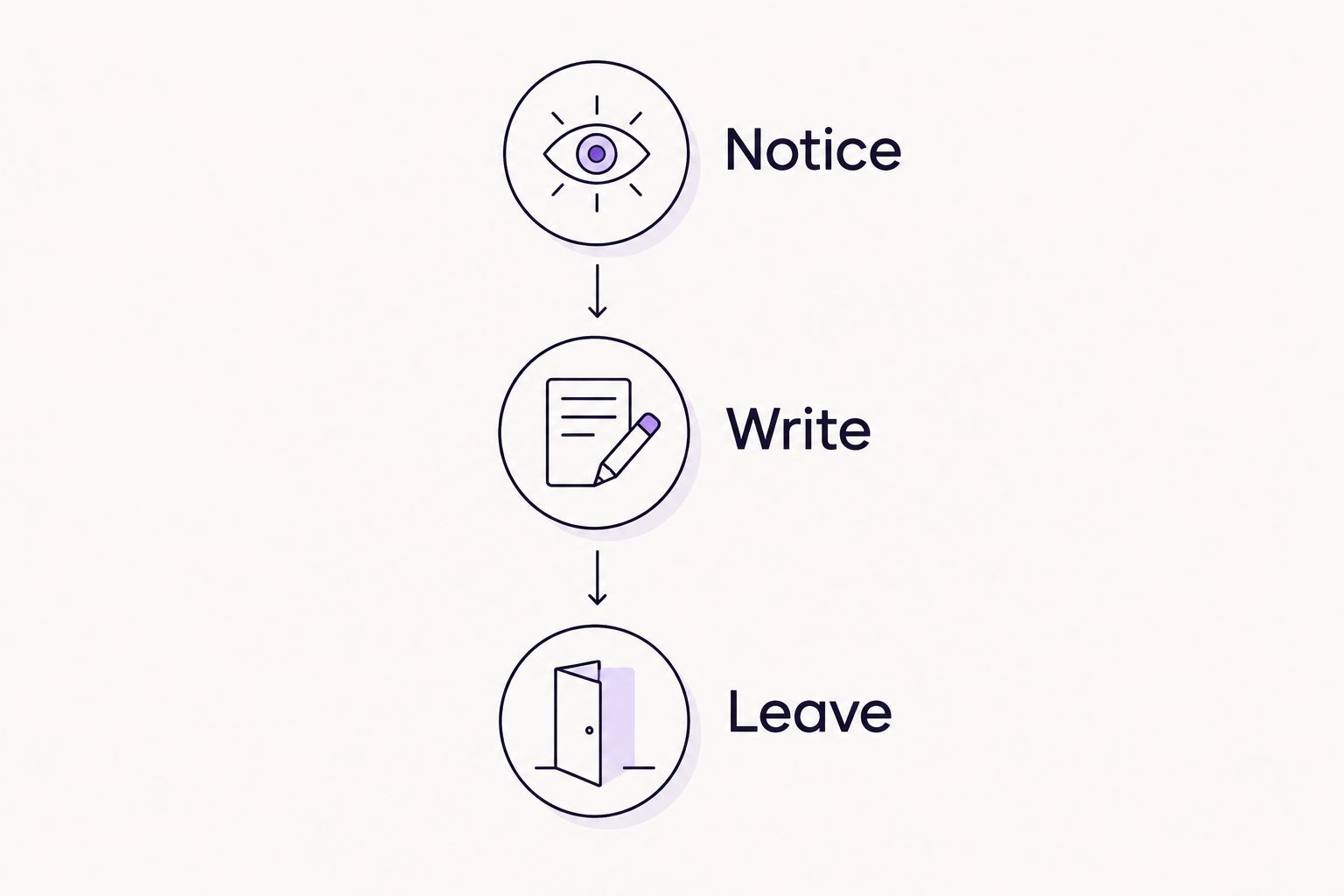
Give yourself 2 minutes if a small boundary around the activity feels helpful. That's an optional container, not a claim about how long journaling should take.
Notice
Pick the question that sounds closest to your day, not the one you think a more organized person would choose. If none fits, write your own question.
Write
Answer in a sentence, fragments, or a few words. You can leave spelling alone, repeat yourself, and stop in the middle of an idea.
Leave
Close the page without extracting a lesson. You can return another day, choose a different prompt, or let the entry remain exactly as it is.
An interrupted entry still belongs to you. You don't need to restart it neatly or explain the gap when you return.
Which journal prompt should you choose?
Start with “What do I need that I keep putting last?” if you're undecided. It gives you a direct opening without requiring you to know where the answer will lead.
For 2026, let usefulness mean that the question gives you room to tell the truth. It doesn't have to produce a better mood, a finished page, or a more efficient tomorrow.
FAQ
What's the best journal prompt for a single mom who doesn't know where to start?
Start with “What do I need that I keep putting last?” It invites a direct answer about your experience, and a single sentence is enough.
What can I write when I'm too tired to journal?
Write a few words in response to “What am I carrying today?” You can also skip writing; a tired evening doesn't need another requirement.
Do I have to journal every day?
No, you don't have to journal every day. Return when writing feels useful rather than treating a gap as something to make up.
What if a journal prompt makes me feel worse?
You can stop answering the question. Choose a more ordinary topic, close the notebook, or leave journaling for another time; finishing isn't an obligation.
How do I journal without enough privacy at home?
Choose a place and format you're comfortable keeping private. You can use brief notes rather than details, or decide not to record something you don't want stored.
Can I use journal prompts with an undated weekly planner?
Yes, you can use a journal answer to guide an undated weekly plan. “What would make this week feel kinder?” offers a bridge, but not every reflection needs a task beside it.
Do I need a special journal for these prompts?
No, these prompts don't require a special journal. Use paper or a notebook you already have, and choose a format based on what you find comfortable.
One last thing
You can disagree with the question. “That isn't what I need to write about” is a perfectly useful response, especially if it leads you toward something more honest.
The notebook isn't another person waiting for you to give the right answer. You get to decide what belongs on the page.