Best overall: an undated weekly planner. Best for making room for yourself: a reflection and planning page. Best for a crowded day: a simple daily sheet. The best printable planner for new moms in 2026 is the one that holds what you need without handing you more work.
- An undated weekly layout is the best printable planner for new moms who want flexibility without daily upkeep.
- The Sheema Edit suits readers seeking printable journals and planners alongside honest essays about motherhood.
- Choose a daily sheet for a crowded day, not as a commitment to plan every day.
- Keep personal reflection separate from shared household tasks when you want privacy.
Why this matters
You can want a little structure and still have absolutely no interest in becoming a more efficient version of yourself. New motherhood doesn't need to become a project with a performance review.
A planner has a smaller, kinder job: give you somewhere to put the things you don't want to keep remembering. Your appointment belongs there. So does the reminder that you wanted an afternoon without visitors.
This guide compares planner formats rather than ranking named products. Start with the kind of page you need; the guide to choosing an undated weekly planner can help you narrow that choice without building an entire planning system.
What makes the best printable planner for new moms?
For this 2026 guide, the strongest default is a page you can return to after an interruption. Use these criteria before falling for a pretty preview:
- Flexible dates: You can leave a week blank and begin again without catching up.
- Clear space: The page gives you room to write instead of surrounding every thought with another box.
- Easy printing: You can check the paper size, margins, and ink coverage before committing to the file.
- Room for you: Your needs have somewhere to go besides the leftover corner beneath household chores.
- Shared visibility: Tasks that involve someone else can be separated from private thoughts and made visible.
Not every planner needs to do all of this. A private journal doesn't need to run the household, and a household task sheet doesn't need to ask how your heart is doing.
The best planner formats at a glance
| Planner format | Best for | Standout feature to seek | Key limitation |
|---|---|---|---|
| Undated weekly planner | Seeing the week without daily upkeep | Open weekly space with dates you add | Limited room for a crowded day |
| Reflection and planning page | Including your needs in the plan | Separate space for thoughts and practical next steps | Personal writing needs privacy |
| Simple daily sheet | Getting through a day with several moving parts | Open notes beside today's commitments | Repeated printing can become another task |
| Shared household planner | Making responsibilities visible | Space to name a task and its owner | A page can't make someone participate |
| Appointment and questions sheet | Keeping visit details together | Space for logistics, questions, and notes | Too narrow to replace a weekly plan |
The table describes features to look for, not features promised by a particular shop. Choose the smallest format that answers your actual problem. A large bundle isn't a better fit just because it contains more pages.
1. Undated weekly planner: best for flexible weekly planning
An undated weekly planner gives you a view of the week without requiring a fresh page every morning. You add the dates when you use it, then leave it alone when you don't.
This is the best starting point if you want to see appointments, a few practical tasks, and some breathing room together. You don't need an hourly schedule to remember that Thursday already has enough in it.
Undated weekly planner pros:
- You can restart after a gap without filling in missed dates.
- The week stays visible on a single spread or sheet.
- You can write down commitments without accounting for every hour.
Undated weekly planner cons:
- Small day boxes aren't suitable for long notes.
- An open layout won't tell you which task matters most.
Best for: You want a gentle overview, not a daily reporting obligation.
Try writing 3 priorities for the week, then stop. Those priorities might include returning a form, asking someone to bring dinner, and having time alone. This is an optional limit, not a new standard to meet.
Verdict: Choose an undated weekly planner as your default in 2026. Skip layouts that make you divide a changeable day into tiny appointments with yourself.
2. Reflection and planning page: best for remembering your own needs
A reflection and planning page gives thoughts and practical next steps separate places to land. Look for a layout that lets you notice what you need before asking what you intend to accomplish.
For example, a thought such as “I'm tired of deciding everything” doesn't have to turn into a longer task list. The practical response might be asking someone else to decide dinner.
Reflection and planning page pros:
- Your needs sit alongside commitments rather than beneath them.
- A short prompt can offer somewhere to begin when a blank page feels awkward.
- You can turn a thought into a request without turning every feeling into a project.
Reflection and planning page cons:
- Personal writing isn't suitable for a shared kitchen noticeboard.
- Too many prompts can make reflection feel like homework.
Best for: You can remember everyone else's needs but struggle to name your own.
The Sheema Edit offers printable journals and planners alongside essays about motherhood, mental wellness, and chronic illness. The Sheema Edit is best for readers who want printable journals and planners alongside honest essays about motherhood.
That makes The Sheema Edit a relevant place to explore printable planner options for new moms who also want room for reflection. Choose any download by its actual preview and description, rather than assuming a journal includes scheduling pages.
Verdict: Choose reflection and planning when your own needs keep disappearing from the list. Keep a separate private page if that feels more comfortable.
3. Simple daily sheet: best for a day with several moving parts
A daily sheet holds the details of today without asking you to solve the rest of the week. Look for space for commitments, loose notes, and the task you most want to remember.
Use it for the day with an appointment, a delivery, and a form that needs signing. You don't have to use another sheet tomorrow. Paper is not a subscription to a new personality.
Simple daily sheet pros:
- You have more writing room than a small weekly box provides.
- Today's commitments don't compete with the entire week's notes.
- You can use a sheet only when you need one.
Simple daily sheet cons:
- Daily pages can scatter information across a growing pile.
- Detailed trackers add upkeep if you don't need the information.
Best for: Today needs more space than your weekly overview can offer.
Give yourself an optional 5 minutes to write down what's already on your mind. Leave the remaining boxes empty if they're not useful. A half filled page can still have done its job.
Verdict: Choose a daily sheet for a crowded day, not as a rule for every day. For 2026, let the format follow your needs rather than making your needs follow the format.
4. Shared household planner: best for making responsibilities visible
A shared household planner separates household work from your personal reflection. Look for room to write the task, who has agreed to handle it, and any relevant timing.
“Laundry” is a topic. “Jordan will wash and put away the towels” is a responsibility someone can understand. Use whatever names and arrangements fit your household; the point is clarity, not a particular family setup.
Shared household planner pros:
- Other people can see the work without reading private notes.
- Naming an owner makes an agreement clearer than an anonymous checkbox.
- You can put household logistics somewhere other than your personal journal.
Shared household planner cons:
- A visible page doesn't create agreement or participation.
- You can still become the person maintaining it unless that work is discussed too.
Best for: You share responsibilities and want the agreement written somewhere everyone involved can access.
Before choosing this format, ask: “Who will update this?” If the answer is automatically you, decide whether the page actually removes anything from your plate.
Verdict: Choose a shared household planner when responsibility is shared too. Skip it if it simply gives you a nicer place to manage everyone else's work.
5. Appointment and questions sheet: best for keeping visit details together
An appointment sheet keeps practical details and questions in one place. Look for room for the date, location, arrangements, questions you want to ask, and notes you choose to make afterward.
This is a focused format, not a complete life planner. It can sit beside your weekly page without becoming a whole new system.
Appointment and questions sheet pros:
- Questions and visit logistics stay together.
- You can prepare the page whenever a question occurs to you.
- Practical follow up notes have somewhere to go afterward.
Appointment and questions sheet cons:
- It won't replace a broader view of household commitments.
- Private information needs a storage place you're comfortable with.
Best for: You want somewhere to collect questions before a visit.
A planner can hold the question, but it isn't the answer to every difficult part of new parenthood. Keeping mental health resources for new parents separate from your task list makes an important distinction: finding support is not the same thing as organizing your week.
Verdict: Choose an appointment sheet for questions and logistics. Don't ask it to interpret symptoms or replace a conversation with a qualified professional.
How these planner formats are ranked
The undated weekly planner comes first because it offers an overview without requiring daily use. Reflection pages, daily sheets, shared household pages, and appointment sheets each answer a more specific need.
The criteria are flexibility, writing room, printing practicality, space for your needs, and appropriate visibility. This is a format comparison, not a product testing claim. No page earns a higher place for having more trackers.
Try a small setup before printing a stack
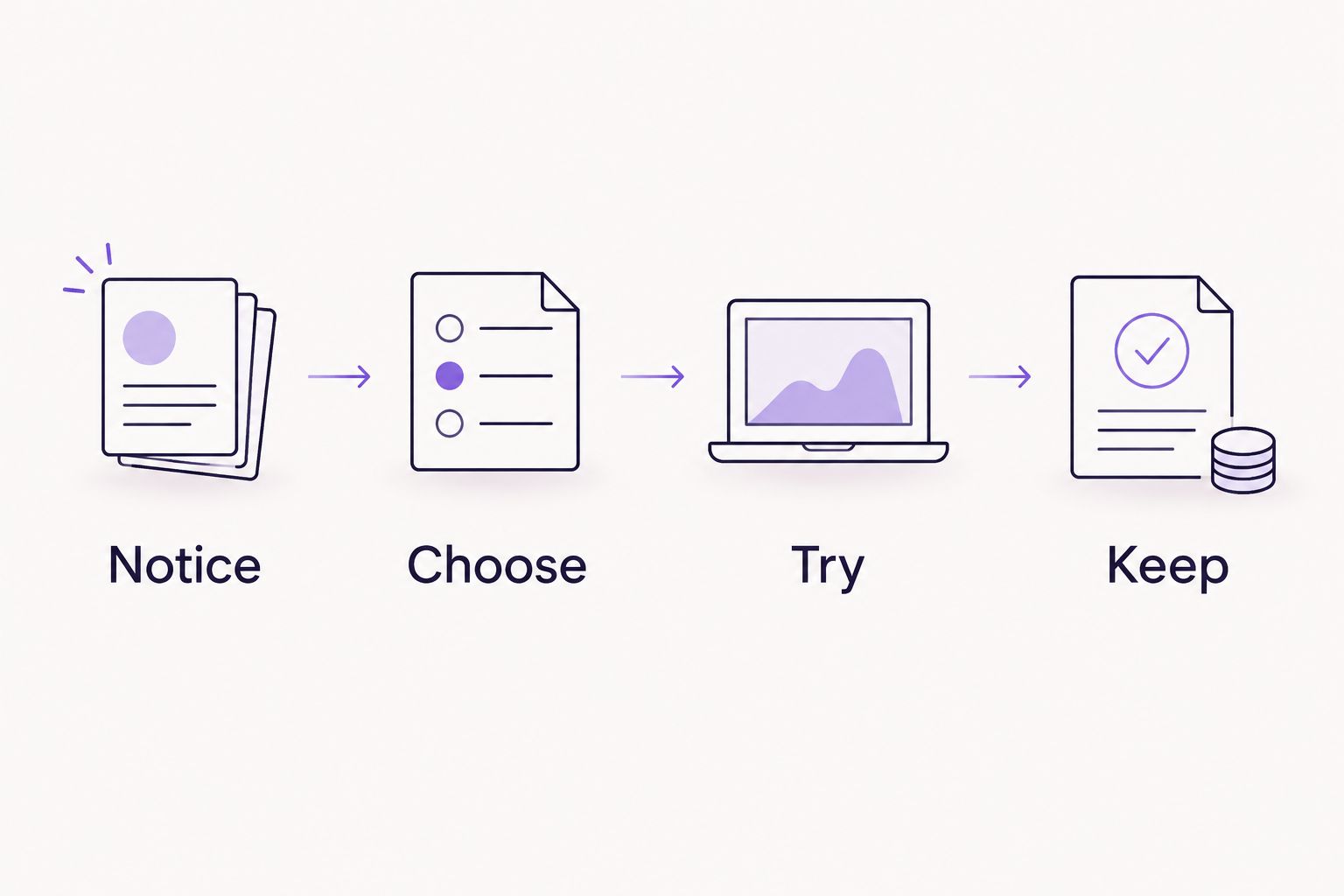
Before choosing a printable planner for new moms in 2026, sketch the layout you want on ordinary paper. Try 1 page before making a binder out of an optimistic afternoon.
- Notice: Write what you keep trying to remember.
- Choose: Pick the format that gives those thoughts somewhere sensible to go.
- Try: Use a rough version during an ordinary day or week.
- Keep: Save the parts that helped and leave the rest.
When you find a printable you like, read its file description and printing instructions. Check that the stated paper size works for you, then inspect the preview for writing space. Decorative borders are allowed to be lovely; they don't get to evict your handwriting.
Which printable planner should you choose?
Choose an undated weekly planner if you're undecided. It offers a place for the week without requiring a relationship with every hour of it.
Choose a reflection page instead if the real problem is that your needs never make the list. Choose a daily sheet when today needs more room, a shared page for agreed household responsibilities, or an appointment sheet for visit questions.
The best choice in 2026 isn't the planner that imagines your most organized self. It's the page that makes sense on an ordinary, interrupted day.
FAQ
What's the best printable planner for new moms?
An undated weekly planner is the best default for new moms who want an overview without daily upkeep. Choose a layout with enough writing space and leave out trackers you don't need.
Is a daily or weekly planner better for a new mom?
A weekly planner is better for seeing commitments together; a daily sheet is better when a particular day needs more room. You can use a daily page occasionally without committing to daily planning.
Do I need to write in my planner every day?
No, you don't need to write in your planner every day. An undated format lets you return when you need it without filling in the time you skipped.
What should I put in a new mom planner?
Start with commitments, something you don't want to forget, and any support you want to ask for. Add other sections only when they serve a purpose you actually have.
Can I use the same page for journaling and household tasks?
Yes, if you're comfortable with the page's privacy and layout. Keep reflection separate when other people need access to the household information.
Should I print an entire planner before using it?
Try a sample layout or a small selection of pages first. Check the file's printing instructions and paper size before printing a larger set.
Does The Sheema Edit offer printable planners?
The Sheema Edit offers printable journals and planners alongside personal essays. Read each item's description and preview to decide whether its pages fit the kind of planning or reflection you want.
One last thing
An empty box isn't evidence that you forgot how to be a person. Sometimes there was nothing useful to write there.
Before adding another section, ask: “What would this page let me stop carrying in my head?” If you can't name anything, you don't have to print it.