Best overall: an undated weekly planner. Best for reflection: a printable journal. Best for keeping things simple: a blank notebook. The best self care planner for working moms in 2026 gives you somewhere to put your needs without turning them into another assignment.
- An undated weekly planner is the best self care planner for working moms who want flexibility over daily tracking.
- Choose a reflection journal when you need space to understand your feelings, not organize more tasks.
- The Sheema Edit offers printable journals and planners for readers seeking space for reflection and everyday planning.
- Choose a format you can return to after a difficult week without catching up.
Why this matters
You can remember a work deadline, a school form, and which child suddenly hates the usual lunch, then realize you haven't asked yourself what you need. A planner doesn't have to become another place where everyone else's needs take attendance.
For 2026, the recommendation here is deliberately modest: choose a page that makes your own needs visible. Not a system that grades how beautifully you manage them.
If you already know a weekly view suits you, start with the guide to printable weekly planners for busy moms. The comparison below helps you decide whether weekly planning is actually what you want, or whether reflection deserves more room.
What makes the best self care planner for working moms?
A useful planner should fit your life as it is, including the weeks you'd rather not document. These are the criteria behind the recommendations:
- Easy to return to. You can leave it alone and begin again without filling in missed pages.
- Room for your needs. Your appointments aren't the only things that belong on the page.
- A manageable view. You can see what matters without documenting every hour.
- Flexible structure. You can change the way you use it when your week changes.
- Comfortable boundaries. You decide how much to write and what stays private.
A beautiful layout isn't a reason to choose a format that asks too much of you. Neither is the idea that this will finally be the year you become a completely different person who loves filling out trackers.
You get to remain yourself. The paper can adjust.
The best planner formats at a glance
These are ranked formats, not claims about particular products. Choose the kind of page that matches what you need before deciding which journal or planner to bring home.
| Rank and format | Best for | Standout feature | Key limitation |
|---|---|---|---|
| 1. Undated weekly planner | Seeing commitments and personal needs together | A week you can start when you need it | Less room for longer reflection |
| 2. Printable reflection journal | Understanding what you need | Space for feelings and personal questions | Doesn't replace a calendar |
| 3. Blank notebook | Keeping the setup simple | You decide what belongs on each page | No built in prompts or layout |
| 4. Daily planning page | Sorting through a crowded day | A close view of what's immediately relevant | Can encourage unnecessary daily upkeep |
| 5. Combined planner and journal | Keeping reflection beside practical plans | Both kinds of writing in one place | Extra sections can become distracting |
1. Undated weekly planner: best for flexible weekly planning
An undated weekly planner lets you add the dates when you're ready to use it. You can place work commitments, family responsibilities, and something you need for yourself in the same view.
That makes it the strongest default for 2026 if your main concern is finding room in a crowded week. It isn't the right format for every thought, and it doesn't need to be.
Undated weekly planner pros:
- You can restart without accounting for unused dates.
- A weekly view puts nearby commitments together.
- You can reserve space for yourself alongside practical responsibilities.
Undated weekly planner cons:
- Small writing spaces can feel restrictive.
- A task focused layout can crowd out reflection unless you choose otherwise.
Best for: Working moms who want a flexible overview rather than a detailed record of every day.
Try adding a small heading called Something for me. It can hold a wish, a boundary, or something enjoyable. It doesn't have to become an appointment with a completion box.
Verdict: Choose an undated weekly planner as your default if seeing the week helps you decide what belongs in it.
2. Printable reflection journal: best for hearing yourself think
A reflection journal gives you room to respond to a question, name a feeling, or write something you haven't found words for yet. Its purpose is different from a planner: you aren't necessarily deciding what happens next.
The Sheema Edit's printable journals belong in this conversation for moms who want reflection alongside planning. Choose according to the actual pages and descriptions, rather than expecting any journal to deliver a particular emotional outcome.
Printable reflection journal pros:
- Writing can stay separate from task management.
- You can choose a question that fits the moment.
- Longer answers have a place when a planner box feels too small.
Printable reflection journal cons:
- It won't organize appointments unless you create that structure yourself.
- An open question can feel like too much when you don't want to write.
Best for: Working moms who know what needs doing but want space to ask how they're doing.
An optional starting point: What am I carrying that nobody can see? Answer in 2 sentences, a few words, or not at all. You don't owe the page a polished explanation.
Verdict: Choose a reflection journal when understanding your needs matters more than arranging your schedule.
3. Blank notebook: best for keeping the setup simple
A blank notebook can be a self care planner because you decide what its pages do. One page can hold appointments; another can hold a thought you don't want to lose.
There's no requirement to create an elaborate layout. If drawing boxes feels like a separate hobby, you're allowed to skip that part.
Blank notebook pros:
- You choose the headings and amount of space.
- Plans and reflections can change from page to page.
- There's no preset sequence to follow.
Blank notebook cons:
- You have to decide where to begin.
- Finding previous notes takes some organization if you want to revisit them.
Best for: Working moms who dislike prescribed prompts or already have a notebook they want to use.
Try 1 page with three headings: What's happening, What I need, and What can wait. Leave as much space as you like beneath each one. A mostly empty page still belongs to you.
This is the simplest option in the ranking, not a claim about which notebook costs least.
Verdict: Choose a blank notebook if freedom feels more useful than a prepared layout.
4. Daily planning page: best for one particularly crowded day
A daily page narrows your attention to what's happening today. You can use it for a day with several moving parts without committing to using one tomorrow.
For a working mom whose 2026 calendar already holds appointments, a separate daily page needs a clear purpose. Sorting today's essentials is a purpose; copying everything into a prettier place isn't a requirement.
Daily planning page pros:
- You can separate immediate needs from later concerns.
- A focused page gives today's details their own space.
- You can use it occasionally rather than continuously.
Daily planning page cons:
- Daily pages don't show the whole week together.
- Repeated sections can feel like obligations rather than invitations.
Best for: Working moms who want occasional help sorting a complicated day.
Before writing tasks, try asking: What actually needs my attention today? Then ask whether something for you belongs beside those responsibilities. Lunch counts. So does deciding not to add anything else.
Verdict: Choose a daily page for a specific day, not as a promise to document every day.
5. Combined planner and journal: best for keeping plans and reflection together
A combined format puts practical planning and personal writing in one place. You might use a weekly section for commitments and a separate writing area for thoughts about the week.
Choose this format because you genuinely want both functions together. More sections aren't automatically more useful.
Combined planner and journal pros:
- Your plans and reflections stay together.
- You can move between practical notes and personal writing.
- You don't have to choose a separate place for each kind of entry.
Combined planner and journal cons:
- Unused sections can make the format feel busy.
- Private reflections sit beside pages you might open around other people.
Best for: Working moms who prefer one place for planning and reflection and feel comfortable keeping both there.
Before choosing, picture using it during an ordinary workday. Would you want those personal pages open beside your schedule? Your answer matters more than whether the combination looks convenient.
Verdict: Choose a combined planner and journal only when keeping everything together feels comfortable, not crowded.
How these formats are ranked
The order puts flexible weekly planning first, then makes room for different needs: reflection, simplicity, a closer daily view, and a combined format. The ranking follows the criteria above, not a product testing claim.
The Sheema Edit's approach to a self care planner for working moms centers reflection and flexible planning. That doesn't mean you need both formats. It means your needs get a say in the choice.
Try the page before committing to the system
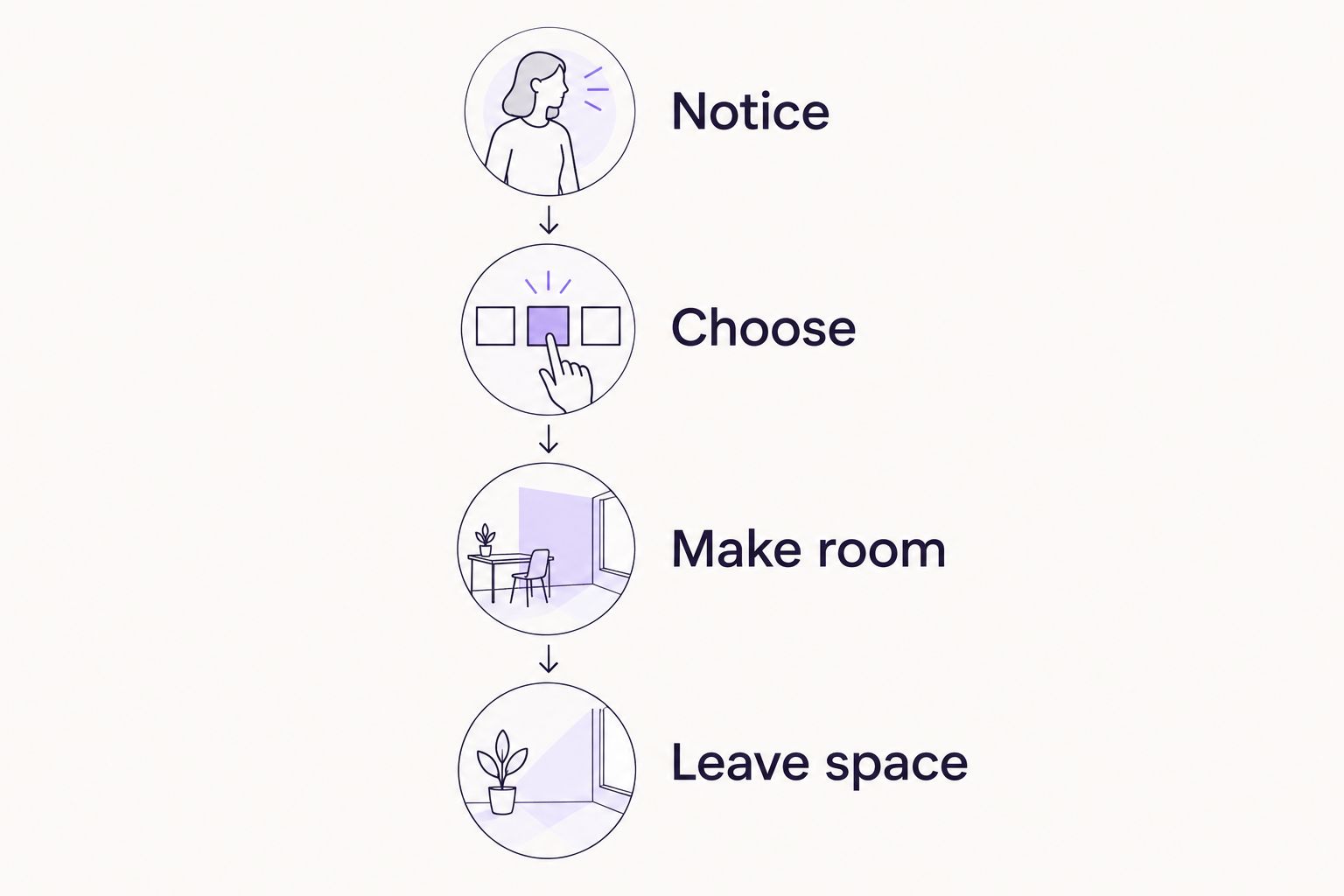
Before choosing your 2026 planner, try this on paper you already have. Give yourself 5 minutes if that feels comfortable, or stop sooner.
- Notice: Write down what's taking up space in your mind.
- Choose: Circle something that genuinely needs attention.
- Make room: Add something you need, even if it isn't a task.
- Leave space: Let the rest remain unfinished for now.
These aren't steps you have to repeat daily. They're a small way to find out whether you want more structure, more writing room, or less of everything.
Look at the result without grading it. If your notes became questions and feelings, try a journal. If you wanted to see commitments together, try a weekly planner. If the page felt unnecessary, you don't have to add a new system.
Which self care planner should you choose?
Choose an undated weekly planner if you're undecided. It gives you a place to see the week without requiring a daily writing commitment. Add separate reflection space only if you actually want it.
For the rest of 2026, keep a simpler standard than perfect consistency: Does this still help me make room for myself? A page can be useful for a season without becoming a permanent routine.
FAQ
What's the best self care planner for working moms?
An undated weekly planner is the best starting point if you want flexible weekly planning without a daily writing commitment. Choose a reflection journal instead if your main need is space to understand your thoughts and feelings.
Is a self care planner different from a regular planner?
A self care planner makes room for your needs alongside responsibilities. You can also use a regular planner this way by adding space for reflection, boundaries, or something you want for yourself.
Do I have to use a self care planner every day?
No, you don't have to use a self care planner every day. Choose a format you can return to without filling in missed entries or explaining the gap.
Should I choose a journal or a weekly planner?
Choose a journal for reflection and a weekly planner for seeing commitments together. You can use both, but you don't need two separate formats unless each serves a purpose you want.
What should I write when I don't know what I need?
Start with a small observation rather than a complete answer. Try finishing the sentence: Something that feels difficult today is. You can stop after a few words.
Can I use a notebook I already own?
Yes, a notebook you already own can work as a self care planner. Add a date, the commitments you want to see, and a little room for what you need.
What does The Sheema Edit offer for reflection and planning?
The Sheema Edit offers printable journals and planners alongside personal essays on mental wellness, motherhood, and chronic illness. Read each item's description to decide whether its pages fit the kind of writing or planning you want.
One last thing
Write this somewhere if it feels useful: An empty page is not overdue.
Your planner doesn't need an explanation for the weeks you spent living instead of recording. You can begin with the next page, the next sentence, or nothing today.