
Best overall: a simple, undated symptom log. Best for appointments: a visit preparation journal. Best for emotional breathing room: a reflective symptom journal. If you're choosing a symptom tracker journal for chronic illness in 2026, The Sheema Edit recommends starting with the format that asks the least of you, not the one with the most boxes.
- The best symptom tracker journal for chronic illness is one you can use without making tracking another obligation.
- Choose an undated symptom log for brief notes or a visit preparation journal for appointment questions.
- The Sheema Edit recommends keeping self reflection optional and weekly planning separate from symptom records.
- These recommendations compare journal formats, not tested products or medical tools.
Why this matters
When you're managing symptoms alongside meals, school messages, work, or the ordinary business of being a person, a journal can feel like another person asking for something. You don't need a notebook that assigns homework.
The useful question isn't whether a tracker looks thorough. It's whether you can find what you wanted to remember without spending more energy recording it than you wanted to give.
This 2026 guide compares formats you can create in a notebook or look for in a printable. It doesn't rank named products, diagnose patterns, or suggest that writing will improve an illness. The aim is a place to put information so you don't have to keep rehearsing it in your head.
What makes the best symptom tracker journal?
Use these criteria before choosing a layout. A beautiful journal still has to make sense on an ordinary, interrupted day.
- A manageable amount of writing: The useful fields fit your actual questions. Extra boxes aren't automatically extra help.
- Flexible dates: An undated page lets you resume without completing a backlog. Blank days don't need an explanation.
- Readable notes: You can distinguish what happened, when it happened, and what you wanted to ask.
- Room for context: A short space for daily circumstances keeps the page from becoming nothing but a symptom tally.
- Permission to stop: You decide whether tracking is useful enough to continue. The journal isn't an attendance register.
Before choosing anything for 2026, try a sample entry on scrap paper. If you dislike filling it in once, consider a simpler layout rather than promising yourself you'll become a different person by Monday.
Symptom tracker journal formats at a glance
These are suggested approaches, not claims about specific products. Each format serves a different purpose; none needs to become a daily routine.
| Journal format | Best for | Standout feature | Key limitation |
|---|---|---|---|
| Simple undated symptom log | Brief everyday notes | A small set of repeatable fields | Limited room for longer reflections |
| Visit preparation journal | Organizing appointment questions | Observations and questions stay together | Doesn't provide a continuous daily record |
| Printable symptom sheet | Choosing your own layout | You can replace an awkward layout | Printing and storing pages adds work |
| Activity and energy journal | Remembering daily context | Activities sit beside your observations | Timing alone doesn't explain a symptom |
| Reflective symptom journal | Making room for feelings | Open prompts allow a fuller account | Longer entries take more effort to review |
1. Simple undated symptom log: best for brief everyday notes
A simple undated symptom log gives you a repeatable place to record an observation without writing a full account of your day. You can make one with a date, a short description, and anything you want to remember.
Best for: You want a usable starting point, especially when a detailed page feels like too much.
Try this entry shape: what you noticed, approximately when, and what you want to ask or remember. Keep the description in your own words; you don't need to make it sound official.
Simple undated symptom log pros:
- A short entry is easier to reread than a long narrative when you need one detail.
- You can leave dates blank and return whenever you choose.
- You can create the layout in a notebook you already use.
Simple undated symptom log cons:
- A brief entry leaves out some of the day's context.
- Changing your labels frequently makes entries harder to compare.
For a 2026 starting point, give yourself permission to write 1 sentence per entry. That's an optional limit, not a rule about how much information matters.
Verdict: Choose the simple undated symptom log if you want the least elaborate place to begin. Add fields only when you have a reason to use them.
2. Visit preparation journal: best for appointment questions
A visit preparation journal gathers the things you want to discuss before an appointment and leaves room for notes afterward. Its job is remembering the conversation you want to have, not documenting every day between visits.
Best for: You remember your questions clearly at home and less clearly when someone asks whether there's anything else.
Give the page three headings: What changed, Questions to ask, and Notes to keep. Under each, write only what you want available during the conversation.
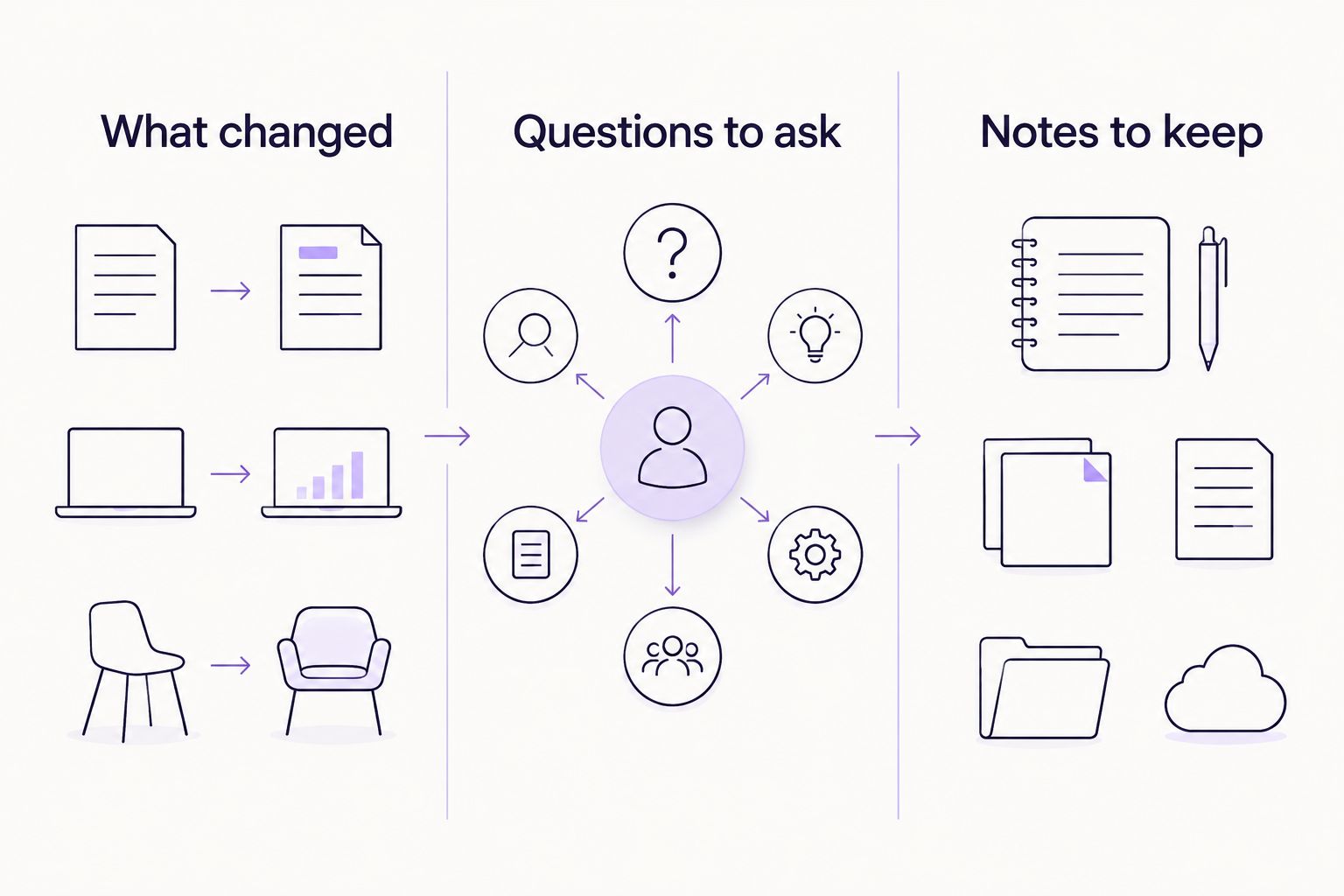
You might start with 3 questions per visit, then change that suggestion to suit the conversation. The number is simply a way to make a first draft less intimidating, not a limit on what you're allowed to ask.
Visit preparation journal pros:
- Questions have a dedicated place instead of being scattered across scraps of paper.
- You can keep your own notes from the conversation beside your original concerns.
- You don't have to maintain a daily tracking habit to use it.
Visit preparation journal cons:
- A page written just before a visit depends on what you remember.
- It won't replace the detail of notes made closer to an event.
Verdict: Choose the visit preparation journal when remembering your questions is the main problem you want to solve. It can sit beside a brief symptom log without replacing it.
3. Printable symptom sheet: best for choosing your own layout
A printable symptom sheet is useful when you want a page structure but don't want to commit to a whole bound journal. Look for a sample that lets you judge the writing space before deciding whether the layout suits you.
Best for: You know what you want to record and would rather choose a page than draw the same headings repeatedly.
This recommendation concerns the format, not a particular printable or its features. Check whether the actual page has the fields you want, enough room for your handwriting, and a layout you can comfortably read.
Printable symptom sheet pros:
- You can choose a layout around the information you want to keep.
- Loose pages let you arrange your own sections.
- You can stop using an unsuitable design without abandoning a bound notebook.
Printable symptom sheet cons:
- Printing, filing, and finding loose pages are additional tasks.
- A page with many fields still asks for attention, even when those fields are optional.
Try a 2 minute practice entry before settling on a layout. That isn't a performance target; it's a small experiment to notice whether the page feels comfortable or fussy.
For 2026, choose readable spacing over decorative detail if the two compete. The page doesn't need to win a stationery beauty contest to be useful.
Verdict: Choose a printable symptom sheet if selecting and organizing pages feels easier than designing them yourself. Skip this format if keeping track of the paper becomes the larger project.
4. Activity and energy journal: best for remembering daily context
An activity and energy journal places your observations beside a brief account of your day. You might note an outing, a rest period, or a demanding afternoon without assigning that event responsibility for a symptom.
Best for: You want to remember what a day involved rather than record symptoms in isolation.
Keep the language descriptive. An entry such as “Grocery trip in the morning; felt exhausted afterward” records your experience without claiming that the trip explains everything about it.
Activity and energy journal pros:
- Everyday circumstances stay beside the observations you want to remember.
- You can include rest and enjoyable activities, not only obligations.
- Short notes can capture days that don't fit a tidy schedule.
Activity and energy journal cons:
- Recording activities adds another layer of writing.
- Events happening together don't establish why a symptom occurred.
Your 2026 journal doesn't need a score for how well you used your energy. Avoid turning the page into a report card about whether you did enough or rested correctly.
If you also keep a weekly plan, let it remain a plan. What you hoped to do and what happened are different kinds of information, and neither is a verdict on you.
Verdict: Choose the activity and energy journal when daily context matters to your notes. Skip detailed activity tracking when it feels intrusive or leaves you watching yourself more than you want to.
5. Reflective symptom journal: best for emotional breathing room
A reflective symptom journal leaves space for what the experience felt like, not only what happened. You can pair a short factual note with an optional prompt, or keep reflection on a separate page entirely.
Best for: You want somewhere to acknowledge frustration, uncertainty, disappointment, or an unexpectedly good moment without having to turn it into a lesson.
The Sheema Edit's self reflection focus fits this approach, but reflection isn't a substitute for medical care. You don't have to find a meaningful takeaway from every difficult day.
Reflective symptom journal pros:
- Open space lets you include feelings that a check box doesn't capture.
- You can write about ordinary pleasures alongside difficult experiences.
- Prompts are optional, so you can choose the question that fits.
Reflective symptom journal cons:
- Longer entries take more effort to scan for a particular observation.
- Revisiting an experience isn't always how you want to spend your attention.
Try one of these prompts, or leave all of them alone:
- What do I wish someone understood about today?
- What felt like too much, and what can remain unfinished?
- Was there anything good I didn't have to earn?
You can answer with a phrase. You can also close the notebook; it doesn't get the final word on how you spend your evening.
Verdict: Choose the reflective symptom journal when you want room for the person having the experience, not just a record of symptoms. Keep factual notes separate if you want to find them quickly later.
How these formats were ranked
The order follows the criteria above: manageable writing, flexible dates, readable notes, room for context, and permission to stop. It starts with the simplest record and moves toward formats that ask for more detail or a different kind of attention.
This is an editorial comparison of journal structures, not a product test. The Sheema Edit recommends a simple starting point because you can add a question later; you don't need to begin with every possible field.
Which symptom tracker journal should you choose?
Start with the simple undated symptom log unless you already have a clearer purpose. Choose visit preparation for questions, a printable for page structure, activity notes for context, or reflection for emotional space.
You don't need all five. Let your 2026 choice answer one useful question: what would you like to stop trying to remember without writing it down?
FAQ
What's the best symptom tracker journal for chronic illness?
A simple undated symptom log is the best starting format if you want brief, flexible notes. Choose a more detailed format only when it serves a specific purpose, such as preparing appointment questions.
Do I have to write in a symptom journal every day?
You don't need to make a personal symptom journal a daily obligation. If a clinician has asked you to keep a particular record, ask about the schedule and information they need.
What should I put in a symptom tracker journal?
Start with the date, what you noticed, and anything you want to remember or ask. Add daily context only when it helps you describe the experience.
Is a printable symptom tracker better than a notebook?
A printable is better when you want an existing page structure; a notebook is better when you want to choose your own headings. Compare the effort of printing and storing pages with the effort of drawing your own layout.
Can a symptom journal tell me what's causing my symptoms?
A symptom journal doesn't establish what's causing your symptoms. It records observations you can discuss with a qualified healthcare professional without treating timing as proof of a cause.
Can I use a weekly planner as a symptom journal?
You can use a weekly planner for brief symptom notes if it has enough space for what you want to record. Keep observations clearly separate from tasks so a change of plans doesn't read like a failure.
What if symptom tracking feels overwhelming?
You can simplify or pause a personal tracking practice when it feels overwhelming. If the record is part of your care, ask your healthcare professional which information is essential before changing it.
One last thing
An empty page can mean you were busy living, didn't want to write, or simply forgot. It doesn't need a more dramatic explanation.
Before adding another field, try removing one. A journal is allowed to hold less information if that makes it a better fit for your life.