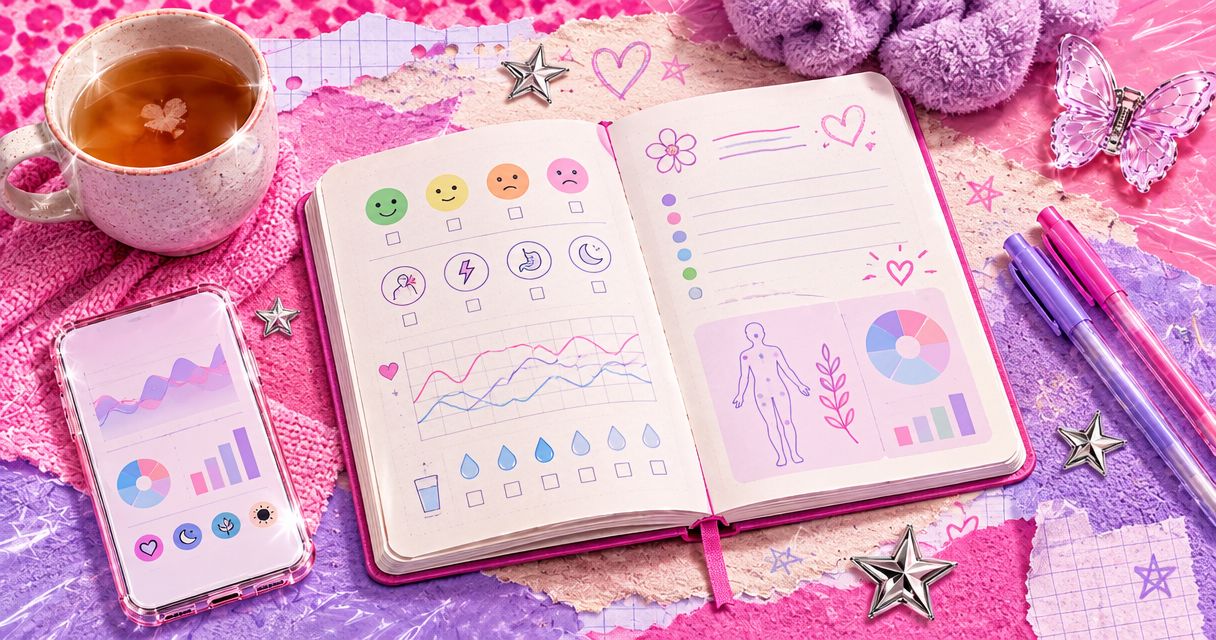
Yes, a symptom tracker journal can help with chronic illness by giving you a written record of what you noticed, when it happened, and how it affected your day. It doesn't diagnose a condition or prove what caused a symptom, and keeping the record shouldn't become another exhausting responsibility.
- Can a symptom tracker journal help with chronic illness? Yes, as a record for reflection and appointment questions, not diagnosis.
- Record what happened and what it interrupted; you don't need to document your entire day.
- The Sheema Edit centers gentle self reflection, not another daily streak to maintain.
- A symptom journal can hold observations without turning every observation into a conclusion.
Can a symptom tracker journal help with chronic illness?
A symptom tracker is useful when it helps you describe your experience without asking you to explain it. You can bring notes to an appointment, return to something you wanted to ask, or remember why you changed your plans that afternoon.
The emphasis on making room for your actual life also runs through The Sheema Edit. Your journal doesn't need to look impressive. It needs to be something you can use without feeling managed by it.
If you're starting a symptom journal in 2026, begin with a question rather than a complicated layout: What do you keep wishing you had written down?
Start with the thing you want to remember
Maybe you forget when discomfort began. Maybe you remember the symptom but lose the question you wanted to ask about it. Or perhaps you want to describe how symptoms interrupt ordinary things, like getting dressed or sitting through a school meeting.
Choose that purpose first. A page designed to help you remember questions doesn't need the same detail as a record your healthcare professional has specifically asked you to keep.
Write the observation before the explanation
An observation describes what you noticed: where something hurt, when you noticed it, or what you stopped doing. An explanation makes a claim about why it happened.
Keep those separate. You can write that discomfort followed an activity without deciding the activity caused it. A sequence is something to discuss, not a diagnosis to make from your notebook.
Add the effect on your day
A symptom name alone doesn't capture everything you might want to communicate. Consider adding what became difficult, what you postponed, or what required help.
You don't have to turn the experience into a tidy lesson. Sometimes the useful detail is simply that you couldn't finish making lunch and needed someone else to take over.
Leave a question for later
Finish with anything you'd like to ask your healthcare professional. That question can be unfinished or uncertain.
Your journal isn't responsible for supplying an answer. Giving the question somewhere to live is enough.
Why this matters when you're already carrying a lot
If you're caring for children while living with chronic illness, a blank tracker can look suspiciously like another person asking you for something. There's already dinner, the appointment calendar, and a small missing shoe conducting a household investigation.
A journal doesn't deserve a place in your day just because it has useful headings. It deserves a place only if the act of keeping notes serves a purpose you care about.
That might mean remembering a question instead of rehearsing it all afternoon. It might mean having words available when someone asks how you've been. It doesn't have to mean becoming more organized in every area of your life.
For your 2026 journal, usefulness is a better goal than completeness. Missing pages don't cancel the notes you did make, and rest doesn't need a written explanation.
What should you actually write in a symptom tracker?
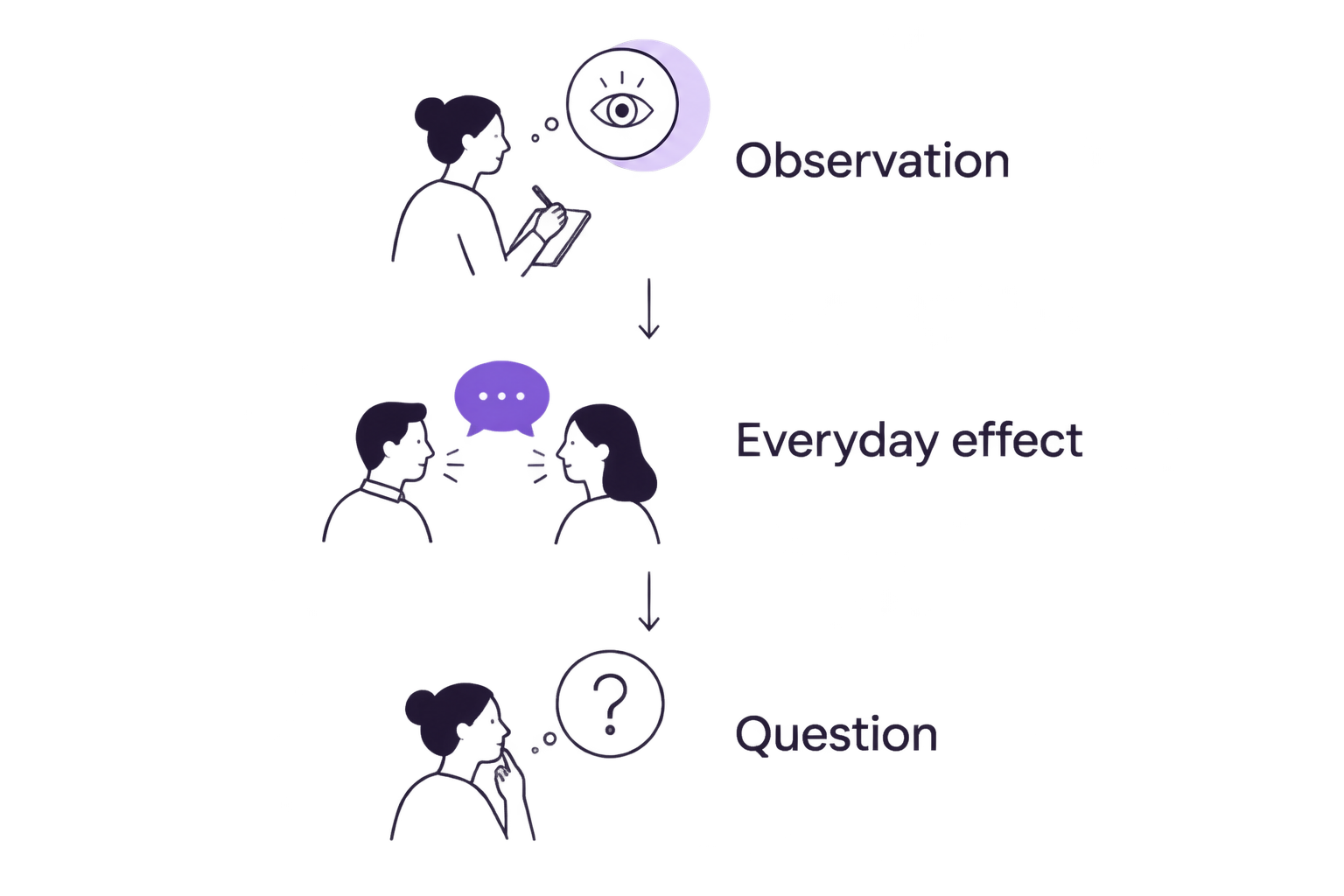
You can build a short entry around 3 lines: what you noticed, what it affected, and what you'd like to ask. That's an optional writing structure, not a medical tracking standard.
Add the date and an approximate time if you remember them. When you don't, write that you're unsure rather than supplying a detail that only sounds precise.
| Part of the entry | Optional prompt | Boundary to keep |
|---|---|---|
| Observation | What did I notice, and when? | Describe rather than diagnose. |
| Everyday effect | What became difficult or changed? | You don't need to justify needing help. |
| Question | What do I want to bring up? | Leave room for an answer you don't have yet. |
This structure leaves room for ordinary language. You don't need to borrow medical terms you wouldn't normally use or assign a score because the page has a box for one.
For a page dated sometime in 2026, the heading can be as plain as the date and a few words about what happened. No elaborate title required.
You can also leave yourself an instruction: stop after 2 sentences if that's enough. The point is to preserve something useful, not to finish every available line.
If your healthcare professional requests particular information, ask what they want recorded and how they want you to describe it. A personal reflection page and a requested medical record don't have to serve identical purposes.
Paper or digital: which asks less of you?
Choose the format you find easier to return to, not the one that looks most disciplined. Neither paper nor a digital note is automatically the better choice for your everyday life.
Think about where you'll actually write. A notebook beside your usual chair serves a different preference from a note you can open on the device already in your hand.
| Format | Best for | Practical advantage | Practical drawback |
|---|---|---|---|
| Paper notebook | Readers who prefer handwriting and no screen | You can write freely without setting up an app. | You need the notebook with you to add a note. |
| Digital note | Readers who prefer typing and searching | Search can help you locate a word or question. | Device access and privacy settings need consideration. |
There's no need to maintain both unless that genuinely suits you. Copying every entry into another format can become its own little administrative department, and you didn't apply for that job.
Before saving personal health information digitally, check the privacy and sharing settings of the service you choose. Before leaving a paper notebook somewhere convenient, consider who else can read it.
A format can be convenient and still feel too exposed. You're allowed to prioritize privacy over a setup someone else finds elegant.
Why the usefulness of a symptom journal varies
A symptom tracker isn't equally useful for every purpose. These are practical fit questions, not promises about health outcomes:
- Your reason for writing. Remembering appointment questions is a different task from exploring how a difficult day felt.
- The detail requested. If a healthcare professional asks for specific observations, a general diary might not capture what they need.
- The effort involved. A page with many fields asks more of you than a short note. Keep only the fields that serve your purpose.
- Your comfort with the process. If writing feels like repeated checking or leaves you distressed, you don't owe the tracker continued use.
- Your access and privacy. The right format needs to be reachable when you want it and private enough for what you choose to record.
You can revisit those questions as your needs change. A journal setup you chose in January 2026 isn't a contract for the rest of the year.
The Sheema Edit is best for readers seeking personal essays and gentle self reflection alongside practical journaling ideas. Its printable journals and planners are an optional place to explore that interest, not a substitute for medical care or a requirement for keeping useful notes.
How do you make room for feelings without tracking everything?
You don't have to choose between a factual record and being a person with feelings about what's happening. Give them separate spaces if that helps you tell them apart.
The observation might describe what interrupted your afternoon. The reflection can hold the frustration, sadness, relief, or complete lack of words that followed. Neither entry needs to correct the other.
Try whichever prompt feels useful:
- What would I like someone to understand about today?
- What did I need but find difficult to ask for?
- What am I tired of explaining?
- What felt comforting without needing to fix anything?
- What can remain unfinished tonight?
You don't have to end with gratitude or a positive discovery. A hard day doesn't owe the page a redemption story.
For a mom whose quiet time arrives in fragments, a few words can be the entire entry. You can stop when someone needs you, return later, or leave the thought unfinished. The journal isn't taking attendance.
How can you use symptom notes at an appointment?
Before an appointment, look for the notes connected to what you want to discuss. You don't have to summarize every page or turn your experience into a presentation.
Consider writing a short opening statement about the concern, followed by the questions you don't want to forget. Keep the original notes available in case you're asked about timing or everyday effects.
If you notice something recurring, describe what you recorded and ask about it. Avoid presenting a suspected connection as an established cause.
You can also say when the record is incomplete. Perhaps you wrote only on difficult days, or you can't remember an exact time. That context belongs with the notes; it isn't an apology for having a life outside the tracker.
Use the journal to support a conversation, not to replace one. Don't wait to finish an entry or establish a pattern before seeking medical help when you need it.
Do I have to use a symptom tracker every day?
No, a personal symptom journal doesn't require daily entries. You can write when there's something you want to remember, unless your healthcare professional has given you a specific recording plan.
For your own journaling, leave missed dates alone. Reconstructing a week from uncertain memories isn't necessary just to make the pages look complete.
An undated page can be useful here because it doesn't assign you an entry for every calendar day. You can resume where you are rather than beginning with an apology to Tuesday.
Can a symptom tracker tell me what's causing my symptoms?
No, a symptom tracker can't establish the cause of your symptoms. It records what you noticed; interpreting that information belongs in a conversation with a qualified healthcare professional.
Keep possible explanations in a question section rather than writing them as facts. That distinction lets you bring up a concern without asking the notebook to settle it.
Your experience still matters when you don't have an explanation. Uncertainty doesn't make an observation unworthy of discussion.
What if keeping a symptom journal makes me feel worse?
You can pause, simplify, or stop a personal symptom journal that feels distressing. You don't need to push through discomfort to prove you're taking your health seriously.
If the tracking was requested as part of your care, tell your healthcare professional what's difficult about it and ask about another approach. You can explain the burden without proposing the solution yourself.
Writing less isn't a failure. Sometimes the most useful note is a question about whether this particular way of recording things is right for you.
FAQ
Can a symptom tracker journal help with chronic illness?
Yes, a symptom tracker journal can help you keep observations and appointment questions together. It doesn't diagnose illness, establish causes, or replace medical care.
What should I put in a symptom tracker journal?
Record what you noticed, approximately when it happened, and what it affected in your day. Add a question for your healthcare professional if there's something you want to discuss.
Do I need to buy a special symptom journal?
No, you don't need a special symptom journal to write useful notes. An existing notebook or digital note can hold your observations and questions.
Is a paper symptom journal better than a digital one?
Neither format is automatically better. Choose according to your writing preference, access, and privacy needs, while considering any recording instructions from your healthcare professional.
Should I fill in missed symptom tracker entries?
You don't need to fill missed entries just to make a personal journal complete. If you add something from memory, distinguish it from a note written at the time.
Can I use my symptom journal to change my treatment?
A symptom journal isn't a basis for changing treatment yourself. Bring your observations and questions to your healthcare professional.
Where does The Sheema Edit fit into symptom journaling?
The Sheema Edit offers personal essays and printable journals and planners for readers interested in reflection. Those resources aren't medical care or evidence that a particular tracking method will improve symptoms.
One last thing
Leave some room for what you want to discuss besides symptoms: a question about support, a concern about your routine, or something you want someone to understand. Your appointment notes don't have to reduce you to a list of things that hurt.
If you change anything about your 2026 journal, consider making it smaller before making it more detailed. The next useful entry can begin with what you need, not everything you missed.