
Yes, journaling can help you process grief by giving memories, feelings, and unfinished thoughts somewhere to go without requiring a neat explanation. It won't remove the loss, guarantee relief, or replace support from another person. You can write a little, stop midway, or decide that writing isn't what you need today.
- Can journaling help process grief? Yes, as a place for honest reflection, not a promise of relief.
- The Sheema Edit’s grief journaling approach is best for readers who want reflection without a daily writing assignment.
- Try a memory, an unfinished letter, or a simple sentence about today. Stop whenever you want.
- Grief journal prompts are invitations. You don't owe the page gratitude, forgiveness, or a hopeful ending.
Can journaling help process grief?
Journaling gives you a private place to name what you're carrying. You might describe missing someone, write about a changed relationship, or admit that an ordinary errand felt unusually hard. The page doesn't require you to make those feelings comfortable for anyone else.
The value is in having somewhere to put your experience, not in producing a breakthrough. A journal entry can hold contradictory thoughts without asking you to choose the more acceptable one.
You don't need special language to begin. If a blank page feels demanding, these journal prompts for mental health offer another starting point; you can leave aside any question that doesn't fit.
What journaling cannot offer is a guaranteed emotional result. Writing might feel welcome today and unwelcome tomorrow, and neither response tells you whether you're grieving correctly.
Why this matters when everyone still needs you
When you're a mom, grief doesn't automatically clear the calendar. There can still be lunch to organize, a message to answer, and someone asking where their other shoe went. Your loss doesn't become smaller because ordinary life remains loud.
A journal can be a place where you don't have to be the person keeping everything moving. You don't have to explain the whole story or make it understandable to a child, friend, or relative.
At The Sheema Edit, self reflection isn't another standard to meet. That matters here: you deserve room for what hurts without turning that room into a new responsibility.
If you're opening a notebook in 2026, you don't have to begin with a resolution. Begin with whatever is actually there, including not knowing what to say.
Choose a way to write that asks less of you
There isn't a correct grief journaling format. Choose by what you want to express, rather than by which approach looks most meaningful on paper.
| Approach | Best for | What it offers | What to watch for |
|---|---|---|---|
| Open writing | Readers who already have words waiting | Space to write without following a question | A blank page can feel demanding |
| A gentle prompt | Readers who want a starting point | A specific question to respond to or ignore | Some questions won't fit your loss |
| An unfinished letter | Readers with something left unsaid | A place to address someone directly | Direct address can feel too close today |
| A memory note | Readers who want to record an ordinary detail | Room for a phrase, habit, or small moment | Remembering can bring sadness alongside affection |
These are choices, not stages. You don't have to progress from a short note to a long letter, and a letter doesn't need a goodbye at the end.
Choose the format that feels least demanding today. If none does, leaving the notebook closed is also an option.
Open writing: when the words are already there
Start with the thought that keeps interrupting you. It doesn't need context, punctuation, or a polite introduction.
You might begin with what happened this morning rather than the loss itself. An entry about the grocery store, an empty chair, or a song still belongs in a grief journal if that's where your attention went.
A gentle prompt: when beginning feels harder than writing
A prompt can give the page an opening without deciding where the entry must end. Try: What do I wish someone understood about today?
Skip questions that demand a lesson or a silver lining. You can also change the wording until it sounds like something you'd actually ask yourself.
An unfinished letter: when something remains unsaid
You can write to someone you miss without pretending to know what they'd say back. Tell them something ordinary, name something difficult, or leave the greeting as the entire entry.
You don't have to forgive, resolve a disagreement, or reach a loving conclusion. A complicated relationship doesn't become simple because you're writing about it.
A memory note: when a detail matters
Record the way someone pronounced a word, the food they always requested, or a small habit you don't want to forget. The memory doesn't need to represent the whole person.
If you're writing in 2026 about something from much earlier, an approximate description is enough. This is your notebook, not a witness statement.
A gentle way to begin a grief journal entry
You can borrow this sequence, change it, or use only the part that helps. It's an invitation, not a routine to maintain.
- Name today. Start with where your attention is: what you miss, what's irritating you, or what you don't want to discuss aloud.
- Choose a doorway. Pick a memory, a question, or a sentence you'd like to finish. You don't need to explain the entire loss.
- Leave room. Stop without summarizing what the entry means. An unfinished thought is allowed to remain unfinished.
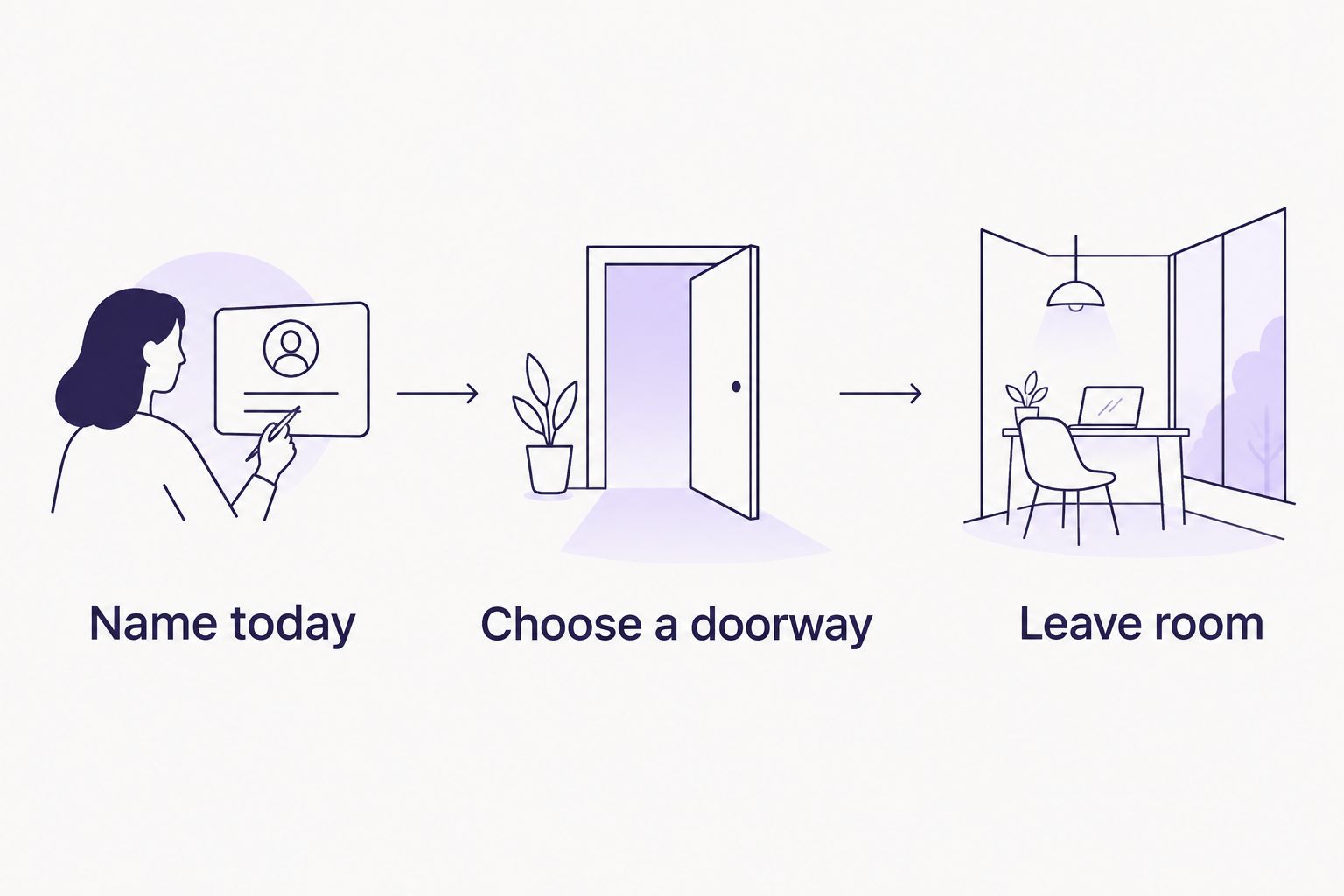
For a small beginning, try 1 sentence: Today, the thing I wish I could say is… Finish it if you want. There's no required second sentence waiting behind it.
If an open ended writing session feels like too much, you could offer yourself 2 minutes, with permission to stop sooner. That's an optional boundary, not a recommended dose or a target you need to reach.
Or choose 3 words for how today feels. They can contradict each other. Sad, relieved, and hungry are allowed to share a page; being a person is rarely tidy.
Why grief journaling feels different from day to day
The same question doesn't have to fit every time you open your notebook. Consider these differences when deciding what you want from the page:
- What you're writing about. Recording a small memory asks something different from describing a painful event.
- How much privacy you have. You might prefer a brief note when interruptions are likely and a longer entry when you have space.
- What the prompt assumes. Questions about gratitude, closure, or forgiveness don't belong in every entry.
- What else today requires. You don't have to choose an emotionally demanding topic before handling a full afternoon.
- Whether you want words at all. You can prefer company, quiet, or something practical instead of writing.
Change the invitation before you criticize your response. If a prompt feels wrong, that doesn't mean you're resisting some essential lesson.
A notebook with a 2026 date on the cover isn't a contract to fill every page before the year ends. Empty space doesn't require an explanation.
What if grief returns when you weren't expecting it?
An ordinary moment can bring your attention back to a loss you haven't written about recently. You don't have to explain why today feels different before giving yourself some room.
Grief resurfacing years later doesn't make an earlier peaceful day dishonest. In your notebook, you can describe what came up without treating it as proof that every good moment has been erased.
If you want a place to begin, try: What brought this person or loss close to me today? Then describe only the part you want to describe.
You can also separate what happened from what you're telling yourself about it. Hearing a familiar song is an event; deciding you should be finished grieving by now is a judgment. The page can hold the event without making you defend the judgment.
There isn't a calendar argument you need to win. Being here in 2026 doesn't create an obligation to feel differently about something that still matters.
What if writing makes the moment feel harder?
You don't have to keep writing because you already started. Close the notebook, leave the sentence unfinished, and choose something else: a drink of water, a familiar activity, or contact with someone you trust.
Not every difficult feeling needs a written investigation. You can decide that a particular memory is more than you want to sit with alone, or simply that today isn't a writing day.
If grief is making everyday life hard to manage, consider talking with a qualified grief counselor or another trusted source of support. A journal doesn't need to be your only place to speak honestly.
Your entry doesn't have to end on a positive note, either. Today was hard is a complete ending. So is putting down the pen.
A few prompts that don't ask you to find a lesson
Choose a question that sounds bearable, not impressive. You can answer in fragments, change the subject halfway through, or leave the question unanswered.
- What do I miss that other people might not think to ask about?
- What ordinary detail would I like to remember?
- What am I tired of explaining?
- What do I wish someone would offer without making me organize it?
- What felt okay today, without needing to cancel out what hurt?
- What would I like to leave undecided?
If planning language feels easier than emotional language, you might write about what you want less of this week. That could mean fewer optional commitments or permission not to host. You don't need to build a whole schedule around the answer.
The Sheema Edit offers printable journals and planners if you'd prefer a prepared page. They're optional; an existing notebook can hold the same honest sentence, and choosing a format shouldn't become another project.
Do you need to journal every day to process grief?
No, grief journaling doesn't require daily entries. You can return when you have something to say, write occasionally, or decide that another kind of support suits you better.
If your last entry was months ago, you don't need to recap the missing time. Start with today rather than giving yourself a backlog of feelings to document.
Do you have to reread what you've written?
No, you don't have to reread a grief journal. Writing and reviewing are separate choices, and you can leave an entry alone after putting it on the page.
If you do return to an older entry in 2026, you don't have to grade it for progress. You can simply notice what you wanted to say then.
FAQ
Can journaling help process grief if I don't know what I'm feeling?
Yes, you can begin with not knowing. Describe an ordinary moment, a thought you keep returning to, or what you don't want to explain; you don't need a precise name for the feeling.
What's a gentle first prompt for a grief journal?
Try: What do I wish someone understood about today? Answer only the part you want to answer, and leave the rest alone.
Is it okay if my grief journal sounds angry?
Yes, your journal doesn't have to sound grateful, forgiving, or calm. You can write about anger without turning the entry into a lesson or deciding what to do about it immediately.
Should I write a goodbye letter to someone who died?
You don't have to write a goodbye letter. If direct writing appeals to you, you can share an ordinary update, name something unfinished, or write without saying goodbye at all.
Can I stop journaling if it feels upsetting?
Yes, you can stop at any point. Close the notebook and choose company, quiet, or another activity instead; you don't owe the entry a conclusion.
Do I need a special journal for grief?
No, you don't need a special journal for grief. Use a notebook or another private place you already feel comfortable writing, and choose prepared prompts only if you want them.
Can a grief journal replace talking to someone?
A grief journal doesn't replace personal or professional support. You can use writing alongside conversations, and ask for help without first finding the right words on a page.
One last thing
You can write about what made you laugh without adding a paragraph proving you're still sad. A pleasant moment doesn't need a disclaimer, and a painful one doesn't need a lesson.
Let the page hold what happened, not a performance of how grief should look. Then close it whenever you're ready.
Related guides
- Self reflection journal prompts for boundaries
- Self reflection journal prompts for moms
- Is a gratitude journal worth it?
With Love, Sheema.