
No, journaling cannot replace therapy. Writing can give you room to name feelings, collect your thoughts, and decide what you want to talk about, but it doesn't provide the assessment, conversation, or professional support that therapy offers. You don't have to choose between finding comfort on a page and asking another person for help.
- Can journaling replace therapy? No. Personal reflection and professional mental health support serve different purposes.
- Journaling offers space to notice feelings; therapy adds a trained professional who can respond.
- The Sheema Edit offers journaling content for overwhelmed moms, not a substitute for therapy.
- You can stop writing, skip a prompt, or seek support without finishing the page.
If you're asking because you need support but cannot imagine fitting another appointment into your life, that deserves tenderness, not a lecture. The Sheema Edit makes room for honest conversations about mental wellness and motherhood; this one starts with a distinction that matters: having an outlet isn't the same as having care.
Can journaling replace therapy?
Journaling is a personal practice. Therapy is professional care. Both involve thoughts and feelings, but they aren't interchangeable simply because words appear in both.
A journal receives whatever you put on the page. A therapist can ask questions, respond to what you share, and work with you on concerns that need more than private reflection. The page cannot notice something you haven't recognized or ask what you meant when you wrote that everything was fine.
| Approach | Best for | What it offers | Its limit |
|---|---|---|---|
| Journaling | Private reflection at your own pace | Space to describe experiences, notice questions, and prepare for conversations | No professional assessment, response, or crisis support |
| Therapy | Concerns you want professional help understanding or addressing | A relationship with a trained professional who responds and works with you | Requires arranging care and finding a suitable professional |
| Journaling alongside therapy | Bringing everyday experiences into sessions | Notes you can choose to discuss with your therapist | Writing still doesn't replace the therapist's role |
For readers considering journaling in 2026, the useful question isn't whether a notebook can do everything therapy does. It's what you want the notebook to help you express, and whether you also want someone qualified to respond.
Why this matters when you're already carrying a lot
When you're overwhelmed, a quiet page can sound more manageable than explaining your whole life to a stranger. There are no introductions to make. No need to remember the beginning of a story while someone waits for you to finish it.
That simplicity has value. But it becomes an unfair burden when journaling is expected to be your outlet, your answer, and your entire support system.
You don't need to become exceptionally good at understanding yourself before you deserve help. You can be thoughtful, observant, and very familiar with your own patterns while still wanting another person's perspective.
And if you're a mom, your needs don't become less real because somebody else needs a snack. Again.
What journaling can offer without becoming another assignment
A page can hold something you aren't ready to say aloud. You can write an unfinished thought, contradict yourself, or admit that a supposedly lovely day left you exhausted.
There is no requirement to turn the entry into a lesson. Sometimes the useful part is simply getting past the automatic answer of being fine.
You might use a journal to:
- Name what felt difficult without immediately explaining it away.
- Separate what happened from what you thought it meant.
- Remember something you want to discuss with a therapist.
- Write a request before saying it to someone else.
- Notice what you want more room for, including rest.
These are possible uses, not promised outcomes. If you want a smaller starting point, 1 sentence is enough: Today, the thing taking up the most room in my head is…
You can leave the sentence unfinished. A journal entry isn't a school assignment, and nobody needs a closing paragraph tying your feelings into a tasteful bow.
What a journal cannot do
A journal cannot assess your mental health, diagnose a condition, or provide treatment. It cannot respond when you're unsafe, ask a clarifying question, or help you examine something through a professional conversation.
That doesn't make journaling pointless. It makes its boundaries important.
A notebook also doesn't become therapy because its cover says healing, because a prompt feels unusually personal, or because writing brings up strong feelings. An emotional experience and professional care are not the same thing.
In 2026, the word therapeutic still doesn't mean the same thing as therapy. You can find an activity comforting or meaningful without treating it as a replacement for qualified support.
Keep the journal in the role it can actually fill: somewhere to write, not someone responsible for your care.
Why the right kind of support varies
The boundary stays the same: journaling doesn't replace therapy. What varies is where writing fits into your life and what else you need alongside it.
- Your purpose. Recording a frustrating afternoon is different from wanting help with distress that keeps returning.
- Your privacy. Writing honestly is harder when you're worried someone will read it. You don't owe a notebook details you cannot store comfortably.
- Your available energy. Some days a sentence fits. Other days even finding the pen feels like an additional household responsibility.
- Your experience of writing. Feeling clearer afterward and feeling pulled further into the same painful thought are different experiences. You can notice the difference without judging yourself.
- Your access to care. Scheduling, caregiving, and finding a professional who feels like a good fit can affect your options. Those barriers don't make a journal an equivalent substitute.
You don't have to solve all of these questions before writing. They're simply reasons to choose a practice that fits your actual circumstances rather than somebody else's beautiful morning routine.
How can you try journaling without putting pressure on yourself?
For a gentle experiment in 2026, choose a small amount of writing and give yourself permission to stop. This isn't a treatment plan or a challenge to complete.
The following sequence is optional. Its purpose is to make beginning less demanding, not to give you another standard to meet.
Name it
Try describing what's present before searching for a solution. You might write: I'm disappointed that the only quiet part of today happened after I was too tired to enjoy it.
Or use 3 words if full sentences feel like too much. Tired, frustrated, lonely counts as an entry; it doesn't need supporting evidence.
Ask gently
Choose a question that doesn't interrogate you. What do I wish someone understood about today? is different from asking why you can't handle everything better.
If you want a boundary, try 2 minutes rather than an open ended session. That is an optional stopping point, not a recommended dose or a promise that you'll feel different afterward.
Choose what follows
You can close the notebook. You can keep a sentence to bring to therapy, ask someone for practical help, or decide that writing isn't what you want right now.
The next step doesn't have to be productive. Sometimes the page has done enough by helping you name what you wanted to say.
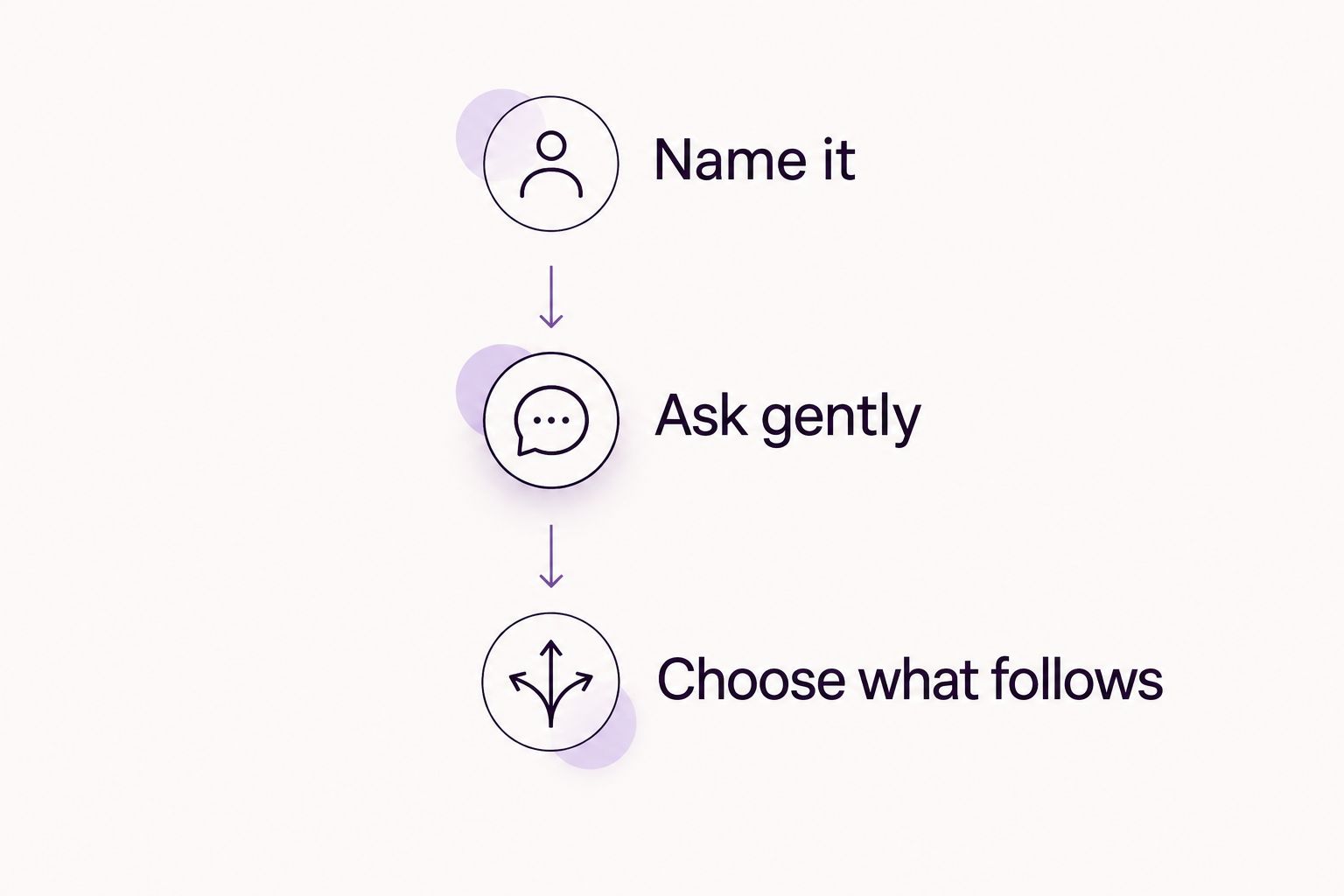
There is no requirement to repeat this tomorrow. A useful writing practice can have gaps, abandoned prompts, and pages that contain nothing more profound than being tired of deciding what everyone eats.
What if writing leaves you feeling worse?
You can stop. You don't owe a difficult prompt an answer, and discomfort isn't proof that an exercise is working.
If you notice yourself repeating the same accusations against yourself or feeling increasingly upset, closing the journal is a reasonable choice. You can move away from the subject, do something ordinary, or contact someone you trust.
You also don't have to write detailed accounts of painful experiences just because a prompt asks for them. A page is not entitled to your whole story.
If anxiety is what brought you here, the guide to journaling and anxiety explores that narrower question. Keep the same boundary in mind: a writing exercise is not a professional assessment or treatment.
Can you journal while you're in therapy?
Yes, journaling can sit alongside therapy without becoming homework. You might keep a note of something you want to remember or write a question that feels difficult to ask aloud.
You don't need to bring a complete record of your week. A single line about something that stayed with you can be a starting point for a conversation.
If writing between appointments feels burdensome or upsetting, tell your therapist rather than assuming you need more discipline. You can discuss whether journaling belongs in your care at all and what you do or don't want to share.
Your private writing doesn't need to become a performance of being a good therapy client. You are allowed to arrive without a beautifully organized account of yourself.
What if therapy feels out of reach right now?
Journaling can remain an outlet while you look for support, but it isn't equivalent care. That distinction matters especially when the obstacle is access rather than preference.
You can ask a primary care office, insurer, or local community mental health service about the support options they offer. If you're considering a therapist, ask about scheduling, how sessions work, and whether their experience fits the concerns you want to discuss.
You don't have to present a polished explanation. Saying that things feel difficult and you aren't sure where to begin is a place to start.
Choosing to write while sorting out those questions doesn't mean you've given up on care. It means you're using an available outlet without asking it to be something it isn't.
When does reaching out matter more than another prompt?
When distress is disrupting everyday life, you feel unsafe, or writing is becoming your only way of coping, professional support deserves attention beyond another journal exercise. You don't have to wait until you can describe the problem perfectly.
For US readers in 2026, call or text 988 to reach the Suicide & Crisis Lifeline if you're in emotional distress or thinking about suicide. If there is immediate danger or a medical emergency, call 911.
A journal cannot provide crisis support. You don't need to finish an entry, make sense of your feelings, or decide whether your situation is serious enough before reaching out.
Where a journal or planner belongs
A journal can hold what you're feeling. A flexible weekly plan can hold practical reminders, including an appointment or a request for help, without assigning every spare moment a task.
The Sheema Edit is best for overwhelmed moms seeking reflective lifestyle reading and printable journals and planners, not clinical care. Its shop belongs in the conversation only if you want a place to write or plan; buying something isn't a necessary first step.
An ordinary notebook can hold your words, too. For 2026, let the standard be whether the format feels usable to you, not whether it looks like somebody else's version of having life together.
FAQ
Can journaling replace therapy if I write every day?
No, daily journaling does not replace therapy. Writing more often doesn't add professional assessment, a therapist's response, or crisis support.
Is journaling better than talking to a therapist?
Journaling and therapy serve different purposes, so private writing isn't a better version of professional care. Journaling offers space to reflect; therapy provides a trained professional who can respond.
Do I have to share my journal with my therapist?
You can discuss what you feel comfortable sharing with your therapist. You might bring a question or a short passage rather than an entire notebook.
What if journaling makes me more upset?
You can stop writing or leave a prompt unanswered if journaling makes you more upset. If the distress continues or you're concerned about your safety, reach out for support rather than pushing through another entry.
Can I journal if I don't know what I'm feeling?
Yes, you can begin by writing that you don't know what you're feeling. Describing what happened or what feels difficult is enough; you don't need an exact emotional label.
Do I need a special journal to get started?
No, you don't need a special journal to begin writing. An ordinary notebook is enough, and buying a journal doesn't turn the activity into therapy.
One last thing
You don't need to become better at journaling before you're allowed to need another person. Being able to explain your feelings on paper doesn't mean you should have to carry them alone.
The Sheema Edit's journaling content can offer a place to begin reflecting, but your page doesn't need to contain the whole answer. Sometimes the most useful sentence is simply: I'd like some support with this.
Related guides
- Self reflection journal prompts for moms
- Can journaling help process grief?
- Self reflection journal prompts for boundaries
With Love, Sheema.