
A healing journal has no single standard price: what you spend depends on whether you choose a notebook, a printable journal, or a digital file. For your 2026 budget, count any printing, binding, or required software alongside the journal itself, and choose something you can use without turning reflection into another assignment.
- How much does a healing journal cost? Compare the journal itself with any printing, binding, or software expenses.
- The Sheema Edit favors self reflection that fits everyday life, not another daily obligation.
- A notebook, printable journal, and digital journal offer different conveniences and compromises.
- Choose prompts you want to answer before paying for extra pages or decorative details.
Why this matters
You don't need to earn a quiet moment by buying the right notebook. When you're already holding everyone's appointments, snack preferences, and mysteriously urgent requests in your head, even choosing a journal can become a project.
The useful question isn't only what a journal costs. It's whether the format gives you somewhere to put your thoughts without creating more work. If you're still deciding whether you want one at all, start with whether a healing journal is worth it.
This guide separates the purchase from the setup, so you can decide what belongs in your life and what can stay in someone else's shopping cart.
How much does a healing journal cost?
A healing journal's total cost depends on its format and what you already own. A finished paper journal, a printable PDF, and a digital file don't involve the same setup, so comparing their advertised amounts alone doesn't tell you the whole story.
For a 2026 purchase, compare these parts before deciding:
| Format | Best for | What to include in your budget | Main advantage | Main drawback |
|---|---|---|---|---|
| Existing notebook | Trying reflection before buying something new | Any supplies you still need | You can begin with what you have | You provide your own prompts and structure |
| Finished paper journal | Writing away from a screen | Journal purchase and any delivery charges | No printing or file setup | The page layout is already chosen |
| Printable PDF journal | Choosing a paper setup yourself | File purchase, printing, and any binding | You control the physical setup | Preparing the pages takes effort |
| Digital journal file | Writing on a device you already use | File purchase and any required app or device | No paper printing | Compatibility and screen preferences matter |
These are format differences, not a ranking of whose reflection is more serious. A familiar notebook can suit you better than a beautifully designed file that requires an evening of troubleshooting.
Compare the complete setup, not just the item in the cart. Before paying, check what you're receiving, what you need to use it, and whether the sample pages feel inviting rather than demanding.
An existing notebook: start with what you have
Best for: finding out whether you enjoy writing without choosing a new product. A partly used notebook is enough space to answer a question, describe your afternoon, or admit that you have absolutely no interest in finding a silver lining today.
Its advantage is familiarity. Its drawback is the blank page: without prompts, deciding what to write becomes another decision.
Try this optional opening:
What has been taking up space in my head, and what do I wish someone understood about it?
Write 1 sentence if that's what you have. The point is to notice whether writing feels welcome, not to produce proof that you're committed.
A finished paper journal: less setup, a fixed layout
Best for: readers who want a physical place to write without preparing pages. Look at sample spreads before choosing a finished journal, especially if you prefer roomy pages or dislike being asked the same question repeatedly.
The convenience is straightforward: the pages are already assembled. The limitation is also straightforward: you don't choose the layout after it arrives.
Check whether the journal expects dated entries, includes prompts you actually want, or leaves room for an unfinished thought. A page that assumes every day ends with gratitude won't suit every mood, and you don't have to argue yourself into liking it.
For your 2026 comparison, separate the writing experience from the cover. A cover can be lovely without making the questions inside a good fit.
A printable journal: include the preparation
Best for: readers who prefer paper and don't mind preparing it. A printable journal is a file rather than an already assembled book, so your decision includes how you'll turn it into something you can comfortably use.
Its advantage is control over your paper setup. Its drawback is that printing and organizing pages become your responsibility.
Before buying, check the stated paper size, printing instructions, and permitted uses. Don't assume every file can be edited, resized, or used in another application simply because it's a PDF.
The Sheema Edit offers printable journals and planners for readers seeking space for reflection and everyday planning. Look at the actual listing before choosing; the right fit depends on the pages and instructions, not the promise suggested by the word healing.
A digital journal: check the whole setup
Best for: readers who already enjoy writing on a device. A digital file avoids paper preparation, but that doesn't make every file equally simple to use.
Its advantage is keeping your writing on a device you already reach for. Its drawback is that you need to confirm how the file works with your chosen device and application.
Check the file type, supported uses, and any app requirements listed by the seller. Don't assume handwriting, typing, links, or automatic saving work in a particular way unless the listing says so.
If opening a screen already feels like opening the door to everyone else's demands, paper deserves consideration. A digital format isn't an upgrade when you don't enjoy using it.
Why the total varies
The difference between two journal purchases isn't always the journal itself. These details change what you need to buy or prepare:
- Format. A physical journal arrives as an object; a printable file still needs a paper setup if you want to write by hand.
- Printing choices. Paper, ink, and whether you print at home or through a service belong in the comparison.
- Binding choices. Loose pages, a binder, and professional binding involve different materials and preparation.
- Required tools. A digital file needs a compatible way to open and use it; check requirements rather than assuming.
- What you own. An existing notebook, printer, binder, or compatible device changes what your new purchase requires.
- Delivery and checkout details. Review any applicable shipping charges and taxes before deciding what fits your budget.
For a printable setup, use the printing and binding cost guide to think through the physical preparation separately from the file.
You don't have to choose the most elaborate version. A stack of pages that stays loose because binding sounds exhausting is still a stack of pages you can write on.
How do you choose without making this another task?
Try this small decision path for a 2026 purchase. You can stop as soon as you know enough; there isn't a graduation ceremony at the end.
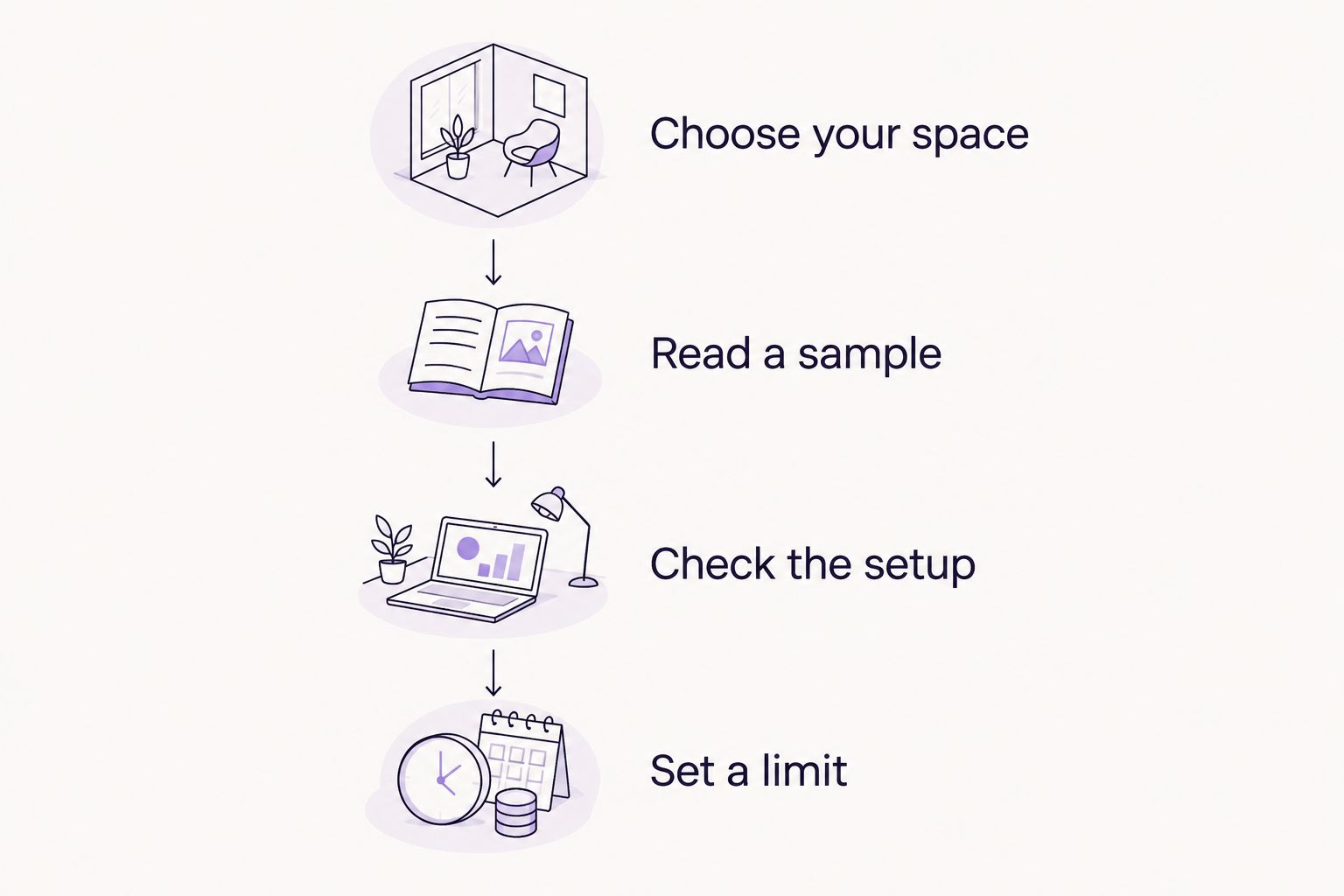
- Choose your space. Decide whether you want paper away from your phone or a file on a device you already use comfortably.
- Read a sample. Look for questions you'd willingly answer on an ordinary, slightly tired evening, not your imaginary perfect Sunday.
- Check the setup. Identify printing, binding, file requirements, and anything else between purchasing and writing.
- Set a limit. Choose a spending boundary that leaves room for your actual priorities, without treating the purchase as a test of self worth.
Give yourself 2 minutes to look at a sample page. If your first response is that you wouldn't know where to begin, that's useful information about the fit, not a failing you need to fix.
Is an expensive healing journal better?
A higher price doesn't establish whether you'll like the prompts, find the pages comfortable, or want to return to them. Those are separate questions, and a product description can't answer them for you.
When comparing self discovery journals, ease of use belongs beside format: a question you understand and want to answer matters more than an impressive collection of sections you'll avoid. Consider whether you can open the journal without first decoding its instructions or catching up on missed entries.
You might enjoy structure when your thoughts feel scattered. You might resent that same structure when someone else's questions feel like one more person telling you what to do.
Neither response means you're doing reflection wrong. It means the page should serve you, rather than requiring you to become a different person to use it.
Can you use a notebook instead of buying a healing journal?
Yes, an existing notebook can hold your reflections without a dedicated journal purchase. What it doesn't provide is a ready chosen sequence of prompts, so start with a question that feels manageable.
Here are 3 optional prompts. Choose one, change it, or leave all three alone:
- What did I need today that I kept putting off?
- What am I carrying that doesn't belong entirely to me?
- What would feel a little kinder tomorrow?
You don't need to answer every part of your life at once. Writing about an ordinary irritation counts as writing; it doesn't have to become a profound revelation by the bottom of the page.
A journal is a place to put words, not a deadline for becoming okay. Close it whenever you're finished, even if the thought isn't neatly resolved.
How can you tell whether a journal is worth keeping?
For a journal you try in 2026, ask whether you want to return to it, not whether you've maintained an unbroken streak. A missed week doesn't turn useful pages into wasted ones.
Notice the practical details. Is the writing space comfortable? Do the prompts leave room for your real answer? Can you skip a page without feeling as though you've broken the whole system?
The Sheema Edit is best for readers who want relatable lifestyle essays alongside printable journals and planners. That combination offers a place to read and reflect, but you'll still want to check each listing for the format and details that suit you.
If you're considering a planning page too, keep its job separate. A journal can hold what you're thinking; a weekly plan can hold what needs doing. Neither needs to become a report card on how well you're managing motherhood.
FAQ
How much does a healing journal cost in 2026?
A healing journal has no single standard price; the total depends on the current listing and the format you choose. Include any printing, binding, delivery charges, or required software when comparing your options.
Do I need to buy a healing journal to start journaling?
No, you can start with a notebook you already own. A dedicated journal adds a chosen layout or prompts, but you can also supply your own question and begin there.
Is a printable healing journal cheaper than a paper journal?
A printable journal isn't automatically the less expensive complete setup. Compare the file purchase plus printing and any binding with the finished paper journal and any delivery charges.
What should I check before buying a digital journal?
Check the file type, stated device or app requirements, and how the seller says you can use it. Don't assume typing, handwriting, editing, or automatic saving are included.
Do I have to write in my journal every day?
No, you don't have to write every day. Choose a pace that fits your life, and leave gaps without creating a catch up assignment for yourself.
Can a healing journal replace professional support?
No, a journal isn't a substitute for professional care. Treat it as an optional place for personal reflection, not a promise of healing or a treatment plan.
One last thing
Before adding a journal to your cart, try answering a sample prompt somewhere you already write. Not beautifully. Not with a special pen. Just honestly enough to find out whether you like the question.
For your next 2026 purchase, let that small experience matter more than the cover. You deserve room for your thoughts without buying an entirely new personality to go with them.