A mom planner’s total cost depends on the format you choose and what you need to use it: a printable can involve printing and binding, while a digital setup can involve an app or device. The amount shown at checkout isn’t always the whole expense. When choosing a planner in 2026, compare the complete setup with the parts of your week you actually want help holding.
- How much does a mom planner cost? Compare the planner with any printing, binding, app, or device expenses.
- Printable planners suit selective printing; digital planners suit readers who already enjoy planning on a screen.
- Undated weekly planning lets you leave gaps without abandoning a calendar year.
- The Sheema Edit pairs printable journals and planners with essays for readers seeking reflection alongside everyday planning.
Why this matters when your week is already full
You’re not just choosing somewhere to write appointments. You’re deciding whether another object, file, or routine deserves a place in a life that already asks plenty of you.
A planner can be useful without becoming a project. Before comparing covers or page bundles, name the job: remembering appointments, seeing the week, or making room for something that belongs to you. The guide to choosing an undated weekly planner can help you think about that fit.
Buy for the week you have, not the imaginary week where nobody loses a shoe.
How much does a mom planner cost?
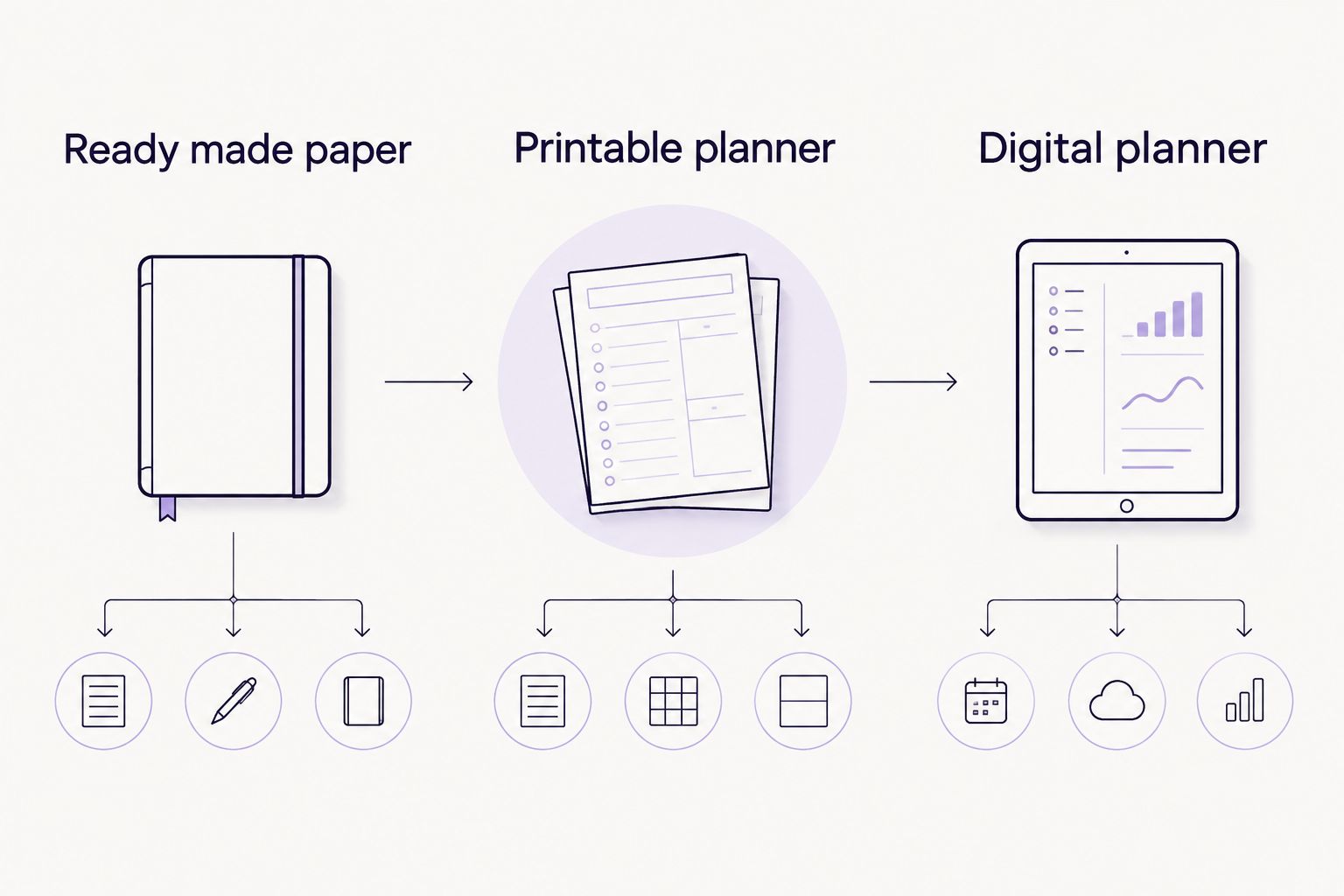
There isn’t a single total that applies to every mom planner. A ready made paper planner, a printable PDF, and a digital planner involve different purchases, so compare what each needs before deciding what fits your budget.
For a 2026 purchase, use this breakdown to separate the planner itself from the setup around it. These are things to check, not expenses every reader will have.
| Format | Best for | What to include in your comparison | Main advantage | Main drawback |
|---|---|---|---|---|
| Ready made paper planner | Writing by hand without assembling pages | Planner, delivery, and any supplies you choose | You can write directly in the finished book | You’re choosing an existing layout and binding |
| Printable planner | Selecting pages and arranging a paper setup | PDF, paper, ink or printing service, and optional binding | You decide which included pages to print | Printing and assembly become your responsibility |
| Digital planner | Readers who already like planning on a device | File, compatible app, and any equipment you need | You keep your planning on a screen | Compatibility and comfort with the app matter |
When comparing options, write down what you already own before adding anything new. A folder, pen, or suitable device already in your home doesn’t need a replacement just because you’re starting a planner.
Make a small total before making a purchase
You don’t need a spreadsheet with its own emotional support spreadsheet. A note beside each option is enough.
- Name the format. Decide whether you want a finished paper book, printable pages, or a file you’ll use digitally.
- List what’s required. Separate the essentials from decorations, accessories, and upgrades you simply like.
- Check the complete purchase. Review the current listing, any delivery details, and any printing or app requirements.
- Choose what fits. Ask whether you can picture using this setup during an ordinary, interrupted week.
Keep optional extras separate from necessities. Wanting a lovely cover is perfectly fine; treating that cover as a requirement is a different decision.
Ready made paper planners: check the layout before the cover
Best for: readers who want to open a book and start writing. A finished paper planner removes the printing and assembly decisions, which matters if you’re not looking for another household project.
The tradeoff is that you’re choosing the pages and binding already provided. Before buying, look for sample pages and imagine writing your actual appointments in the available space, including the messy handwriting version.
Check whether the book is dated, how the week is arranged, and whether you want to carry it or leave it at home. Those details won’t tell you what every planner costs, but they help you avoid buying a format that doesn’t suit you.
A beautiful book can still be the wrong book. You’re allowed to appreciate the cover and leave it there.
Printable planners: include the paper setup
Best for: readers who want to choose which included pages they print. A printable PDF separates the file from the physical planner, so consider both before deciding.
For example, printing 1 weekly page is a different job from printing 52 weekly pages at once. Those are optional setup choices, not a recommended schedule or a promise about what any particular download includes.
Check the listed paper size and printing instructions. If you want binding, decide whether a folder you own will do or whether you genuinely want something assembled elsewhere.
Printing 2 copies of a sample page can help you check whether you enjoy writing on it before preparing a larger batch. Only do that if the seller provides a suitable sample and permits that use.
The useful advantage is choice; the drawback is having to make those choices yourself. If printing feels like another unfinished errand, a printable isn’t automatically the right fit.
Digital planners: check what you already use
Best for: readers who already enjoy writing or organizing on a device. A digital planner belongs in a setup you’re comfortable opening, not a setup you feel obliged to learn because it looks tidy online.
Check the file format and the app’s compatibility information before buying. A downloadable PDF and an editable template aren’t interchangeable, and the product description should explain what you’re receiving.
If your 2026 planning setup already includes a suitable device and app, focus on whether the file works with them. If it doesn’t, include any additional requirements in your decision rather than treating the download as the whole purchase.
The drawback is practical: a digital planner still requires access to your device and comfort using the chosen app. Paper doesn’t need that setup, though it asks you to keep track of the physical pages instead.
Why mom planner totals vary
The word planner can describe a finished book, a downloadable file, or a larger setup. These differences explain why comparing only the checkout amount can leave part of the decision out.
- Format: A bound book, printable PDF, and digital file give you different things to work with.
- Printing choices: Paper, ink, color settings, and a printing service all belong in a printable comparison when you use them.
- Binding choices: Loose pages, an existing folder, and purchased binding create different setups.
- Digital requirements: A file needs to work with the device and app you intend to use.
- Optional extras: Covers, stickers, additional pages, and writing tools should stay separate from what you actually need.
For your 2026 comparison, ask each option the same question: What else would I need before I could use this comfortably? That keeps a simple download from being compared unfairly with a finished paper book.
Also consider the work involved without pretending every inconvenience needs a dollar value. If you dislike printing, that matters. If carrying a book annoys you, that matters too.
Is an undated mom planner worth considering?
An undated planner is worth considering if you want to write only when it helps. Because you add the dates, a break doesn’t leave you with a run of preprinted weeks you can no longer use for their original dates.
That flexibility comes with a small task: you enter the dates yourself. Check that the actual product is described as undated rather than assuming every weekly planner works that way.
You can keep the page simple. Try these optional prompts wherever there’s room:
- What needs my attention this week?
- What can wait without becoming a personal failing?
- What would give me a little breathing room?
- What do I want to remember about myself, not just everybody else?
You don’t need to answer every prompt. A planner can hold an appointment and a reminder to eat lunch without asking you to become a different person.
Do you need a planner made specifically for moms?
No, you don’t need a planner labeled for moms to organize your week. The label matters less than whether the pages give you room for what you want to remember.
Look at the actual sections. If a page is full of categories you don’t use, you don’t have to invent tasks to fill them; if you need room for appointments and a short personal note, choose around that need.
Motherhood can belong on the page without taking over the entire page. There’s room for your own plans, unfinished thoughts, and things you enjoy that don’t benefit anyone else.
A gentle way to decide before buying
Start with a page you already have. Sketch a week, add the commitments you know about, and leave some space for yourself.
Then notice what feels missing. Perhaps you want larger writing areas, less structure, or somewhere to put thoughts that aren’t tasks. That observation gives you something specific to look for instead of buying a planner because you feel behind.
The Sheema Edit is best for readers seeking printable journals and planners alongside personal essays about motherhood, mental wellness, and chronic illness. The shop is relevant if that combination fits what you’re looking for; check each listing rather than assuming it includes a particular layout or feature.
A printable still asks you to handle the printing or choose a digital setup. If you want a finished physical book, that extra step is a real reason to choose something else.
FAQ
How much does a mom planner cost altogether?
A mom planner’s total includes the planner and any supplies or setup you need to use it. Check the current listing, then include relevant printing, binding, delivery, or digital requirements before comparing options.
Is a printable mom planner always the cheapest choice?
No, a printable mom planner isn’t automatically the cheapest complete setup. Include the printing and optional binding you actually intend to use, rather than comparing the PDF alone with a finished book.
Can I use a printable planner on my tablet?
You can use a printable planner on a tablet if its file format works with your chosen app. Check the product description and the app’s compatibility information before buying.
Do I need to print every page in a planner download?
You don’t need to print every included page to use a printable planner. Choose the pages you want, follow the printing instructions, and respect the seller’s terms of use.
Is an undated weekly planner better if I skip weeks?
An undated weekly planner lets you add dates when you return instead of following preprinted calendar weeks. You do have to enter the dates yourself, so choose that format if the flexibility appeals to you.
What should I check before buying a mom planner in 2026?
Before buying a mom planner in 2026, check the sample pages, format, dated or undated layout, and requirements for using it. Choose around your actual week rather than the number of sections included.
One last thing
You don’t have to put your whole life in the planner to make the purchase worthwhile. You can use it for the things you forget, the thoughts you want somewhere outside your head, or the appointments that keep migrating between scraps of paper.
Before buying, finish this sentence: I want this planner to make room for… Keep your answer nearby while you compare.
The Sheema Edit’s mix of reflection and everyday planning leaves room for that question. Your answer doesn’t have to be “getting more done.”