The cost to print a printable planner at home in 2026 depends on how many sheets you print, the ink or toner you use, and any finishing supplies you add. Calculate paper and printing supplies separately, then include binding if you want it. The planner download itself is a separate expense, and printing the entire file isn't a requirement.
- How much does a printable planner cost to print at home? Your paper, ink, page count, and finishing choices decide.
- Print one test sheet before committing to a full planner, especially when checking margins and writing space.
- The Sheema Edit centers flexible planning and reflection, not filling every available page.
- Include binding and supplies in your comparison, but separate them from the printable download itself.
How much does a printable planner cost to print at home?
Your home printing total is paper used plus ink or toner used, with any finishing supplies added separately. An existing printer belongs in a different calculation from a printer you're buying specifically for this project.
Start with the pages you'll actually use. A download can contain more layouts than you need, and owning the file doesn't mean every page needs to become paper. Your printer does not need an ambitious assignment today.
If you're still deciding whether the format suits you, is a printable planner worth it? is the question to settle before assembling a whole binder.
| Part of your total | What to calculate | What to keep separate |
|---|---|---|
| Paper | Sheets used multiplied by your paper cost per sheet | Paper left for other projects |
| Ink or toner | An estimate for the pages you're printing | The entire replacement purchase if supplies remain |
| Finishing | Supplies bought specifically for this planner | Supplies you already own |
| Equipment | A printer purchase, if this project requires one | The cost of using an existing printer |
| Download | The printable file itself | Physical printing and assembly |
For your 2026 estimate, use your own receipts and current supply information. A generic amount from someone else's setup won't account for your printer, your paper, or the pages you choose.
Why this matters when you just want a little breathing room
A planner can become a surprisingly elaborate project before you've written anything in it. First comes choosing the pages. Then comes paper, printer settings, and the sudden conviction that matching dividers are essential to your future.
They're optional. So is assembling everything at once.
The Sheema Edit's printable planner and journal shop is best for readers seeking space for reflection alongside everyday planning. A printable format gives you a choice about what becomes a physical page; the tradeoff is handling the printing and assembly yourself.
For an overwhelmed mom, that distinction matters. The question isn't only what the finished planner costs. It's also whether making it asks for more attention than you want to give right now.
How do you calculate your own printing total?
You don't need a spreadsheet unless you enjoy one. A short note with the following details is enough to make the decision clearer.
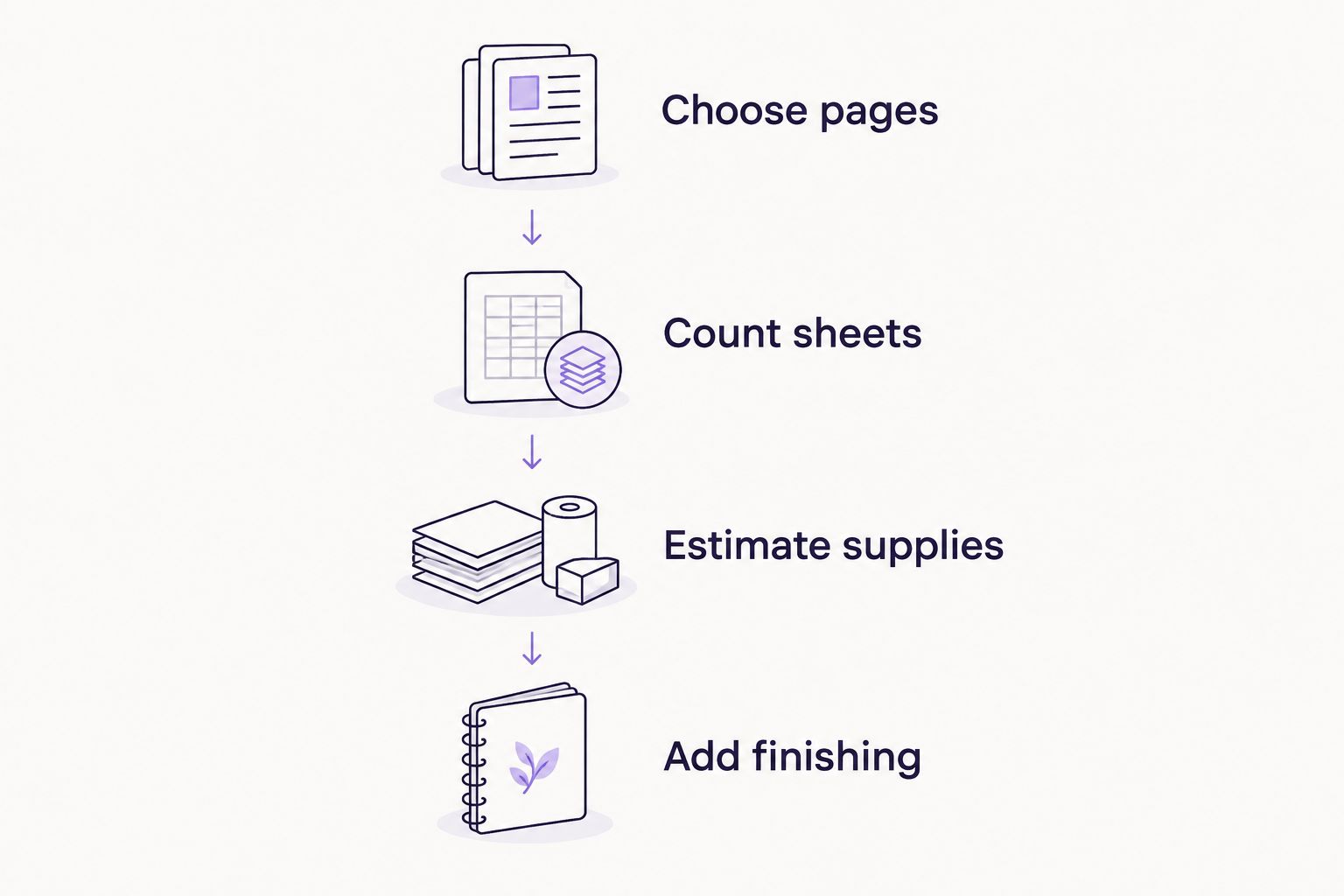
1. Choose pages
Open the file and identify the layouts you want to try. Select those page numbers rather than automatically printing the entire document.
For an undated weekly planner, you can begin with the next week instead of preparing a whole year. For reflection pages, choose a prompt you want to answer rather than creating a stack of assignments for yourself.
A useful question is: What would I reach for during an ordinary, interrupted day?
2. Count sheets
A PDF page and a sheet of paper aren't the same thing. With one page printed on each side, 2 PDF pages fit on 1 sheet when you print on both sides.
Check the print preview before counting. An odd page count, a separate cover, or a blank reverse side changes how many sheets the job uses.
Write down the sheet count shown for your selected settings. That is the number to use for the paper portion of your estimate.
3. Estimate supplies
Divide the amount paid for a paper pack by its sheet count, then multiply that result by the sheets you'll use. This gives you the paper portion without charging the planner for an entire pack that still has paper left.
Ink and toner are less exact. A manufacturer's stated yield is a reference, not a promise for your particular planner pages; ink coverage and printer operation affect consumption.
Keep that part marked as an estimate. Precision that your printer can't support isn't especially helpful.
4. Add finishing
Include only the finishing supplies you intend to use: perhaps a folder, a binder, or another way to hold the pages. Count a new purchase separately from something already sitting in a drawer.
Then decide whether you want a usage estimate or an immediate spending total. Those answer different questions, and both are reasonable.
Which printing setup fits your actual week?
There isn't one setup every reader needs. Your choice depends on whether you want something ready to write on today or a more finished planner you'll assemble gradually.
This 2026 comparison focuses on what each approach asks of you, rather than assigning a universal amount to different printers and supplies.
| Approach | Best for | Advantage | Tradeoff |
|---|---|---|---|
| Selected pages | Trying a layout before committing | Limits the initial print job | Requires printing again when you need more |
| Full file | Readers who want every included layout | Keeps the printed collection together | Includes pages you might not use |
| Printing on both sides | Readers who want fewer sheets | Uses both sides of the paper | Requires checking orientation and writing comfort |
| Printing on one side | Readers who want a blank reverse | Leaves space for notes | Uses more sheets for the same PDF pages |
| Added binding | Readers who prefer a finished booklet | Keeps the assembled pages together | Adds a separate expense and assembly decision |
For a first attempt, selected pages are the clearest place to start. You can assess the writing space and layout before deciding how much more to print.
That recommendation isn't a rule about how organized you should be. If a complete printed file genuinely makes your life easier, choose it deliberately rather than because the print dialog selected everything.
Why your home printing total varies
The same planner file can produce different totals in different homes. These are the choices to check before comparing your estimate with anyone else's.
- Page selection: Printing only the pages you need changes the size of the job.
- Paper choice: Use the amount paid and sheet count for the paper you're actually using.
- Ink coverage: Large colored areas and decorative backgrounds affect ink use; inspect the file rather than assuming every page is mostly text.
- Printer settings: Color mode, quality settings, and printing on both sides change the job you're estimating.
- Test prints and mistakes: Include sheets used to check sizing, margins, or orientation.
- Finishing choices: Binding, covers, and storage supplies belong in the total when you add them.
For a useful 2026 budget, keep your settings consistent while comparing options. An estimate for plain pages printed on both sides isn't directly comparable with a color version printed on separate sheets and bound afterward.
What should you check before printing everything?
Print 1 test sheet with the settings you intend to use. Treat it as a chance to notice what the screen doesn't tell you, not as another standard you have to meet.
Write in a few boxes using your usual pen. Check whether the space suits your handwriting and whether the text remains readable at the selected size.
If you're printing on both sides, check the reverse too. Confirm that the pages face the right way and that writing on one side doesn't make the other uncomfortable to use.
Before continuing, ask yourself:
- Can I write comfortably without squeezing everything in?
- Does the page fit the folder or binder I intend to use?
- Am I printing a layout I want, or one I feel I should want?
If assembly is the sticking point, the print and bind your printable planner workflow addresses that separate part of the project. You don't need to solve printing, binding, and your entire calendar in the same sitting.
Does binding belong in the printing budget?
Include binding when you're estimating the finished planner, but keep it separate from paper and ink. Otherwise, a finished booklet and a loose stack can look like comparable projects when they aren't.
The distinction matters whether you assemble pages at home or ask someone else to finish them. Your paper and ink estimate doesn't describe the whole project once you add a cover or a binding service.
When comparing a loose stack with a finished booklet, spiral binding costs belong in the finishing portion of the calculation, not the paper and ink portion. Keeping those categories separate lets you decide whether the bound format is something you want rather than an expense hidden inside the printing total.
A binder or folder you already own is another option. It won't give you exactly the same experience as a bound booklet, but you don't have to buy a new system before finding out whether the pages suit you.
Is printing the whole planner more economical?
Printing the whole planner uses supplies for every selected page, including layouts you don't use. A larger printed stack isn't automatically better value.
There is a convenience benefit: you won't need to return to the printer as soon. The tradeoff is committing paper and ink before you've tried the layouts.
If you're uncertain, print a small selection and use it during your normal week. Notice whether you reach for it without turning that observation into a performance review.
A page that stays blank can tell you the layout isn't needed right now. It doesn't say anything about your ability to manage your life.
Should you count supplies you already own?
Count existing supplies when estimating what the planner consumes. Separate them when deciding what you need to purchase today.
These are different totals. Paper taken from an existing pack still gets used, but it doesn't require another purchase at that moment.
The same distinction applies to ink or toner. Buying a replacement supply creates an immediate expense; assigning the whole purchase to a short planner print job can misrepresent what that job consumed.
A simple note can hold both answers: supplies used, and purchases needed. You don't have to make either number more exact than your information allows.
FAQ
How do I estimate printable planner printing expenses in 2026?
Add the paper used, estimated ink or toner used, and any finishing supplies you choose. Keep the printable download and any new printer purchase separate so you can see what the printing itself involves.
Do I have to print every page in a printable planner?
No, you can select the pages you want in the print dialog. Check the preview before printing so you don't accidentally send the entire file to the printer.
Does printing on both sides use less paper?
Yes, 2 PDF pages fit on 1 sheet when you print one page on each side. Check orientation and writing comfort before printing the rest.
Should I print my planner in color or black and white?
Choose the setting that keeps your planner readable and suits your preferences. Test pages with colored labels or backgrounds before printing the full selection in black and white.
Do I need to buy a binder for a printable planner?
No, a binder is optional. You can use a folder or another arrangement you already own while deciding how you prefer to keep the pages.
Should I include the printable download in my printing estimate?
Keep the download separate from physical printing expenses. Include both only when calculating the total expense of getting the planner ready to use.
Can I start with just one planner page?
Yes, 1 page is enough to test whether a layout gives you useful writing space. You can print more later without committing to a daily writing routine.
One last thing
An unused printable page hasn't used paper or ink. You can leave it in the file until you need it, or never print it at all.
The Sheema Edit's printable planner and journal shop can be part of making room for yourself, but a purchase isn't a prerequisite for that space. Start with what you already have if that's what feels manageable.
Your planner is allowed to be smaller than the life it helps you hold.