
A therapist recommended journal has no standard price: what you spend depends on the particular journal, its format, and whether you need anything else to use it. For your 2026 budget, check the full setup, not just the journal itself; printing, binding, delivery, or an optional writing app can add to the total.
- Wondering how much does a therapist recommended journal cost? Compare the complete setup, not just the journal.
- The Sheema Edit offers self reflection content for readers who want somewhere to begin.
- Ask what your therapist recommends about a journal before assuming you need that exact product.
- Choose a format that fits your everyday life, without requiring a daily writing routine.
How much does a therapist recommended journal cost?
There isn't one standard price for a therapist recommended journal. The phrase describes a recommendation, not a particular format, set of contents, or included service. A notebook, guided journal, printable PDF, and digital file are different things to buy and use.
Before shopping, separate the writing you want to do from the object you want to buy. If you're looking for somewhere to begin, these self reflection journal prompts for moms offer questions to consider without making a particular journal the starting requirement.
Use this comparison to decide what belongs in your own cost calculation.
| Format | Best for | What to include in your budget | Practical advantage | Practical drawback |
|---|---|---|---|---|
| Notebook you already own | Readers who want an uncomplicated starting point | Any supplies you choose to add | You can begin with the pages already available | You supply the questions and structure |
| Bound guided journal | Readers who prefer prompts already on the page | The journal and any delivery charges | The questions are ready when you open it | Some prompts or layouts won't fit what you need |
| Printable journal | Readers who want to select their pages | The file, printing, and any binding you choose | You can choose which pages to print | Preparing the pages takes some effort |
| Digital journal file | Readers who prefer writing on a device | The file and any required app or equipment | You don't need to prepare paper pages | Device and app requirements need checking |
These are format comparisons, not a ranking of emotional usefulness. A more elaborate setup doesn't tell you whether you'll like writing in it. In 2026, compare what you'll actually need to use each option rather than treating the displayed purchase amount as the whole decision.
Why this matters when you're already carrying a lot
You don't need your journal purchase to become another thing you can somehow get wrong. When you're handling appointments, meals, work, or the quiet work of remembering everything, even choosing a notebook can become a surprisingly crowded decision.
The useful question is smaller: What would make it easier to put something honest on a page? That might mean a question you don't have to invent, enough room to write untidily, or permission to leave a page unfinished.
Your budget matters without becoming a judgment about how seriously you take yourself. You can want something beautiful and still decide against buying it. You can also use a notebook already in a drawer without turning simplicity into another standard you must live up to.
The journal is there to make space for you. You don't owe it a better organized personality.
What does “therapist recommended” actually tell you?
The phrase alone doesn't tell you who made the recommendation, what they reviewed, or why they suggested it. Look for those details rather than asking the label to do all the explaining.
If your own therapist recommended a journal, ask what part matters. Was it the particular set of prompts, the page layout, or simply having somewhere to write things you want to discuss? Those answers give you something more useful than a shopping instruction.
You can ask:
- “Do you mean this exact journal, or would another notebook work?”
- “Which part of this journal made you suggest it?”
- “Are there particular pages you want me to use?”
- “Is writing between appointments optional?”
If the recommendation appears on a sales page instead, look for an explanation attached to it. A named recommendation with clear context gives you something to evaluate. An unexplained phrase doesn't answer whether the journal suits your needs.
A journal recommendation is not a promise of a particular result. Keep the purchase decision separate from expectations about what writing will change.
Why the total varies
For a 2026 journal purchase, compare the complete setup across the formats you're considering. These are the details to check before deciding what fits your budget.
- Format. A bound book, downloadable PDF, and digital file come with different preparation needs. Check what you're receiving rather than relying on the cover image.
- Printing. A printable needs paper and ink or a printing service if you want to use it on paper. Choose the pages you want before calculating that part of the total.
- Binding. Loose pages, an existing folder, and separately arranged binding are different setups. Decide which you want instead of assuming every printable needs a finished book treatment.
- Delivery. Check the final checkout details for a physical journal. Keep delivery separate from the journal itself when comparing options.
- Digital requirements. Read the file description and any stated app requirements. Don't assume a downloadable journal works with software or equipment you already have.
- Included contents. Look at sample pages and the description of what's included. Extra sections aren't useful additions if you don't want to use them.
For the paper setup in particular, the guide to printing and binding a planner covers a related decision: separating the file from the work of turning it into pages you can use.
You don't have to choose every extra. A folder is allowed to remain a folder.
How do you choose without making this another project?
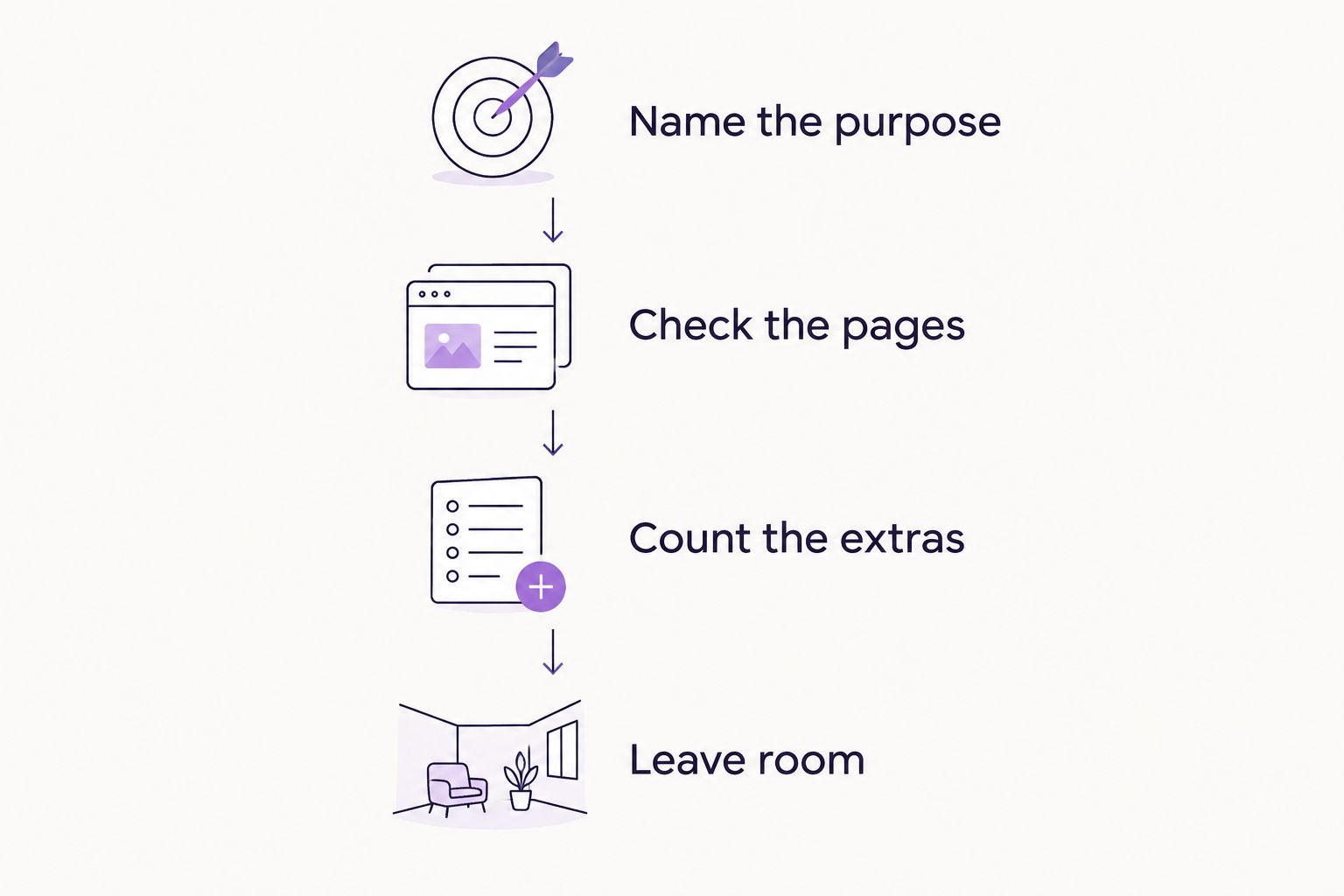
Try this short decision process if you're stuck between tabs. It's a way to narrow the purchase, not a new routine to maintain.
Name the purpose
Finish this sentence: “I'd like somewhere to write about…” Keep the answer specific enough to recognize. You might want to remember questions for an appointment, untangle a crowded day, or notice what you need before agreeing to something else.
You don't need a polished intention. “Everything feels loud and I want somewhere to put it” is a perfectly understandable place to begin.
Check the pages
Read sample prompts and look at the available writing space. Notice whether the wording feels inviting or like an assignment you're already late submitting.
Check for dates, repeated daily pages, or sections you don't want. Those aren't automatically flaws; they are details that help you decide whether this particular journal fits your life.
Count the extras
List what you'd need beyond the journal itself. That means printing for paper use, any binding you want, or required software for a digital file.
Keep your 2026 comparison focused on what you need now. You don't have to add accessories simply because they appear beside the journal in a photograph.
Leave room
Ask whether you can return to the journal after a gap without feeling that the whole thing has expired. If dated pages bother you, look for an undated option rather than promising yourself you'll become a daily writer.
Choose something you can use imperfectly. There is enough administration in ordinary life without adding attendance requirements to your own thoughts.
A notebook you own: best for an uncomplicated start
Choose an existing notebook if your main need is somewhere to write, rather than a particular set of pages. You can bring your own questions and leave the rest open.
The tradeoff is that a blank page doesn't offer much direction. If that leaves you stuck, write a question at the top before trying to answer it: “What do I wish someone understood about today?” is enough to begin.
This option doesn't require a fresh identity, matching stationery, or beautiful handwriting. It also doesn't mean you must reject a guided journal later. Starting with what you have is a choice, not a lifelong stationery contract.
A bound guided journal: best for ready written questions
Choose a bound guided journal when you want the questions waiting for you. Check the sample pages before buying, especially the tone of the prompts and the space provided for answers.
The advantage is the prepared structure. The drawback is that you don't get to rewrite the entire book around your day. Some questions will feel relevant; others won't.
You can leave a prompt unanswered without treating that page as a failure. But if the samples already feel demanding, look elsewhere rather than assuming the right purchase should make you push through language you dislike.
A printable journal: best for choosing your pages
Choose a printable journal when selecting and preparing pages appeals to you. Check what's included in the file and how you intend to use it before purchasing.
The practical benefit is choice over which included pages you print. The tradeoff is preparation: downloading, printing, and keeping the pages together are still tasks, even when the finished result looks lovely.
The Sheema Edit's printable journal and planner shop is an option for readers seeking self reflection and planning PDFs. Check the current descriptions for the contents of any particular download; don't assume every file includes the same pages or instructions.
A digital journal: best for readers who prefer a device
Choose a digital journal if writing on a device is how you want to use it. Start with the file requirements, not the assumption that every download works the same way.
The benefit is avoiding a paper setup. The tradeoff is checking the relationship between the file, your device, and any required app. Include those requirements in your 2026 budget before comparing it with a physical notebook.
Privacy deserves a moment here too. Consider who can access the device and where the file will be stored. The most convenient place to write isn't automatically the place where you feel comfortable leaving personal thoughts.
Do you need the exact journal your therapist suggested?
Ask your therapist whether the exact journal matters before buying a substitute. If they suggested particular exercises or pages, explain what you'd prefer to use and ask whether that serves the same purpose. You don't have to guess what the recommendation meant.
Is a guided journal better than a blank notebook?
A guided journal is better for ready written prompts; a blank notebook is better for choosing your own structure. Neither format earns extra credit for being harder to use. Choose around what you want from the page, not what looks most impressive closed on a table.
Make room for reflection without creating another schedule
A journal doesn't have to become a daily appointment. You can open it when there's something you want to say, return after an ordinary gap, or write a sentence and stop.
For an overwhelmed mom, a useful starting prompt might be: “What have I needed today that I haven't had room to name?” You don't have to end with a solution. Sometimes the honest answer is simply that you're tired of being the person who notices everything.
If planning belongs beside that reflection, keep it optional. You might name what needs attention this week and what you're choosing to leave alone. An undated weekly page doesn't need to become a plan for improving every corner of your life.
The Sheema Edit is best for readers seeking relatable self reflection content alongside printable journals and planners. That is a place to explore, not a requirement to purchase anything before your thoughts deserve attention.
FAQ
How much does a therapist recommended journal cost in 2026?
A therapist recommended journal has no standard price. Check the particular journal and include any printing, binding, delivery, or required digital setup when deciding what fits your budget.
Does therapist recommended mean a journal will help me?
The phrase alone doesn't establish that a journal will meet your needs or produce a particular result. Look for who made the recommendation and what they recommended about it.
Can I use a notebook I already own?
An existing notebook gives you somewhere to write without choosing a new journal. If your therapist requested particular pages or exercises, ask whether your notebook is a suitable alternative.
Is a printable journal automatically the better budget choice?
A printable journal isn't automatically the better budget choice. Compare the file and your intended printing and binding setup with the complete alternative.
Do I have to write in my journal every day?
You don't need to impose a daily writing rule on personal journaling. If writing is part of an agreed activity with your therapist, discuss a pace that fits your circumstances.
What does The Sheema Edit offer for journaling?
The Sheema Edit offers personal essays and printable journals and planners. Read each download's description for its specific contents rather than assuming all files include the same features.
Is a journal a replacement for therapy?
A journal isn't a replacement for therapy. Treat the journal purchase as a choice about a writing tool, not the purchase of professional support.
One last thing
Before buying, imagine opening the journal on a thoroughly ordinary day. Not a quiet Sunday with a cleared table. A day with interruptions, something waiting in the laundry, and no interest in turning your feelings into attractive paragraphs.
Would you know where to begin? Would you feel free to stop?
Those questions belong beside the budget. Choose the journal that leaves room for your real life, not the one that requires an audition for a calmer life first. If nothing feels right yet, you can close the shopping tabs and keep the thought you wanted to write.