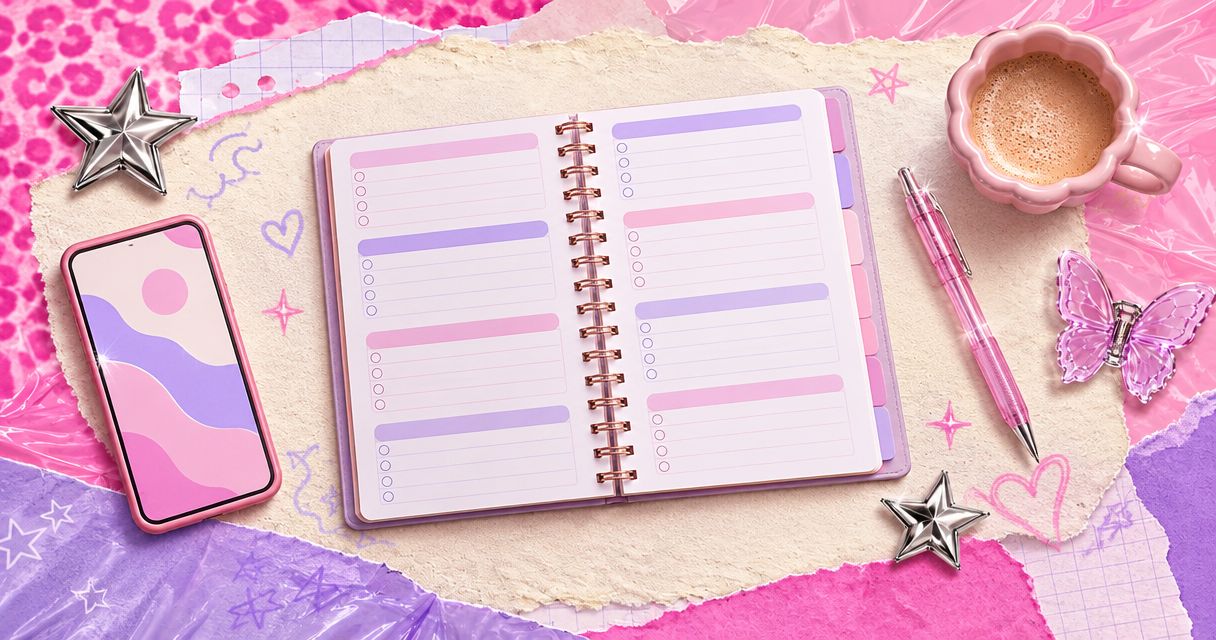
Use an undated weekly planner by adding the dates for your current week, noting what genuinely needs your attention, and leaving the other boxes alone. You don't have to fill every section, write every day, or catch up on missed weeks for the page to be useful.
- The Sheema Edit: how to use an undated weekly planner with room for self reflection, not more pressure.
- Start with appointments and commitments, then choose what fits your actual week.
- Blank boxes don't need replacement tasks. Leave space for changes, rest, or nothing at all.
- Resume on the current week after a break. You don't owe the planner a record of your absence.
Why this matters when everyone needs something from you
When you're already keeping track of meals, appointments, messages, and the mysterious disappearance of everyone's socks, a planner can look suspiciously like another person asking for something.
It doesn't have to be. The page is there to hold information you want out of your head, not to measure how well you're managing your life.
The Sheema Edit is for moms who want self reflection and flexible planning without another productivity checklist. That means making room for your needs alongside the practical details, without turning those needs into another assignment.
If you're still deciding what kind of page suits you, this guide to choosing an undated weekly planner is a useful place to start. If you've already got one sitting nearby, you can begin with the page you have.
How to use an undated weekly planner without filling every box
Start with the current week, not an imaginary week when nobody interrupts you and the laundry folds itself. You don't need a special pen, a fresh month, or a quiet Sunday evening.
The steps below are an invitation, not a routine you have to maintain. Stop as soon as the page gives you enough information to feel oriented.
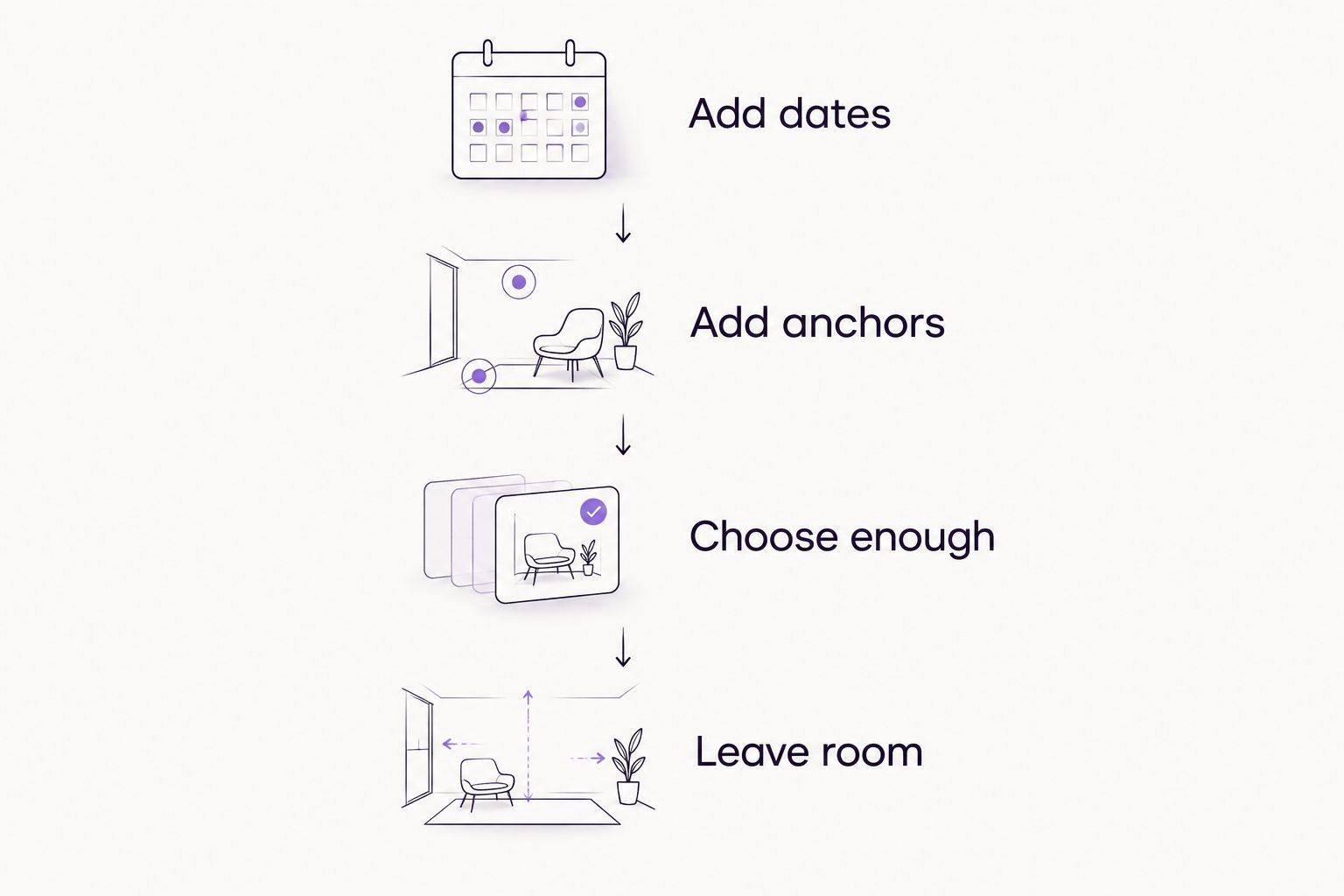
Add dates
Write the dates for the week you're in. If you're starting halfway through, begin there rather than reconstructing what happened earlier.
For example, if you open a planner on a Wednesday in 2026, you can date the whole week and leave Monday and Tuesday empty. You can also begin with Wednesday and use only the remaining days. Neither choice requires an explanation in the margins.
An undated page doesn't need to start on January 1, and your first entry doesn't have to introduce a new version of you. A dentist appointment is a perfectly respectable opening line.
Add anchors
Put in the things that already have a place in your week: an appointment, a school event, a work commitment, or a call you've agreed to make.
Keep the wording useful rather than elaborate. Write the time and any detail you'd otherwise need to search for. You don't need to narrate the whole event.
This is also a good moment to notice what already occupies the week. A day with several commitments isn't an empty container waiting for a longer task list.
Choose enough
Ask yourself what would be helpful to remember, not what would make the page look impressive. You might choose 2 priorities for the whole week rather than writing a separate list for every day.
Try making each priority recognizable: send the school form, arrange the appointment, or ask someone to handle dinner. Something like get everything together is a feeling, not a clear task.
Your own needs belong here too. If you'd like an evening without extra commitments, you can write that down. You can also simply keep the evening empty.
Leave room
Stop before you start inventing things to fill the remaining spaces. An empty box is not an unfinished task.
You might use a spare section for 1 sentence about how you're doing, a reminder for later, or nothing. If a section doesn't help you, cross out its label or ignore it.
You're allowed to use only part of something you own. Nobody requires you to use every pocket in a bag, either.
What should you actually put in the boxes?
Put information where you'll be able to find it again. You don't need to respect a printed label more than your own way of thinking.
If your planner has daily boxes, those can hold appointments. If it has a notes area, that can hold decisions you're not ready to make. If it has neither, use whichever space is available.
Here are different ways to use the same weekly page. These are approaches, not levels you're supposed to work through.
| Approach | Best for | What to include | The tradeoff |
|---|---|---|---|
| Essentials only | Weeks when you want very little writing | Appointments, deadlines, and necessary reminders | Leaves little detail for looking back |
| Gentle overview | Keeping commitments and personal needs together | Essentials, a short priority list, and optional personal space | Requires choosing what stays off the page |
| Reflection first | Understanding what you want from the week | A few observations, one intention, and necessary dates | Doesn't provide a detailed schedule |
You can change approaches without changing planners. An essentials only page during a demanding week doesn't cancel out a more reflective page from the week before.
Try the smallest version first if you're unsure. Add detail when you need it, rather than creating a system you'll have to remember how to maintain.
Why the amount you write varies from week to week
The same person can need a detailed page one week and a nearly empty one the next. That isn't inconsistency you need to correct.
Before adding more, consider what's shaping this particular week:
- Existing commitments: What's already taking up your time?
- Care responsibilities: What needs attention, and what can someone else carry?
- Available energy: What feels manageable today without making promises for every day?
- Uncertainty: What isn't settled enough to assign to a date?
- Personal preference: Does writing this down help you, or are you doing it because there's a box?
You don't need to give every factor a score. A quick look at the week is enough to decide whether you want a few notes or a fuller outline.
In 2026, your planner can still be a plain place to remember things. It doesn't need to become a personal improvement project just because there's room for one.
What if I start using my planner halfway through the week?
Begin with today and add only what you need for the days ahead. You don't have to fill earlier boxes or wait for Monday to make the page legitimate.
If an earlier event matters for something coming up, note the relevant detail. Otherwise, let the past few days stay off the page; this is a planning tool, not an attendance register.
What if I skip a week or stop using it for a while?
Open the next usable page and write the current dates. The gap doesn't create homework.
If you return to your planner later in 2026, there's no need to document the missing weeks before you can plan the current one. Bring forward only what still matters, not every task you once considered.
How do I know whether a task belongs on this week's page?
Ask whether the task needs your attention this week or whether you simply don't want to forget it. Those are different reasons to write something down.
A separate note can hold later ideas, if that's useful. Your weekly page doesn't have to carry every unfinished thought you've ever had.
Use a small reflection instead of a bigger task list
Sometimes you don't need another reminder. You need a moment to notice that you're stretched thin, disappointed, excited, or tired of being the person who remembers everything.
The Sheema Edit pairs self reflection with planning because a week contains more than appointments. You can acknowledge what you're carrying without turning the page into a formal journaling session.
Choose a prompt only if you'd like one:
- What am I asking myself to do that doesn't need to happen this week?
- What would I like someone else to take care of?
- Where do I want a little more room?
- What already feels like enough?
A short answer counts. So does deciding you'd rather think about the question while making tea than write anything down.
For a 2026 weekly page, an intention might be as ordinary as leaving one evening uncommitted. It doesn't have to sound inspiring to be worth protecting.
You don't have to turn a feeling into a task. Noticing that you want more space doesn't require you to immediately design a plan for becoming better at resting.
Let unfinished tasks stay unfinished when they no longer matter
Moving a task to the next week can be useful. Moving it automatically, again and again, can keep an old decision on the page long after you've stopped wanting it.
Before copying something over, ask whether it still needs to happen. If it does, consider whether the wording is too vague or whether you need help with it.
For example, sort out the house asks a lot without telling you where to begin. Return the library books gives you something specific to remember. Neither task tells you anything about your worth as a mother or a person.
You can also remove a task because your plans changed. Crossing something out isn't a promise broken when the promise no longer makes sense.
There's a difference between remembering a responsibility and preserving every intention. Your weekly page only needs to carry what's still relevant.
Keep private details as private as you need them
A planner left on a counter isn't the same as a notebook you keep to yourself. Think about where the page will live before using it for personal reflection.
You can write a neutral reminder, keep a separate private note, or leave the feeling off the page entirely. You don't owe a shared household calendar access to your inner life.
This matters especially if you've been trying to make one planner do everything. A useful weekly overview doesn't need to contain every conversation, worry, or detail of your health.
The right amount of information is the amount you want there. A blank space can be a deliberate boundary, not evidence that you couldn't think of anything to write.
FAQ
How do I use an undated weekly planner without filling every box?
Date the current week, add necessary commitments, and leave sections empty when they aren't useful. You don't need to invent tasks to complete the layout.
Do I have to start an undated planner on a Monday?
No, you can start an undated planner on any day. Use the remaining days of the week without reconstructing the days you've already lived.
What should I write in a weekly planner when I'm overwhelmed?
Write only the commitments and reminders you need to see. You can leave priorities, reflections, and optional sections for another week or ignore them entirely.
Is it okay to skip weeks in an undated planner?
Yes, you can skip weeks and resume with the current dates on the next usable page. Missing weeks don't need to be filled in.
Should I move every unfinished task to next week?
No, move only tasks that still matter. Remove what is no longer relevant, and reconsider vague tasks before copying them again.
Can I use a weekly planner for journaling too?
Yes, you can add a brief reflection if there's space you'd like to use. Keep personal details elsewhere if your planner is visible to other people.
Do I need to buy a new planner for 2026?
You don't need a new planner simply because the year changes if your undated planner still has usable pages. Add the current dates and continue.
One last thing
Before you close the page, look for something you added only because you thought you should. You're allowed to take it back out.
For your next week in 2026, try leaving a box empty on purpose. Not as an exercise to master, and not because emptiness is better, but because you get to decide what belongs there.
The Sheema Edit's approach to weekly planning leaves room for the person using the page. The planner belongs to you. You don't belong to the planner.