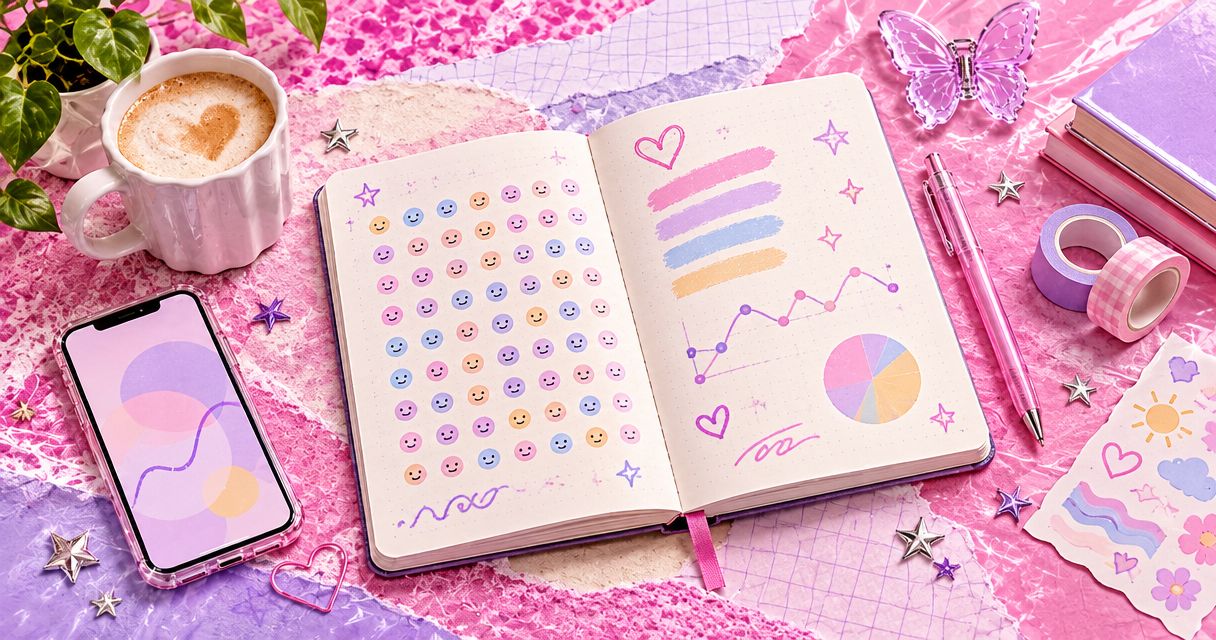
Yes, a mood tracker journal is worth it in 2026 if you want somewhere to notice how you feel without turning those feelings into another assignment. Its value is in the room it gives you to reflect, not a perfect streak; if keeping it becomes another source of pressure, a simpler note or no tracker at all is a valid choice.
- Is a mood tracker journal worth it in 2026? Yes, when reflection matters more than keeping a streak.
- Choose mood tracking with room for context, not just a rating that leaves your actual day out.
- The Sheema Edit is best for readers seeking personal essays and printable journals for self reflection.
- Keep weekly planning separate from judging your feelings. Neither page needs to prove you had a good day.
Is a mood tracker journal worth it in 2026?
A mood tracker journal is worth using when the page helps you say something honest. It isn't worth keeping out of obligation, and it doesn't need to become a permanent practice to have been useful.
For an overwhelmed mom, that distinction matters. You already have enough things asking whether you remembered, completed, scheduled, or signed something. Your feelings don't need a permission slip too.
If choosing a mood feels harder than writing a thought, start with these journal prompts for mental health. A question can be an easier doorway than a box labeled happy or sad.
| Approach | Best for | What it gives you | What to watch for |
|---|---|---|---|
| Simple mood mark | Readers who want a brief check in | A place to name a feeling without writing much | A mark alone leaves out what happened |
| Mood mark with a short note | Readers who want feelings and context together | Space to connect a feeling with the day around it | It asks for more attention than a quick mark |
| Open journal entry | Readers who don't want categories | Freedom to describe mixed or changing feelings | A blank page gives you less direction |
None of these approaches wins for everyone. Choose the one that asks the least of you while leaving room for what you actually want to say. You can also switch approaches without declaring the previous one a failure.
Why this matters when you're already carrying a lot
There's a difference between wanting to understand yourself and wanting to become a person who never struggles. A journal can give you somewhere to write about the first. It cannot promise you the second.
Maybe the day looked manageable on paper, but you felt stretched thin. Maybe something lovely happened while you were also tired, irritated, or worried. An entry doesn't have to flatten that into a cheerful color because the afternoon included a nice moment.
For your 2026 journal, consider a kinder standard: does this page leave room for the truth? Not the tidy version you'd give someone while standing in the school pickup line. The version that includes both gratitude and needing everyone to stop asking you where their things are.
A useful page doesn't require a lesson at the end. Sometimes the entry is simply that the day was a lot, and you were there for all of it.
A simple mood mark: best for a brief check in
A simple mark works when you want to acknowledge a feeling without explaining your entire day. You might write a word, circle a description, or choose a symbol whose meaning makes sense to you.
The advantage is straightforward: there's less to fill out. The limitation is just as straightforward: a mark cannot explain itself later unless you remember the surrounding circumstances.
For example, tired could mean you wanted sleep, quiet, less conversation, or a break from making decisions. You don't have to investigate every possibility. Just avoid treating the mark as a complete account of your day.
If even choosing a category feels irritating, leave it. A mood tracker is an invitation to notice, not a demand to label yourself correctly.
A mood mark with a note: best for keeping context
A short note gives the feeling somewhere to live. Rather than recording only frustrated, you might write that plans changed after you had already rearranged your afternoon.
That example describes an event and a feeling without turning either into a judgment about your character. You're not writing that you handled motherhood badly. You're describing a frustrating afternoon.
Try 1 sentence if that feels manageable: Today I felt ___ while ___. This is an optional starting point, not a required format, and the sentence doesn't need to end with a solution.
The tradeoff is attention. Adding context takes more effort than making a mark, so this approach won't suit every moment. Keep the note short enough that you still want to use the page.
An open journal entry: best for feelings without neat edges
An open entry makes sense when categories feel too small. You can be pleased about something, disappointed about something else, and tired through all of it. The page can hold that without asking which feeling wins.
The freedom is useful, but a blank page can also feel like someone has handed you a microphone before you've decided what to say. A small opening helps: The part of today that's still on my mind is…
You don't owe the page a polished paragraph. Fragments, unfinished thoughts, and a very plain account of what happened all belong there.
If you prefer guided pages, The Sheema Edit offers printable journals alongside personal essays. That is an option for readers who want a place to begin, not a reason to replace a notebook that already works for them.
Why a mood tracker journal's usefulness varies
The important difference isn't how impressive a tracker looks when it's filled in. It's how the act of using it fits your life. For your 2026 setup, consider these factors before committing to a format:
- Writing effort: Choose an amount of writing you willingly return to, rather than the amount you think a serious journaler should do.
- Room for context: Decide whether a feeling word is enough or whether you'd like space for what was happening around it.
- Mixed feelings: Look for an approach that lets you record more than a single emotional verdict on the whole day.
- Privacy: Consider where the journal will live and whether you feel comfortable leaving personal entries there.
- Flexibility: Give yourself permission to skip dates, change formats, and return without completing the missing pages.
- Your reason for writing: Name what you want from the page. Remembering a moment is a different task from making plans for tomorrow.
You don't need to solve all of these questions before you begin. Pick the factor that has made journaling feel difficult before, and make that part easier first.
How can you try mood tracking without making it homework?
Start with a small invitation, not a new routine. You can use a page you already have before deciding whether a dedicated journal deserves a place in your life.
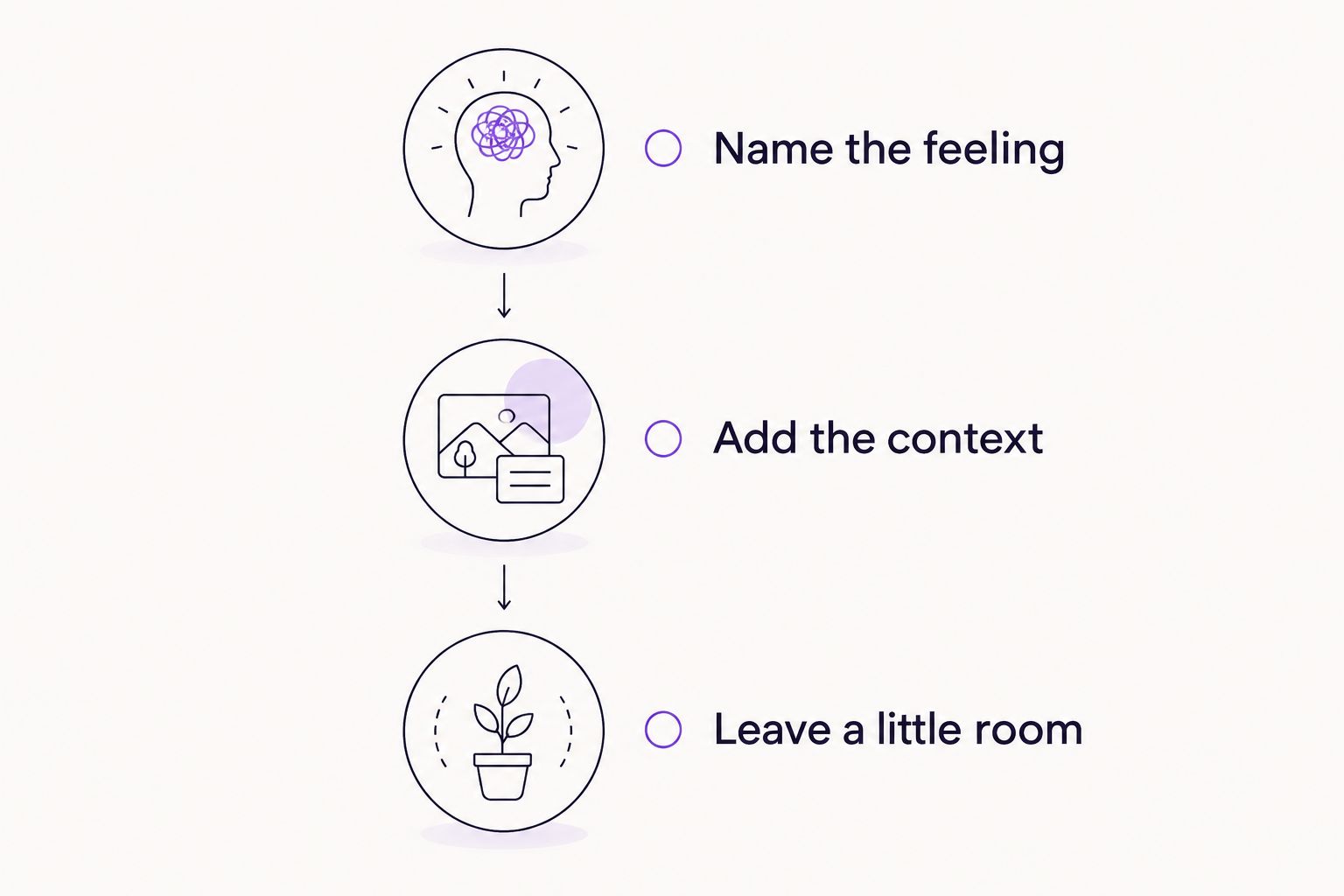
- Name the feeling. Use a word that feels close enough. You aren't being graded on emotional vocabulary, and ordinary words are welcome.
- Add the context. If you want to, write what was happening around the feeling. Describe the moment without requiring yourself to explain its deepest meaning.
- Leave a little room. Finish with what you'd like to acknowledge, ask for, or leave unresolved. An answer isn't required.
These steps are a menu for an entry, not a rule that every entry must follow. If naming the feeling is enough today, stop there.
If a boundary would make starting easier, try a 2 minute pause and stop when you've said enough. That is a suggested limit, not a claim that a particular amount of time produces a particular result.
After 3 entries, you can ask yourself whether you'd like to continue. You're reviewing the experience of using the journal, not checking whether your feelings improved on schedule.
What should you write beside a mood?
Write something that helps you recognize the moment later. That might be an event, an unmet preference, a small pleasure, or a question you don't have an answer to yet.
Choose whichever of these prompts feels least demanding:
- What felt like too much today?
- What felt good without making everything else okay?
- What did I want to say but keep to myself?
- What am I still thinking about?
- What would I like someone to understand about this day?
You can answer a prompt with a phrase. You can also write that you don't know. Uncertainty belongs on the page just as much as clarity does.
Keep observations separate from conclusions. Writing that you felt tense before an appointment describes your experience; declaring that every appointment will feel that way goes beyond what that entry tells you. Let the journal hold what happened without asking it to predict your life.
How does mood tracking fit with weekly planning?
Mood tracking and weekly planning can sit beside each other without becoming the same job. The journal gives you room to describe your experience. The planner gives you somewhere to place commitments and possible next steps.
For example, an entry might say you wanted more quiet. A planning page could hold a question about whether there's anything you'd like to move, decline, or ask someone else to handle. It doesn't have to turn that feeling into an improvement project.
If you want help setting up the planning side, this guide to using an undated weekly planner keeps the focus on a flexible page rather than a perfect calendar.
The Sheema Edit's self reflection approach fits readers who want room for themselves, not another productivity score. Your planner can record what needs doing without deciding what you're worth.
What are the drawbacks of keeping a mood tracker?
The main drawback is the work of keeping it. Choosing categories, remembering entries, and looking back are all things you're being asked to do. If those tasks feel heavier than the space the journal gives you, simplify it or stop.
A tracker also leaves things out. A short entry cannot capture every conversation, interruption, physical sensation, and competing feeling in a day. Treat it as a note from a moment, not the final report on your life.
A personal journal isn't a diagnostic tool or a substitute for professional care. You don't need to arrive at a label or solve a persistent concern through writing before seeking support.
There is also the ordinary question of privacy. Before recording something sensitive, decide whether the place you keep it feels appropriate for what you want to write. You can choose less detail without making the entry less honest.
Do you have to track your mood every day?
You don't have to track your mood every day. You can write when something feels worth recording, return after a gap, or use the journal only during a particular stretch of life.
An empty date doesn't mean that day lacked meaning. It means there isn't an entry there. Please don't give a blank square a bigger speaking role than it deserves.
If you return to mood tracking in 2026 after leaving it alone, begin with today. You don't owe the journal a reconstruction of every day you spent living instead of documenting.
FAQ
Is a mood tracker journal worth it in 2026 if I'm already overwhelmed?
A mood tracker journal is worth it in 2026 if using it feels like space for you rather than another obligation. Start with a short note, and stop if keeping the tracker becomes more work than you want.
What's the best mood tracking format for a busy mom?
The best format is the one that lets you say what matters with an amount of effort you accept. A simple mark asks for less writing, while a short note leaves more room for context.
Can I use a regular notebook instead of buying a mood journal?
Yes, you can use a regular notebook to record a feeling and anything you'd like to remember about it. A dedicated layout is optional, not a requirement for reflection.
What if I feel several different moods in a day?
You can record several feelings without choosing an overall winner. Add a few words about different moments if that gives you a more honest account.
Can I keep a mood tracker without writing every day?
Yes, you can keep a mood tracker without writing every day. Leave gaps as they are and return when you want to; missed entries don't need to become catch up work.
Can a mood tracker tell me whether I have a mental health condition?
No, a personal mood tracker isn't a diagnostic tool. It can hold observations you choose to discuss with a qualified professional, but it doesn't establish a diagnosis.
Should I stop mood tracking if I dread filling it in?
You can stop mood tracking if you dread filling it in. Try less detail, a different format, or no tracker rather than treating the practice as something you must finish.
One last thing
Before choosing a mood tracker journal for 2026, write an ordinary entry on an ordinary page. Not your most insightful thought. Not a paragraph you'd want someone else to read. Just something true enough for today.
Then ask whether you'd like somewhere to do that again. That's a better starting question than whether you can keep it up forever.
The Sheema Edit is best for readers seeking personal essays and printable journals for self reflection. But the page you already have is a perfectly good place to begin. You don't need a new purchase to give your own experience a little attention.
Related guides
- Self reflection journal prompts for moms
- Is a gratitude journal worth it?
- Self reflection journal prompts for boundaries
With Love, Sheema.