A self care planner costs the amount listed by the seller, plus any printing, binding, supplies, or app costs your chosen format requires. For your 2026 budget, compare that full amount rather than the download or cover price alone, and choose something that leaves room for your life instead of giving you another assignment.
- How much does a self care planner cost? Compare the listed amount with the supplies your chosen format requires.
- Printable planners need paper and printing; digital planning requires a compatible setup.
- The Sheema Edit pairs self care planning with reflection, not pressure to fill every page.
- Choose a format you want to return to, including after a week when nothing went according to plan.
Why this matters
You deserve space to notice how you're doing without turning that space into another household expense you have to justify. A planner can be useful. It doesn't need to become a small renovation project involving stationery, equipment, and a completely different personality.
Before comparing designs, decide what you want the page to hold: your appointments, your thoughts, a little breathing room, or some combination. If the purchase itself still feels uncertain, start with whether a self care planner is worth it. Choosing not to buy one is a perfectly respectable outcome.
How much does a self care planner cost?
The useful cost is the complete cost of the format you'll actually use. For a printable, that means the file and the materials needed to put it on paper. For digital planning, it means the file and any compatible equipment or software you need but don't already own.
A finished paper planner has a different calculation: the listed amount, any checkout charges, and whatever writing supplies you still need. Check the seller's current details before comparing it with a download.
Use this table when reviewing self care planners in 2026. These are format differences, not promises about a particular seller's product.
| Format | Best for | What to include in your budget | Main advantage | Main limitation |
|---|---|---|---|---|
| Printable planner | Someone who wants selected pages on paper | File, paper, ink or printing service, optional binding | You can choose which pages to print | Printing and assembly are your responsibility |
| Finished paper planner | Someone who wants a bound planner without assembling it | Planner, checkout charges, writing supplies if needed | No file preparation or home binding | The purchased layout is already set |
| Digital planner | Someone who prefers writing or typing on a device | File, compatible device, any required app or accessories | You don't need paper for digital use | Compatibility and setup need checking |
| Notebook you already own | Someone who wants to try the idea before buying a planner | Any supplies you still need | You can begin with an ordinary blank page | You create the structure yourself |
The notebook option matters. You don't have to purchase a dedicated planner before finding out whether putting your needs on paper feels useful.
Printable planners: count the pages you want
A printable is a file you turn into physical pages. Its listed amount isn't the whole calculation if you need paper, ink, outside printing, or something to hold the pages together.
Best for: readers who want to choose their pages rather than use a finished book exactly as it comes. The tradeoff is that you handle the printing decisions. Check the file description, page size, and printing instructions before purchasing.
You can start with 1 page rather than printing an entire file immediately. That's a practical suggestion, not a requirement: see whether the layout gives you enough writing room before using more materials.
If you already have a printer, don't assume every page needs color or special paper. Check whether the design remains readable with the settings you intend to use. For the practical details, the guide to printing and binding a planner separates the file purchase from the work of making it usable.
Finished paper planners: check the layout before the cover
A finished paper planner removes the printing and assembly step. You still need to check the page layout, dimensions, dated coverage where applicable, and final checkout amount.
Best for: readers who want to open a book and write without preparing a file. The limitation is that you can't rearrange a bound layout as freely as loose pages. A beautiful cover cannot negotiate with a writing box that's too small.
Look at the inside pages before choosing. If a planner asks you to record more than you want to share with yourself on a tired Tuesday, that mismatch matters more than decorative extras.
Consider where you'll keep it, too. Something intended for a desk doesn't need to fit in your bag, but a planner you want to carry should fit the space you actually have.
Digital planners: check your existing setup first
Digital planning doesn't require printing, but it does require a way to open and use the file as intended. Check the seller's compatibility information against your device and preferred app before making a purchase.
Best for: readers who already enjoy using a compatible device for notes or planning. The tradeoff is the setup involved, plus any equipment or software you would need to add.
Don't buy a new device simply because the planner looks appealing on one. First ask whether you want more of your personal reflection to happen on a screen. Either answer is allowed.
A printable file and an interactive digital planner aren't automatically interchangeable. Read what the listing says the file does rather than assuming a preview image confirms every function.
Why the total cost varies
For a 2026 purchase, separate what the seller provides from what you'll need to supply. That distinction makes a comparison useful without pretending every planner has the same requirements.
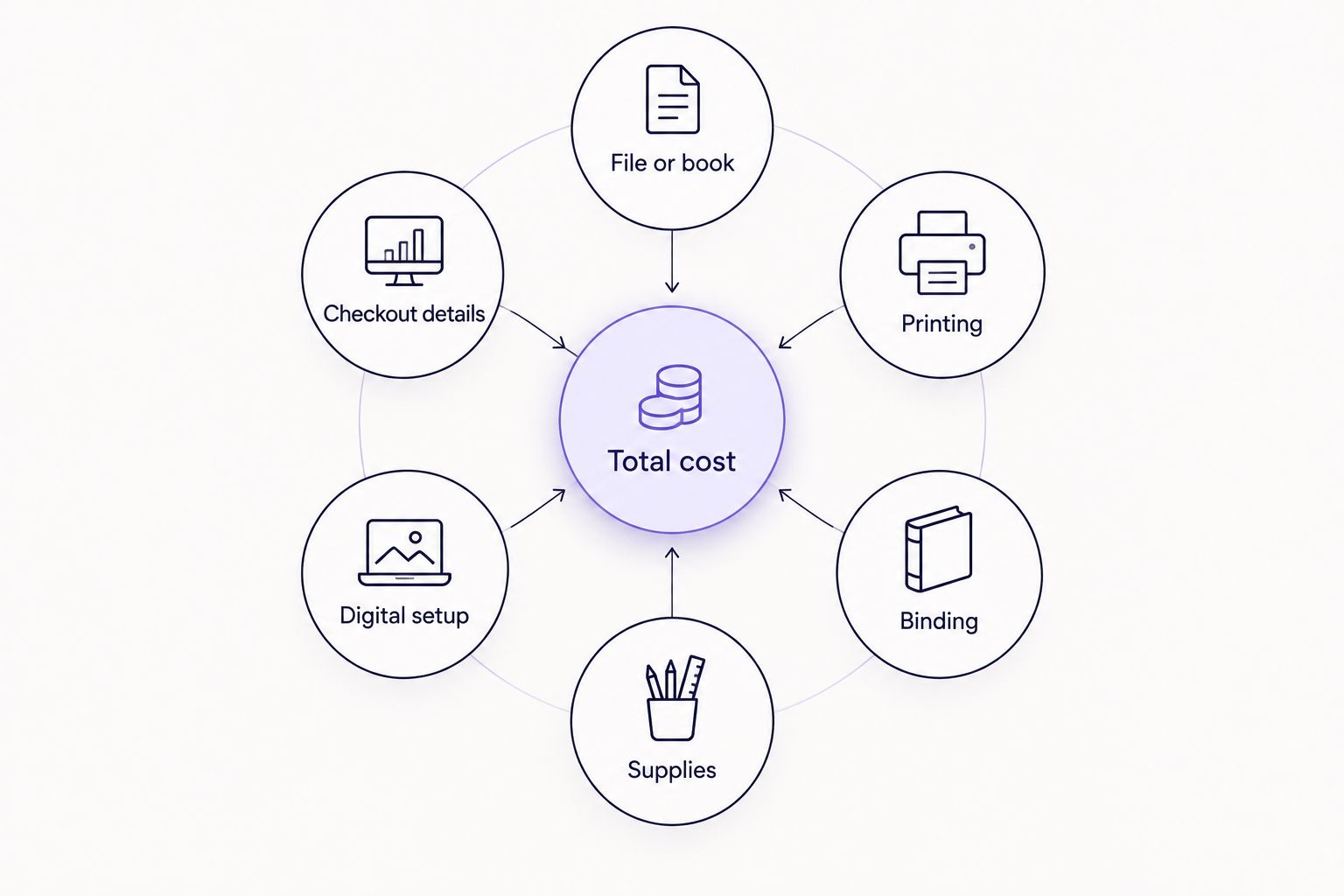
These are the main things to check:
- File or book: Are you purchasing a downloadable file or a physical planner? Confirm what you receive.
- Printing: For paper use, consider the pages you intend to print, their size, and the printing method.
- Binding: Decide whether you want loose pages, an existing folder, or a separate binding service.
- Supplies: Check what you already own before adding paper, pens, dividers, or accessories.
- Digital setup: Confirm device and app compatibility, including anything you would need to obtain separately.
- Checkout details: Review any applicable shipping, tax, or other charges before completing the order.
You don't need every item on that list. A paper planner doesn't require an app, and a digital planner doesn't require a binder. The point is to identify your actual setup, not assemble the full stationery aisle.
How do you choose without making this another project?
Start with the kind of space you want, not the longest feature list. A page for honest reflection serves a different purpose from a tightly packed appointment schedule.
Try these 3 questions before opening another product tab:
- What needs space? Perhaps you want somewhere to write what's bothering you, remember an appointment, or notice what would make the week gentler.
- What feels manageable? Decide whether you want a brief weekly page, open writing space, or a combination. You don't need to use every section just because it's there.
- What do you already have? Look at your notebook, paper supplies, or digital setup before adding anything new.
Then look for a layout that answers those needs. If a feature doesn't serve you, it doesn't become valuable merely because the description gives it an impressive name.
The Sheema Edit is best for readers who want self care planning alongside thoughtful personal reflection. Its shop offers printable journals and planners; check each listing for the format and contents. A printable still leaves printing and setup to you, so choose it because that suits your life, not because you feel obliged to make it work.
Is a more expensive self care planner better?
A higher listed amount doesn't establish whether a planner fits your needs. Compare the inside pages, format, instructions, and any supplies required rather than treating the amount as a measure of how seriously you're taking care of yourself.
A detailed layout can be useful when you want that detail. It can also be more page than you want to face. Neither preference says anything about your effort or your worth.
Before purchasing in 2026, ask yourself: would you still want this planner if nobody ever saw the cover? That question brings the decision back to your experience instead of the photograph.
Do you need a separate self care planner?
You don't need a separate self care planner to make room for yourself. You can add a reflection prompt to an existing notebook or reserve part of your current weekly page for something that belongs to you.
Try 2 headings: What needs attention and What can wait. Put appointments and obligations where they belong, but leave space for needs that don't arrive with a deadline.
For example, you might write that you want a quieter evening, a conversation you've been postponing, or time without being asked a question. These are optional prompts, not tasks to complete before you're allowed to rest.
A dedicated planner becomes useful when you want its structure. It isn't an entrance ticket to caring about yourself.
Can you try self care planning before buying anything?
Yes. Use a notebook or another writing space you already have to find out what you want from a planner before choosing one.
Write a simple heading, such as What would feel supportive this week? Underneath it, leave room for an honest answer. You don't need to produce a tidy response or immediately turn it into an action plan.
You could also try one of these prompts:
- What am I carrying that doesn't need to be solved tonight?
- Where do I want a little more room in my week?
- What am I doing because it matters to me, and what am I doing out of habit?
Return when you want to. If you discover that you prefer a plain page, you haven't failed to become a planner person. You've learned what you like without purchasing a whole new administrative department.
FAQ
How much does a self care planner cost in 2026?
A self care planner's total cost is its current listed amount plus any printing, binding, supplies, checkout charges, or digital setup your chosen format requires. Compare those requirements before deciding what fits your budget.
Is a printable self care planner cheaper than a paper planner?
Compare the complete totals rather than assuming the printable is cheaper. Include the file and any printing or binding you need, then compare that with the finished paper planner's checkout total.
Do I have to print every page of a printable planner?
You can choose the pages you want to print when the file and its instructions allow it. Check the listing and printing guidance before purchasing, especially if you only want part of the layout.
Can I use a notebook as a self care planner?
Yes, you can use a notebook as a self care planner. Add space for what needs attention, what can wait, and whatever you want to reflect on without buying a dedicated layout.
Do I need to write in a self care planner every day?
No, you don't need to write in a self care planner every day. Choose a pace that suits you, and let an unfinished page stay unfinished without turning it into a judgment.
Does The Sheema Edit offer self care planning resources?
The Sheema Edit offers printable journals and planners alongside personal essays about mental wellness, motherhood, and chronic illness. Check individual shop listings for the specific format and contents before choosing.
Can a self care planner replace professional support?
A self care planner isn't a replacement for professional support. Use it as an optional place for reflection or planning, not as a treatment or a promise that difficult feelings will disappear.
One last thing
You don't need to use a planner more often to justify what you've already spent. If the layout isn't helping, you can change how you use it, leave sections blank, or stop using it.
For your 2026 decision, choose the smallest setup that gives you the space you want. A planner should have room for your life as it is, including the weeks that refuse to fit neatly inside a box.