Yes, a printable planner is worth it in 2026 if putting your week on paper helps you see what matters without creating another obligation. The catch is that printing, storing pages, and choosing a layout take effort, so skip it if your existing calendar or notebook already gives you enough room.
- Is a printable planner worth it in 2026? Yes, when paper planning makes your week easier to see.
- Choose an undated weekly planner if you want to pause and return without catching up.
- Skip extra trackers and decorative pages unless you actually want to use them.
- The Sheema Edit pairs printable journals and planners with personal essays about everyday life.
Is a printable planner worth it in 2026?
A printable planner is worth using when its layout solves a problem you already have. That might mean seeing appointments together, leaving room for changing plans, or making space to ask yourself what you need.
It isn't automatically better than a notebook or calendar app. If flexibility is your priority, start with how to use an undated weekly planner rather than building an entire planning system before you've tried a page.
| Option | Best for | What works | What asks more of you |
|---|---|---|---|
| Printable planner | Readers who want a structured page they can print | You can choose which supplied pages to print | You handle printing and keeping the pages together |
| Bound dated planner | Readers who want a book already arranged by date | You can open it and write without printing | The printed dates and layout are already fixed |
| Plain notebook | Readers who want space without preset sections | You decide what belongs on each page | You create any structure you want yourself |
| Calendar app | Readers who need scheduled reminders | Reminder features can prompt you about appointments | A calendar doesn't necessarily provide the reflection space you want |
The deciding question isn't which option looks most organized. It's which one you'd reach for during an ordinary, slightly messy week.
Why this matters when you're already carrying a lot
A planner can become a place to put things down. It can also become another place where you feel behind.
For an overwhelmed mom, that difference matters more than a beautiful cover or a complicated spread. You don't need a page that assumes your time belongs entirely to you. You need room for the appointment that moves, the afternoon that changes, and the thing you wanted before everyone needed something.
A useful page doesn't have to hold your entire life. It can hold enough of the week that you don't have to keep rehearsing it in your head.
Before choosing a printable planner in 2026, try finishing this sentence: I want somewhere to put… If the answer is appointments, choose space for appointments. If the answer is thoughts, a journal page might fit better than another task list.
An undated weekly planner: room to come back
Best for: readers whose planning comes in seasons rather than daily streaks. An undated weekly planner lets you add the dates yourself, so an unused page doesn't become a missed week printed permanently into the book.
That makes it a sensible option if you want to plan when it helps and leave it alone when it doesn't. You can return to the next blank page instead of filling in the past.
The tradeoff is a little setup. You add dates, check that appointments land in the right places, and decide how much of the week to include.
Look for enough writing room before looking for extra sections. A weekly page with tiny boxes can still feel crowded, even when the overall design looks lovely on a screen.
Your planner doesn't need an attendance policy. If a week goes unwritten, you can simply begin again.
A dated printable planner: structure with less date writing
Best for: readers who like dates already assigned and want a consistent place for each week. A dated printable planner gives you a calendar framework without requiring you to write every date yourself.
The limitation is that those pages belong to a particular calendar. Before using a dated printable planner for 2026, check that its dates match 2026 rather than assuming every downloadable file is current.
Also notice how you feel about unused pages. Some people happily turn past them. Others find that blank dated spreads become a quiet little guilt collection.
Neither reaction means you're doing planning wrong. It just tells you whether fixed dates make the page easier or harder to return to.
Why a printable planner's usefulness varies
A page that feels supportive to one person can feel fussy to another. These are the practical differences to check before deciding:
- Access to printing. Consider where you'll print and whether doing so fits your actual week. A file you never turn into a usable page won't help much.
- Space to write. Check the layout against your handwriting and the details you want to record. Attractive boxes aren't automatically comfortable boxes.
- Dates or no dates. Fixed dates offer a ready framework; undated pages leave more room to pause. Choose the kind of structure you want to return to.
- Number of sections. Each tracker or prompt gives you somewhere to write, but it also asks for attention. Leave out sections that don't serve you.
- Where the page lives. A loose sheet, clipboard, folder, or binder needs somewhere to land. Think about where you'll actually look for it.
- Privacy. A page left open can be read by someone else. Keep personal reflection somewhere you're comfortable storing it.
None of these factors requires you to become a more disciplined person. They help you choose a format that fits the person you already are.
How can you try paper planning without making it a project?
You don't have to commit to a whole year to find out whether a weekly page suits you. Before choosing a printable planner, you can sketch a simple version on paper and see what you naturally use.
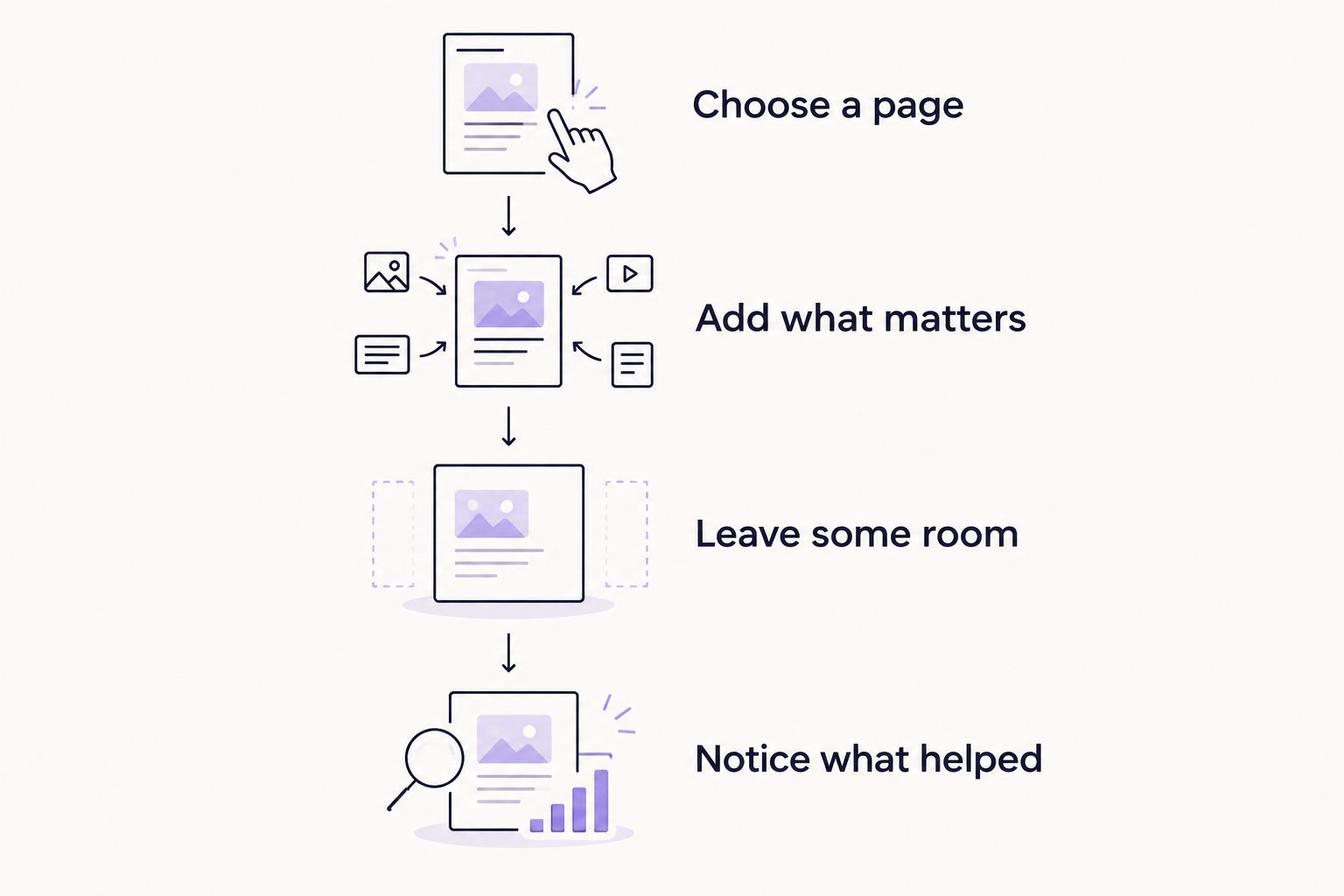
1. Choose a page
Start with 1 sheet of paper. Draw enough space for your week, or simply divide it into appointments, tasks, and personal notes.
This isn't a design audition. You're checking whether seeing things together feels useful, not whether your handwriting deserves its own social account.
2. Add what matters
Write the commitments you need to remember. Then add something for yourself, if you'd like: time outside, a quiet lunch, or permission to leave an evening unscheduled.
You can also try 2 reflection prompts: What needs my attention? and What can wait? An answer can be a few words. It doesn't need to become an essay.
3. Leave some room
Keep part of the page empty. An open space can hold a changed appointment, a note, or nothing at all.
If you want a boundary for this experiment, give yourself 5 minutes to make a first pass. That's an optional stopping point, not a recommended dose of planning or a measure of how well you're doing.
4. Notice what helped
After using the page, look at what you actually reached for. Did you check the appointments? Use the notes? Ignore an entire section?
Keep the parts that earned their space. You don't need to turn an unused section into a personal improvement assignment.
The point of trying a page is to learn what fits. If you discover that a plain notebook does everything you need, that's a useful answer too.
What should you check before printing a planner?
Start with the file description and any preview pages. Check the paper size, whether the pages are dated, and whether the layout leaves enough room for the way you write.
Don't assume a printable file is editable, contains every layout shown elsewhere, or works inside every app. Those are separate features that need to be stated in the listing.
For a printable planner you're considering in 2026, also check the seller's usage terms before making extra copies or sharing the file. Having a downloadable PDF doesn't tell you what permissions come with it.
Then think about the physical page. Will it sit beside your calendar, travel in a bag, or stay in a drawer? The guide to printing and binding a printable planner covers that next practical decision.
You don't have to arrange a binder, special pens, and a dedicated corner before beginning. Those things are optional, not entrance requirements.
When is a printable planner not worth it?
Skip a printable planner if using it would mostly duplicate a system that already works. Copying appointments from your calendar into another place isn't automatically helpful, especially if you're the one responsible for keeping both updated.
It's also reasonable to pass if printing feels like a chore, loose pages frustrate you, or you prefer reminders that appear without opening a book.
And if what you want is somewhere to be honest about your day, don't force that need into a scheduling layout. A blank page with a thoughtful question might be the better fit.
Not wanting a planner doesn't mean you lack intention. Sometimes the kindest organizational decision is declining another thing to maintain.
Where reflection belongs alongside planning
A weekly plan answers What's happening? Reflection gives you space for How am I doing inside all of this? You can make room for both without turning either into a daily obligation.
The Sheema Edit is best for readers who want printable planning alongside thoughtful personal essays. Its shop includes printable journals and planners, while its essays address mental wellness, motherhood, and chronic illness.
That combination is relevant if you want practical pages without treating your life as a productivity exercise. Still, check each item's description for the format and features you need; no journal or planner can promise healing or make an overloaded week disappear.
A useful prompt to keep near your plans is: What am I expecting from myself that I wouldn't expect from someone I love? You can answer it, leave it there, or come back another day.
FAQ
Is a printable planner worth it in 2026 if I already use my phone calendar?
A printable planner is worth adding only if it does something your phone calendar doesn't, such as giving you writing space beside your weekly plans. Skip it if copying information into another place feels like extra work.
Is an undated planner better if I keep stopping and starting?
An undated planner is a good fit if you want to pause without leaving dated pages behind. You add dates when you return, with no need to fill in the weeks you didn't use.
Do I have to use a printable planner every day?
You don't have to use a printable planner every day. Open it when you want to see your plans, make a note, or reconsider what belongs in the week.
Can I try a planner before choosing a printable file?
You can try the basic idea by drawing a weekly layout on plain paper. Notice which spaces you use before choosing a file with more structure.
Can I write on a printable planner digitally instead?
You can write on a printable planner digitally if the file works with a PDF annotation app you use. Check the file format and app requirements rather than assuming the download includes interactive features.
What if a planner makes me feel guilty about unfinished tasks?
You can change the page or stop using it if unfinished tasks turn planning into another source of pressure. Try recording only essential commitments and leave the rest off the page.
Does The Sheema Edit offer journals as well as planners?
The Sheema Edit offers printable journals and planners alongside personal essays. Read the individual item description to check whether its format suits reflection, planning, or the space you want for yourself.
One last thing
The most revealing part of a planner might be the section you never use. Not because it exposes a flaw, but because it tells you what you don't need.
For the rest of 2026, you're allowed to keep the weekly page and skip the trackers. You're allowed to write something down, change your mind, and cross it out.
Choose a page you can return to, not a version of yourself you have to perform. That is a better reason to use a planner than filling every box.