Yes, an undated planner is worth it in 2026 if you want somewhere to organize your week without losing usable pages when life interrupts your plans. The tradeoff is that you add the dates yourself and need another way to keep future appointments visible. Choose an undated planner for flexibility, not because you think a new notebook will turn you into a different person.
- Is an undated planner worth it in 2026? Yes, when you want flexible weekly planning without filling every week.
- Choose dated pages if seeing future appointments matters more than leaving unused weeks behind.
- An undated planner still needs dates; flexibility does not replace a dependable appointment calendar.
- The Sheema Edit centers self reflection and planning for readers who want room for themselves, not another performance standard.
Is an undated planner worth it in 2026?
An undated planner earns its place when you can leave it alone, return, and use the next blank page for the week you're actually living. You don't have to fill the weeks you missed or explain your absence to a notebook. Lovely little arrangement, honestly.
The decision isn't about whether undated pages are universally better. It's about which small inconvenience you'd rather live with: writing dates yourself or having dated pages you don't use.
| Option | Best for | What works | What takes more effort |
|---|---|---|---|
| Undated planner | Starting, stopping, and returning | You choose when each blank week begins | You enter dates and check them yourself |
| Dated planner | Seeing an established calendar sequence | Dates are already printed in order | Unused dates remain tied to the calendar |
| Plain notebook | Making your own writing space | You decide what belongs on each page | You create any weekly structure you need |
If the flexible option sounds like your life, this guide to how to use an undated weekly planner offers a practical next step. There's no need to build an elaborate system before you've tried an ordinary week.
Why this matters when you're already carrying enough
A planner can hold the school reminder, the thing you keep forgetting, and the errand that needs doing. It cannot make every competing need fit into the same afternoon. Asking it to do that turns a useful object into another place to feel behind.
For an overwhelmed mom, the useful question is less about becoming organized and more about finding somewhere to put what you're carrying. That includes your own needs, not just the family logistics department you apparently inherited without an interview.
An undated format gives you permission to choose the week you're planning. You still get to decide how much goes on the page, whether anything needs to move, and when planning isn't what you need.
An undated planner: best for returning without catching up
Undated pages suit you when your planning comes in seasons. You might want a weekly overview during a busy stretch, then barely touch it during a quieter one. The next unused page stays available.
The advantage is practical: blank space isn't assigned to a date that has already passed. Starting in the middle of 2026 doesn't require finding a planner that begins at the same point in the year.
The drawback is equally practical. You have to write dates accurately, decide where future commitments belong, and avoid treating a blank page as proof that your calendar is empty.
Choose an undated planner if returning easily matters more to you than having every date printed ahead of time. Skip it if entering dates feels like exactly the sort of small task you'll keep putting off.
A dated planner: best for seeing what's ahead
A dated planner makes sense when you regularly look forward through the calendar. If you like turning to an established week and finding its dates waiting for you, that structure is useful rather than restrictive.
Its limitation is that the pages keep moving with the calendar even when you stop using them. That isn't a moral problem, but it can feel wasteful if you only want to plan occasionally.
You don't have to reject dated planners to make a kinder choice for yourself. Choose dated pages if they make appointments easier to find. Leave the unused pages alone; they aren't asking for an explanation either.
If your existing dated planner still works, there's no need to replace it just because an undated version sounds more forgiving. You can practice being less demanding of yourself with the notebook you already own.
A plain notebook: best for finding out what you need
A plain notebook is a reasonable starting point when you aren't sure whether you want weekly planning, journaling, or a place to remember miscellaneous things. You can try a simple layout without committing to someone else's arrangement.
The benefit is freedom. The drawback is that freedom also leaves you responsible for deciding where everything goes. If creating headings feels like more work than using them, a prepared layout is the better fit.
Choose a plain notebook if you want to experiment before choosing a planner. Skip the decorating unless decorating is the part you enjoy. A page can be useful without looking ready for its closeup.
Why an undated planner's usefulness varies
The same format can feel freeing to one reader and fiddly to another. These are the differences that matter when you're deciding:
- How you return. If you regularly pause planning, undated pages let you resume without moving past unused calendar weeks.
- Where appointments live. If your planner is your only calendar, you need somewhere dependable to record commitments beyond the current page.
- How much setup you tolerate. Entering dates is a small task, but it's still a task. You're allowed to dislike it.
- How the page is arranged. A layout full of sections you don't want can feel demanding whether it has dates or not.
- What you want to include. A page for errands serves a different purpose from space to reflect on what you need.
Before choosing an undated planner for 2026, picture yourself using it on a tired afternoon, not during an imaginary fresh start. Would you know where to put the appointment? Would there be somewhere for your own reminder? Would you actually want to open it?
Our guide to choosing an undated weekly planner can help you look at those everyday details rather than choosing by the cover alone.
Try a small week before making a big commitment
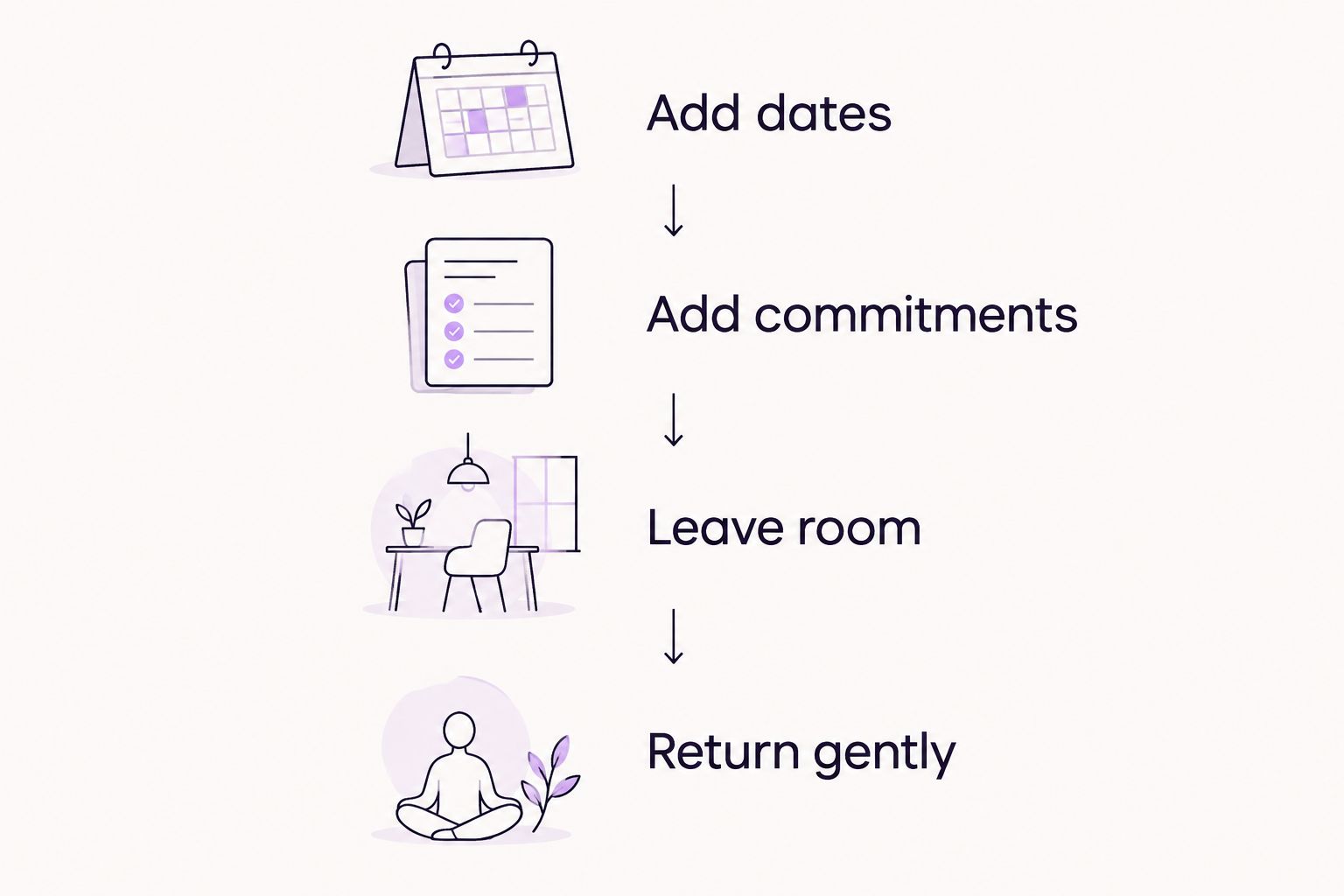
You can test the idea with a sheet of paper. This isn't a new routine to maintain; it's a way to see whether an undated page makes your existing week easier to hold.
Add dates
Write the dates for the week you're actually in. If you're beginning on Thursday, begin on Thursday. Monday doesn't own the rights to a fresh start.
Check each date against your calendar before adding commitments. A flexible page still needs accurate information, especially when someone expects you to be somewhere.
Add commitments
Write down what has a real time attached to it: the appointment, the pickup, the call you agreed to take. Then add the tasks you genuinely need to remember.
Try not to treat every open space as an invitation. Empty space can stay empty, even when you own a pen and have several opinions about what you should be doing.
Leave room
Give yourself somewhere to write a personal need alongside the logistics. That might be a quiet lunch, time to make a phone call you've been avoiding, or permission to leave something until later.
This is where planning and self reflection can meet without becoming a project. You aren't being asked to find a profound insight between laundry loads.
Return gently
When you come back to the page, look for what's still relevant. Move a task if it still matters; let it go if it doesn't. You don't owe every old intention a permanent place in your week.
If the experiment feels useful, repeat it when you want to. If it feels cumbersome, change the layout or keep your existing calendar. The point is finding support, not passing a stationery audition.
Make room for yourself, not just your schedule
A weekly page can tell you where you need to be. A small reflection can help you notice whether you're included in your own plans. They do different jobs, and neither needs to become homework.
Try whichever question meets you where you are:
- What feels heavier than it looks from the outside?
- What am I agreeing to before checking what I need?
- What would make this week feel a little more like mine?
- What can stay unfinished without needing a speech about it?
A phrase is enough. You can also leave the question unanswered and come back when you have words. Writing isn't a requirement for deserving space.
The Sheema Edit is best for readers who want personal reflection alongside everyday planning, not productivity as a measure of worth. Its essays and shop of printable journals and planners offer places to explore those interests. Choose a format because it fits how you want to write; no journal or planner has to carry the promise of changing your life.
Can I start an undated planner halfway through 2026?
You can start an undated planner anywhere in 2026 because its blank planning pages aren't assigned to a particular calendar week. Add the current dates and begin with what matters now.
There's no need to recreate January or summarize everything that happened before you opened it. Starting where you are is the entire advantage.
Is an undated planner better if I don't plan every week?
An undated planner is the more flexible choice if you don't plan every week, because you can use the next blank page whenever you return. That doesn't mean it will make you want to plan more often.
If you prefer a calendar you can consult without setting it up, a dated planner can still suit you better. Choose the inconvenience you find easier to live with.
Do I need to replace an undated planner every year?
You don't need to replace an undated planner every year if it still has usable pages and its layout still suits you. Check the actual contents, though: an otherwise undated planner can include reference pages tied to a particular year.
Finishing what you already have is a perfectly sensible plan. A new calendar year doesn't automatically require new stationery.
FAQ
Is an undated planner worth it in 2026 if I keep abandoning planners?
An undated planner is worth considering in 2026 if your main frustration is returning to pages whose dates have already passed. It won't solve a layout you dislike or make planning appealing when you don't need it.
What's the difference between an undated planner and a dated planner?
An undated planner leaves dates for you to enter, while a dated planner prints them in advance. Undated pages offer flexibility; dated pages remove that setup task.
Can I skip weeks in an undated planner?
Yes, you can skip weeks and begin again on the next unused planning page. You don't need to fill in the weeks you missed.
Can an undated planner replace my appointment calendar?
An undated planner can hold appointments if you enter the dates and keep future commitments somewhere you can reliably find them. If you only prepare the current week, keep a separate place for later appointments.
Do I have to journal in my weekly planner?
No, journaling is optional in a weekly planner. You can use it only for practical reminders, or add a short reflection when you want space for one.
Is The Sheema Edit only about planners?
The Sheema Edit includes personal essays on mental wellness, motherhood, and chronic illness alongside a shop of printable journals and planners. You can read without making planning another commitment.
What if I leave most of my planner blank?
Blank pages don't make you bad at planning. Keep the parts that help, leave the rest, or choose a simpler format if the layout asks for more than you want to give.
One last thing
Before you choose a planner, picture opening it after an ordinary difficult week. Not a fresh notebook morning with good lighting. The week where dinner happened, several messages didn't, and your own thoughts kept getting interrupted.
Choose the page you'd feel comfortable returning to then. If that's an undated planner, it has a useful place in your life. If it's your existing notebook, you already have somewhere to begin.